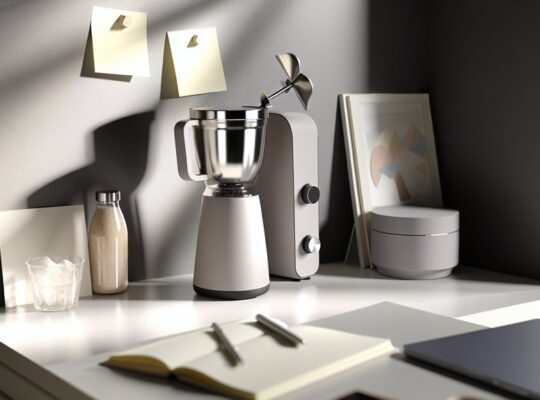
If you cook often, you’ll notice juicer mixer grinders and normal mixer grinders handle tasks very differently. One prioritizes clear juice extraction, pulp separation and higher power; the other is simpler, versatile for batters, spices and chopping. You’ll want to weigh cleaning, noise, safety features, and cost against the exact tasks you do—because the right choice changes the routine in subtle but important ways.
Key Takeaways
- Juicer mixer grinders include dedicated juicing attachments and strainers for clearer juice extraction, while normal mixers lack specialized juicing parts.
- Juicer mixers use higher‑wattage, better‑cooled motors and overload protection for continuous fibrous use; normal grinders have simpler, lower‑power motors.
- Normal mixer grinders excel at dry grinding, batter and chutneys with high torque; juicer mixers handle wet blends and large liquid batches better.
- Juicer mixers have more removable parts (pulp chambers, seals) requiring extra cleaning and maintenance compared with simpler normal mixer jars.
- Choose based on habits: buy a juicer‑mixer for frequent juice and large wet jobs, or a normal mixer for everyday spice, batter, and chopping tasks.
What Is a Juicer Mixer Grinder and How It Works
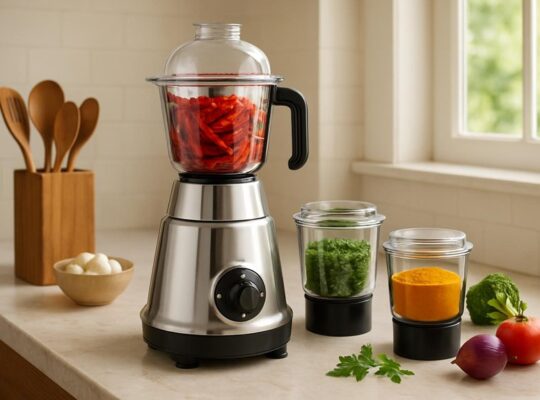
A juicer mixer grinder combines three functions—juicing, wet/dry grinding, and blending—into a single appliance, so you don’t need separate machines for extracting juice, making chutneys or grinding batter. You’ll notice a juicer mixer grinder differs from a basic grinder by having dedicated juicing attachments, larger-capacity jars, and often a more powerful motor to handle fibrous produce without stalling. When you use it, feed fruits or vegetables into the chute for centrifugal or cold-press extraction, then switch to grinding jars fitted with sharp, stainless-steel blades for wet or dry tasks; blending jars with tighter seals handle smoothies and purees. Controls are usually labeled for speed and pulse, letting you match torque to ingredients while minimizing splatter and overheating. For safety, always lock lids, use the provided pusher, and avoid overfilling. Regular cleaning and checking for worn seals or blades keeps performance consistent and reduces the risk of motor strain or contamination. These units typically offer higher power and larger jar capacities than basic bullets or personal blenders, making them better suited for bulk prep and a wider variety of tasks.
What Is a Normal Mixer Grinder and How It Works
A normal mixer grinder is a countertop appliance you’ll use for grinding, blending, and chopping solid and semi-solid ingredients for everyday cooking. It’s built from core components like a powerful motor base, multiple jars with blades, and speed controls that work together to shear and pulverize food. In typical operation you’ll secure a jar, select speed or pulse, and let the rotating blades break down ingredients until you reach the desired texture. These units typically have lower-RPM, higher-torque motors suited for heavy grinding tasks.
Basic Definition and Purpose
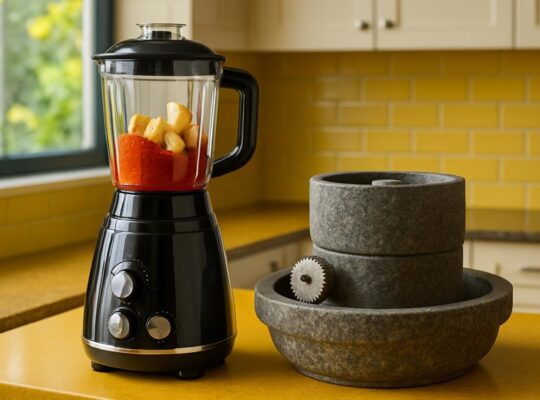
Compact and familiar, the normal mixer grinder is the kitchen workhorse you probably already own or have used, designed to perform blending, grinding, and mixing tasks with straightforward mechanical action. You use it to process solids and liquids—making chutneys, batter, spice powders, and purees—by converting ingredients through rotating blades at varying speeds. Compared with a juicer mixer grinder, it prioritizes versatility over extraction efficiency: it handles coarse to fine textures but won’t separate juice from fiber. Its purpose is practical: reduce prep time, ensure uniform consistency, and enable routine cooking tasks safely when you follow basic precautions like securing lids, avoiding overfilling, and switching off before inserting utensils. Knowing this helps you decide whether its capabilities match your daily needs. Many popular models feature 750W motors and stainless steel jars for durable, high-performance grinding.
Core Components and Parts
The main body, motor, jars, blades, and control assembly are the parts you’ll interact with most when using a normal mixer grinder, and understanding how they fit together clarifies both function and limits. You’ll notice the body houses the motor and cooling vents; a compact motor delivers power but has thermal limits, so you shouldn’t overload it. Jars are detachable—choose stainless or plastic for durability and food safety. Blades differ by task: coarse chopping, fine grinding, or wet grinding; inspect blades for damage and secure fitting. The control assembly lets you set speeds and should have clear markings and a safety interlock to prevent accidental starts. Many users prefer models with multiple jar sizes for versatility and everyday kitchen tasks.
- Motor: power rating and thermal protection
- Jars: sizes and material safety
- Blades: types and maintenance
- Controls: speed settings and safety lock
Typical Operation Process
How does a normal mixer grinder actually work, and what should you expect during typical use? You’ll place ingredients in a jar, secure the lid, select a speed, and engage the motor; blades driven by the motor create shear and impact to chop, grind, or blend. Compared to a juicer, it processes whole ingredients including fibrous or solid pieces, so you’ll see thicker textures and more pulp. Expect short bursts for coarse chopping and longer runs for fine pastes; pause occasionally to scrape sides and avoid overheating. Safety-wise, always lock jars, check sealing, and wait for blades to stop before opening. Regularly inspect blades, vents, and cord for wear to prevent mishaps and maintain consistent performance. For many tasks, it’s best to add liquids first and solids next to ensure even processing and avoid overloading the motor load properly.
Key Performance Differences: Power, RPM, and Motor Design
When you compare juicer mixer grinders to normal mixer grinders, you’ll notice clear differences in power and wattage that affect what each can handle. You’ll also see that RPM ranges and speed-control options are tuned for different tasks—higher, steadier RPMs for juice extraction versus variable speeds for grinding. Finally, motor type and cooling design determine durability and thermal performance, so choosing the right combination matters for heavy or continuous use. Many wet grinders, like the Butterfly Smart models, emphasize motor durability and specialized stones to produce better batter consistency.
Power and Wattage
Many users don’t realize how much motor power and RPM affect everyday performance: juicer-mixers typically pack higher-wattage motors and faster, purpose-built RPM ranges than standard mixer-grinders, so they’ll extract juice and handle fibrous produce without bogging down. You’ll notice wattage ratings directly influence torque, heat generation, and continuous-duty capability. For safety and longevity, choose motors with thermal protection and appropriate duty cycles for your workload. Lower-wattage mixer-grinders suit light tasks; higher-wattage juicer-mixers cope with dense fruits and prolonged use. Compare rated watts, start-up draw, and manufacturer guidance to match appliance to your needs.
Philips models like the HL7505/00 often pair sturdy construction with reliable motor protection and a strong service network, making them a good choice for heavier use and long-term reliability (sturdy construction).
RPM and Speed Control
Power specs set the stage, but RPM and speed control determine what the machine actually does with that power. You’ll notice juicer mixer grinders often offer higher RPM ranges and finer speed gradation so you can extract juice gently or pulverize fibers without overheating. Normal mixers typically have fewer fixed speeds, suited for chopping and blending, but they’ll struggle with delicate control.
| Feature | Juicer Mixer Grinder | Normal Mixer Grinder |
|---|---|---|
| RPM Range | High, variable | Moderate, limited |
| Speed Control | Fine increments | Few presets |
| Safety Impact | Prevents clog/heat | Simpler, riskier if overloaded |
Choose a unit with clear speed markings and safety cutoffs so you can adjust safely for ingredients and avoid motor strain. Models like the Suruchi Elantra Food Pro 5x often pair high-power motors with three stainless steel jars to handle a range of tasks safely.
Motor Type and Cooling
How does the motor inside your appliance shape its performance and longevity? You’ll notice juicer mixer grinders use high-torque induction or BLDC motors with better cooling fins and heat-sink designs, while normal mixers often have universal motors that run hotter and wear brushes. That affects continuous run time, overload tolerance, and maintenance.
- Motor type: induction/BLDC (juicer) vs universal/brush (normal).
- Cooling: active fans and vents vs minimal airflow.
- Thermal protection: built-in cutoffs common in juicers; basic fuses in normals.
- Serviceability: sealed motors last longer; brush motors need periodic replacement.
Choose appliances with clear thermal ratings and safety cutoffs to reduce overheating risk and extend motor life. Modern consumer models often include overload protectors to prevent motor damage and improve safety.
Juice Extraction Capabilities and Pulp Management
Curious about which appliance gives you cleaner, higher-yield juice? You’ll find juicer mixer grinders are designed to separate liquid from fiber: they use centrifugal or mastication mechanisms and dedicated strainers, so you get clearer juice and higher extraction from fruits and vegetables. Pulp is ejected or collected separately, making cleanup predictable and reducing airborne splatter when you follow safety instructions.
A normal mixer grinder chops and blends, so juice contains more pulp and requires additional straining if you want clarity. That extra step increases handling and potential mess, so you’ll need to take care with hot liquids and ensure lids and sieves are secure to prevent spills.
Compare capacity too: juicer attachments often have larger pulp compartments and safety interlocks to prevent operation when parts aren’t fitted. If juice yield, cleaner output, and controlled pulp disposal matter to you, a juicer mixer grinder is the safer, more efficient choice. Higher-wattage models with thermal protection and robust motors also help maintain consistent performance during heavy juicing.
Wet and Dry Grinding: Which Handles What Better
Which appliance handles wet batter and dry spice grinding better depends on motor design, jar geometry, and blade type. You’ll find juicer-mixer-grinders often have higher-watt motors and sealer-equipped wet jars that keep batter smooth without overheating, while normal mixer grinders may struggle with prolonged wet grinding but excel at quick dry spice pulverizing. You should watch run-time limits and cooling intervals; overheating can dull blades or trip safety switches. Blade profile matters: curved, sharper blades favor wet blending; flat, aggressive blades suit dry grinding.
- Motor power and torque — higher power sustains wet batter without stalling.
- Jar seals and material — leakproof wet jars prevent mess and electrical hazards.
- Blade shape and mounting — determines particle size and heat buildup.
- Duty cycle and safety features — thermal cut-offs protect you and the appliance.
Compare specs before use, follow manufacturer safety guidance, and avoid overloading to ensure consistent results and safe operation.
Versatility: Attachments, Jars, and Recipe Range
Beyond motor specs and blade geometry, what really broadens an appliance’s usefulness is the range of attachments and jars it supports and the recipes those parts let you make. You’ll find juicer mixer grinders often include a centrifugal or slow-juice attachment, dedicated pulp separators, and tall jars for extracting fresh juice, plus small chutney jars for concentrated pastes. A normal mixer grinder usually offers multiple stainless-steel jars—large for batter, medium for grinding, small for chutney—and sometimes a blender jar for smoothies. Compare functionality: juicer attachments let you make clear juices, nut milks, and vegetable concentrates with less heat; normal jars let you grind batters, spice mixes, and coarse dough more safely. Consider recipe range: if you want cold-pressed juices, nut butters, and fine sieving, a juicer-equipped model expands options. If you need reliable batter, chutneys, and spice grinding, a normal mixer grinder’s jars are more practical and safer for dense loads.
Cleaning, Maintenance, and Durability Considerations
When you compare cleaning and upkeep, juicer mixer grinders often have more nooks — filters, pulp chambers, and extra seals — that need regular rinsing, while normal mixer grinders usually have simpler, quick-rinse jars and fewer detachable parts. Consider long-term durability: motors in juicer-mixers can face heavier wear from fibrous produce unless designed with stronger components, whereas basic mixer grinders can last longer with routine jar and blade care. Factor in replaceable parts, warranty coverage, and how easy each model is to disassemble when deciding which fits your maintenance tolerance.
Ease of Cleaning
How easy is it to keep a juicer mixer grinder clean compared with a normal mixer grinder? You’ll find juicer mixer grinders often have more parts (strainers, pulp containers) that need rinsing immediately to prevent bacterial growth, while normal mixer grinders usually have fewer detachable blades and jars to wash. Consider splash and pulp residues: juicers can splatter more, so you’ll clean counters and seals more often. Both require safe handling of sharp blades and sealed electrical bases—never immerse the motor housing.
- Disassembly: juicers = more components; grinders = simpler jars.
- Residue: juicers retain pulpy matter; grinders leave smoother, easier-to-rinse paste.
- Cleaning time: juicers typically take longer.
- Safety: always unplug before cleaning and use gloves if needed.
Long-term Durability
Cleaning habits directly affect how long either machine will last, so it’s worth comparing maintenance needs alongside build quality and parts wear. You’ll find juicer mixer grinders have more moving parts, seals, and pulp channels that need daily rinsing to prevent corrosion and motor strain; neglect speeds wear. Normal mixer grinders are simpler, with fewer seals and easier access to blades, so routine cleaning and occasional blade sharpening usually suffice. For both, you should follow manufacturer service intervals, replace worn gaskets, and avoid overloading to protect bearings and windings. Inspect power cords and switches for heat damage. Store dry; don’t stack wet jars. Prioritize food-safe cleaning agents and let components fully air-dry before reassembly to prevent rust and electrical hazards.
Noise Levels, Safety Features, and Ease of Use
Curious about how loud your kitchen will get? You’ll notice juicer mixer grinders often run at higher RPMs, meaning sharper noise during extraction, while normal mixer grinders produce steadier, lower-frequency hums. For safety, juicers may include overload protection and interlock lids; standard grinders typically offer simpler thermal cut-offs. Ease of use varies: juicers need more assembly and cleaning, grinders are usually plug-and-play with fewer parts.
- Noise: juicer = higher-pitched, intermittent; grinder = consistent, generally quieter.
- Safety features: juicer = interlock switches, non-slip bases, overload shutoff; grinder = basic thermal protection and locking jars.
- Cleaning and handling: juicer parts can be fiddly and require careful reassembly; grinder jars and blades are quicker to rinse and store.
- Controls and ergonomics: juicers often have specific speed settings and pulp disposal steps; grinders use straightforward speed knobs and simple lids.
Choose based on how much noise you tolerate, how safety-minded you are, and how much hands-on maintenance you want.
Price, Energy Consumption, and Value for Money
Want the best bang for your buck? Compare upfront price, running cost, and long-term value between a juicer mixer grinder and a normal mixer grinder. You’ll usually pay more for a juicer mixer grinder because it combines motor power, specialized juicing attachments, and sturdier jars. A normal mixer grinder is cheaper and handles everyday grinding, chutneys, and batter.
Energy consumption varies: juicer mixer grinders often draw higher wattage during extraction, so they consume more electricity per use—especially for hard fruits and vegetables. Normal units run at lower sustained loads for common tasks, so they cost less on your utility bill. Factor in frequency: if you juice daily, higher energy use adds up.
Value for money depends on safety, durability, and warranty. Pick models with thermal overload protection, durable blades, and clear warranty terms; they lower repair risks and replacement costs. Balance initial cost, expected use, and safety features to decide which gives you the better total value.
How to Choose Based on Your Cooking Habits and Kitchen Space
Price, energy use, and warranty matter, but your everyday cooking patterns and the space you have in your kitchen will ultimately decide which machine fits best. If you make fresh juices, nut milks, or smoothies daily, a juicer mixer grinder gives you specialized functions; if you mostly grind spices, batter, or chutneys, a normal mixer grinder is compact and efficient. Measure countertop and storage space; heavy, tall juicer attachments need clearance and stable placement. Consider noise, cleaning time, and safety locks—models with interlocks and overload protection are safer for frequent use. Match motor power to tasks: higher watts for crushing ice or nuts, moderate power for wet grinding.
- Prioritize frequency: daily juice use favors juicer mixer grinders.
- Space check: small kitchens benefit from compact normal units.
- Cleaning & safety: choose models with detachable, lockable parts.
- Power vs. need: avoid oversized motors that waste energy.
Frequently Asked Questions
Can a Juicer Mixer Grinder Process Leafy Greens Effectively?
Yes — a juicer mixer grinder can handle leafy greens better than a normal grinder, extracting nutrients and juice more efficiently; you’ll still want to avoid overloading, clean attachments thoroughly, and follow safety guidelines to prevent clogging or motor strain.
Do Juicer Mixer Grinders Require Special Jars or Blades?
Yes — you’ll need specialized jars and blades for juicer mixer grinders; they’re designed for liquid extraction and soft produce, so using proper attachments ensures efficient juicing, prevents motor strain, and reduces risk of leakage or blade damage.
Are Replacement Parts Widely Available for Juicer Mixer Grinders?
Yes — you’ll usually find replacement parts for juicer mixer grinders, but availability varies by brand and model; choose reputable manufacturers, keep serial numbers, and verify genuine blades, jars, and safety seals to ensure proper fit and safe performance.
Can Juicer Mixer Grinders Handle Nut Butters and Pastes?
Yes — many juicer mixer grinders can make nut butters and pastes, but you’ll need a sturdy high-torque motor, appropriate blades/jars, short pulses to avoid overheating, and safety checks for overheating, lid locks, and proper cooling breaks.
Do Juicer Mixer Grinders Void Warranty if Used for Dry Grinding?
It depends: if your juicer mixer grinder’s manual forbids dry grinding, using it that way can void the warranty; compare manufacturer guidelines, follow safety limits, and choose the correct appliance to avoid damage and protect coverage.