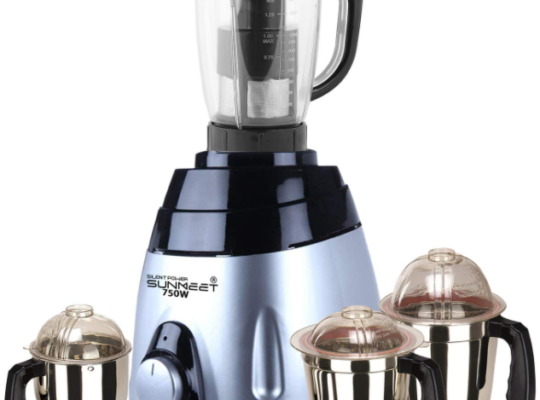
If you’re evaluating how long a high-end mixer will last, focus on measurable factors: motor class and duty cycle, gear materials and ratios, seal and bearing spec, thermal management, and manufacturer test data. Premium models use stainless and anodized surfaces, corrosion-resistant seals, and heavy die-cast housings to resist acids and salts, but wear parts and heat buildup still limit life—keep going to see which specs matter most.
Key Takeaways
- Durability depends on materials: 304 vs 316 stainless, anodized aluminum, and thick housing walls resist wear and corrosion.
- Mechanical durability hinges on gearbox, bearings, and gear tooth design rated for peak torque with safety factor ≥ 2.
- Continuous-duty motor ratings (500–1000 W) and thermal management predict longevity under heavy commercial use.
- Serviceability, parts availability, and clear warranty terms strongly influence real-world lifespan and repair costs.
- Expected lifetimes vary widely: top units >5,000 hours, typical 2,000–3,500 hours, with early failures possible from misuse or contamination.
What Defines Durability in High-End Mixers
What exactly do we mean by “durability” when evaluating high-end mixers? You’ll assess durability through measurable, observable factors: material wear resistance (stainless grades, anodized finishes), joint and seal integrity under cyclic loading, and resistance to corrodents like acids or salt. You’ll track failure rates per 1,000 operational hours, mean time between failures (MTBF), and warranty-claim frequencies to quantify reliability. Mechanical tolerances—shaft runout, bearing play, gear backlash—should be specified in micrometers and monitored over time. Vibration spectra and noise-decibel trends indicate emerging fatigue. You’ll inspect electrical connector ingress protection (IP ratings) and insulation resistance to evaluate safety under moisture exposure. Component replaceability and spare-parts lead time affect operational resilience. Documented maintenance intervals, torque specs, and approved cleaning agents reduce risk of premature degradation. By prioritizing test data, traceable materials, and clear maintenance protocols, you’ll make safety-aligned, evidence-based decisions about which high-end mixers will sustain performance without compromising user safety. Consider the motor and thermal design, including wattage and cooling, when assessing expected longevity and suitability for intended workloads.
Motor Power, Heat Management, and Lifespan
How much motor power do you really need, and how does that translate into sustained performance and lifespan? You should evaluate rated wattage and torque curves, not just peak numbers. A 500–1000 W continuous-duty motor typically sustains heavy batters without overheating; peak watts above that give headroom but don’t equate to longer life. Measure duty cycle: mixing tests at 30–60% load over extended runs reveal thermal buildup rates. Motors with lower thermal rise (ΔT ≤ 40°C after standardized run) and built-in thermal cutoffs reduce failure risk. Look for service intervals: mean time between failures (MTBF) and manufacturer-specified run-hours; units rated for commercial or “continuous” use usually double MTBF versus hobby models. Cooling design—forced-air vents, heat sinks—affects how quickly windings dissipate heat and therefore insulation aging. For safety, prefer mixers with documented thermal protection, clear overload indicators, and accessible service parts so you can maintain cooling systems and preserve operational lifespan. Also consider matching motor RPM and torque to your typical loads to avoid stalls and excessive heat buildup.
Materials, Construction, and Build Quality
Why does material choice matter so much for a mixer’s real-world durability? You rely on components that resist fatigue, corrosion, and impact; metals and polymers behave differently under load and temperature, and that affects service life and safety margins. Quantify density, tensile strength, and thermal conductivity when comparing housings and bowls.
| Component | Typical Material | Key Property |
|---|---|---|
| Housing | Die-cast aluminum/stainless steel | Corrosion resistance, stiffness |
| Bowl | Stainless steel | Food safety, dent resistance |
| Fasteners/seals | Stainless/EPDM | Corrosion and chemical resistance |
You’ll want construction that minimizes stress concentrators: folded seams, continuous welds, and stainless fasteners extend safe operation. Check manufacturer data for material grades (e.g., 304 vs 316 stainless), wall thicknesses, and coating specifications. Prioritize traceable materials and third-party testing to reduce failure risk; that’s how you translate material data into reliable, safe performance. Manufacturers that use stainless steel construction often show better longevity in heavy-use kitchens.
Gearing, Bearings, and Wear Points
Where should you expect the highest mechanical stress in a mixer? You’ll find it at the gearbox output and the attachment hub where torque transfers from motor to tool. Quantify stress by torque (Nm), contact pressure (MPa), and cycle count; high-viscosity tasks spike instantaneous torque and accelerate fatigue. Bearings nearest the output see axial and radial loads that exceed typical ratings during paddle stalls; compare rated dynamic load (Cr) to measured peak loads to predict life. Gear teeth experience pitting and micropitting driven by Hertzian contact stress and lubrication film thickness—monitor for wear patterns that correlate with load spectrum and lubricant viscosity. Seals and splines are secondary wear points; their degradation increases contamination risk, raising bearing wear rates multiplicatively. For safety, use components with safety factors ≥2 for expected peak torque and verify bearing life (L10) against projected hours. Track vibration and temperature trends; deviations >20% from baseline indicate accelerated wear and potential failure. Also consider real-world user expectations for household appliances like mixer grinders when specifying duty cycles and maintenance intervals.
Ease of Maintenance and Repairability
A mixer’s long-term value hinges on how quickly you can perform routine maintenance and repairs, so quantify accessibility by service time (minutes), parts count, and required torque specs for fasteners. You’ll want clear service manuals, labeled connectors, and modular components so you can reduce downtime and exposure to electrical or mechanical hazards. Trackable metrics let you compare models objectively.
| Task | Typical Service Time (min) | Fastener Torque (Nm) |
|---|---|---|
| Replace beater/shaft seal | 10 | 8 |
| Access planetary gear set | 25 | 12 |
| Replace motor brushes | 15 | 6 |
| Clean ventilation/heatsink | 8 | n/a |
Use the table to prioritize interventions: lower time and parts count reduce risk and worn fasteners; higher torque often needs a torque wrench and safety gloves. Insist on replacement-part lists and exploded diagrams so you can maintain torque accuracy and avoid over-tightening that creates failure or injury. A clearly documented safety feature such as a double locking system or circuit breaker speeds troubleshooting and reduces risk during maintenance.
Warranty Coverage and Manufacturer Support
You’ll want to compare warranty length and explicit terms across models, noting median coverage periods and any prorated clauses. Check line-item lists for what’s covered (motor, electronics, labor) versus common exclusions (wear parts, misuse, and unauthorized repairs). Also quantify available support channels and typical turnaround times for factory repair, authorized service, and parts availability to estimate real-world protection. Also verify that warranties cover motors rated 750–1500 W and specify service availability for commercial-grade units.
Warranty Length and Terms
How long should you expect a fancy mixer to be covered, and what exactly does that coverage include? You’ll typically see base warranties of 1–2 years for consumer models and 5–10 years for commercial-grade motors and drives. Check whether the term applies to whole-unit defects or only specific components (motor, gearbox, electronics). Note also whether the warranty is prorated: full coverage early, reduced reimbursement later. Data from manufacturer specs show longer-term coverage often correlates with higher mean time between failures (MTBF). You should confirm repair turnaround targets, authorized-service requirements, and whether postage or labor is billed to you. Keep records of purchase and maintenance—claims hinge on documented use. Clear, numeric warranty terms reduce safety risks by ensuring timely, verified repairs. Also confirm whether common exclusions like motor burnouts from overloading or unauthorized repairs are listed and how they affect coverage.
What’s Covered, What’s Not
What exactly does a mixer warranty cover, and what will you likely be on the hook for? You’ll usually see coverage for manufacturing defects in motor, gearbox, and electronic controls for a specified term (often 1–5 years). Coverage commonly excludes wear items—seals, belts, beaters—and damage from misuse, overload, or unauthorized repairs. Data from manufacturer policies show most warranty claims are denied for evidence of improper heavy-duty use or lack of maintenance. You should document serial numbers and retain receipts; manufacturers request proof for claims and may offer pro-rated replacement costs beyond initial term. For safety, follow stipulated load limits and cleaning instructions: doing so maximizes valid coverage and reduces risk of electrical or mechanical failure. Choose units with continuous-duty motors and verified cooling features for extended commercial use.
Repair and Support Options
After confirming coverage limits and documenting serial numbers, the next step is figuring out repair and support pathways—manufacturer authorized service centers, third-party repair shops, and direct warranty fulfilment each have differing response times, costs, and approval rates. You’ll quantify trade-offs: mean turnaround, percentage of parts replaced under warranty, and documented safety inspection protocols. Prioritize providers with published defect-fix times and safety compliance certificates.
- Manufacturer service center: typically faster approvals, OEM parts, higher cost
- Third-party technician: lower price, variable parts sourcing, check certifications
- Mail-in warranty fulfillment: predictable records, longer downtime, tracked shipping
- Extended protection plans: cost vs. repair frequency analysis
Use data on response rates and safety checks to minimize risk and downtime. Consider manufacturers that offer thermal overload protection as part of their safety and warranty support to reduce motor failure claims.
Real-World Longevity: User Experiences and Tests
Why should you trust manufacturer lifespans when street-level user reports and lab stress tests tell a different story? You’ll want empirical comparisons: aggregate failure rates, mean time between failures (MTBF) from independent labs, and user-reported runtime hours before malfunction. Review datasets that separate electrical faults, gear wear, and motor overheating; these account for most safety risks. Cross-reference sample sizes, test protocols (continuous vs. intermittent duty), and environmental conditions—heat and humidity change outcomes. Pay attention to terciles: top third of units often sustain >5,000 hours under lab cycles, middle third show sporadic issues around 2,000–3,500 hours, bottom third fail early from bearing or seal degradation. User forums add contextual failure modes tied to misuse, such as overloaded attachments. Prioritize statistics that include confidence intervals and recall-adjacent incident reports. That lets you assess realistic longevity and safety margins rather than relying solely on optimistic manufacturer claims. Consider also reported noise measurements as part of durability assessments, since sustained high vibration and noise often correlate with bearing and alignment failures.
Making a Durable Mixer Choice Based on Your Needs
To choose a mixer that lasts, you’ll quantify your intended usage patterns—hours per week, batch sizes, and frequency of heavy-duty tasks—to match motor ratings and duty cycles. You’ll also factor expected maintenance needs and repairability metrics, such as availability of replacement parts, mean time between failures, and typical service costs. Combining those data points gives a projected lifecycle cost and uptime estimate you can use to compare models objectively.
Intended Usage Patterns
How often will you use the mixer and what tasks will you ask it to handle? You should quantify frequency and load to match durability ratings: daily heavy use (≥1 hour/day) requires commercial-grade motors; occasional baking (≤4 times/month) tolerates consumer models. Track task types and duty cycles to predict wear and safety margins.
- Baking light batters, 10–20 minutes per session
- Kneading dense doughs, 30–60 minutes per session
- Repeated multi-batch use, back-to-back runs exceeding 1 hour
- Attachments and accessory interchange frequency
Measure expected motor hours/month and peak torque events to choose models with matching service factors and thermal protection. Prioritize units with clear load specifications and safety interlocks so usage stays within rated limits and risk is minimized.
Maintenance and Repairs
What maintenance schedule will keep your mixer running at rated performance? You should follow manufacturer intervals: daily wipe-downs, weekly bowl and attachment inspections, monthly lubrication of gears where specified, and annual professional service after ~1,000 hours. Track runtime hours and cycles; data correlates higher cycles with accelerated wear on planetary housings and motor brushes. Replace wear parts—belts, seals, brushes—at 70–80% of rated life to avoid catastrophic failure. Use calibrated torque settings for fastener checks to maintain safety tolerances. For repairs, prioritize OEM parts and documented procedures; third-party components can alter performance curves and void warranties. Maintain a dated log of maintenance actions and failed-component metrics to inform replacement schedules and justify safety audits. Accurate records reduce downtime and risk.
Frequently Asked Questions
Do Fancy Mixers Affect Food Flavor or Texture Over Time?
Yes — they can: you’ll see subtle flavor shifts from metal oxide leaching, residual oils or plasticizers, and wear-related residue; texture may change if blades dull or seals fail, so monitor parts, clean meticulously, and replace per specs.
Can High-End Mixers Be Used Safely Outdoors?
Yes — you can use high-end mixers outdoors, but they’re typically not weatherproof; you’ll want to verify IP ratings, avoid moisture and dust, use grounded GFCI outlets, shield from sun and wind, and follow manufacturer guidelines precisely.
Are There Eco-Friendly Disposal Options for Old Mixers?
Yes — you can recycle parts, donate working units, or use certified e-waste services; check manufacturer take-back programs and local hazardous-waste rules, document serials, and follow disposal protocols to minimize environmental and safety risks.
Do Mixers From Premium Brands Require Specific Accessories?
Yes — premium mixers often require specific accessories for optimal performance and safety; manufacturers list compatible bowls, beaters, guards, and attachments, and you should follow torque, voltage, and sanitary specifications to avoid damage, voiding warranties, or hazards.
Can Smart Mixers Receive Firmware Updates or Security Patches?
Yes — many smart mixers can receive firmware updates and security patches; manufacturers push OTA updates to fix bugs, improve performance, and address vulnerabilities, so you should install updates promptly and verify update authenticity for safety.