RPM in a mixer grinder tells you how many times the blade or shaft spins each minute, and you’ll want to know it to judge speed and consistency. Higher RPMs process ingredients faster but can heat or thin them; lower RPMs keep texture and reduce strain. You’ll also need to compare RPM with motor power and torque to see if the appliance can handle heavy jobs—so let’s look at what RPM really means for everyday tasks.
Key Takeaways
- RPM (revolutions per minute) is the speed the motor shaft or blade hub spins, showing how fast the grinder cuts or blends.
- Manufacturers list no-load and rated RPM; check whether the RPM refers to the motor shaft or the blade hub (gearing changes speed).
- Higher RPMs produce finer, smoother results but increase frictional heat and require sufficient torque to avoid stalling.
- Lower RPMs are better for coarse chopping, fibrous ingredients, and reducing heat or aeration.
- Choose variable speeds and adequate motor wattage/torque, and follow run-time limits to safely use the grinder at rated RPMs.
What RPM Means and How It’s Measured
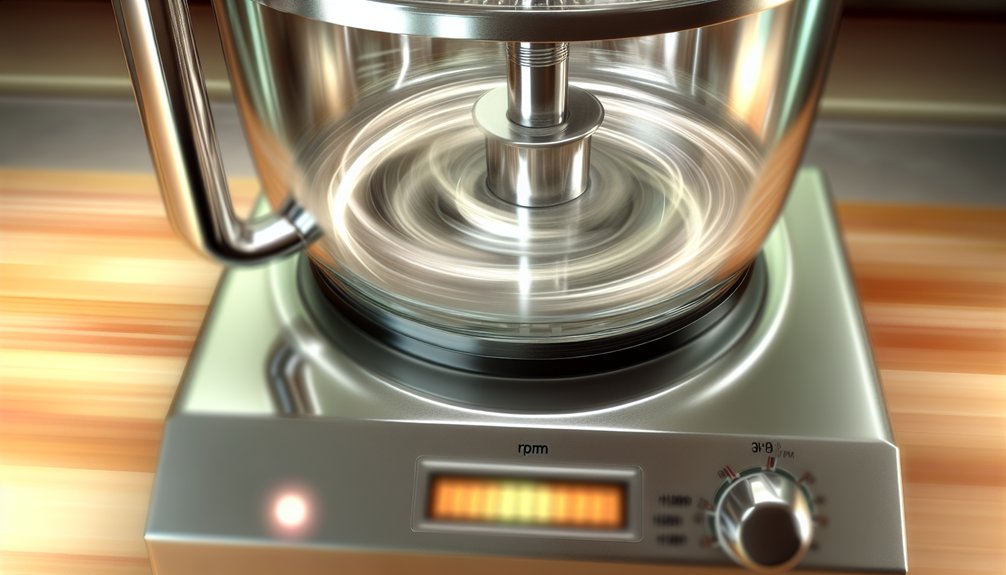
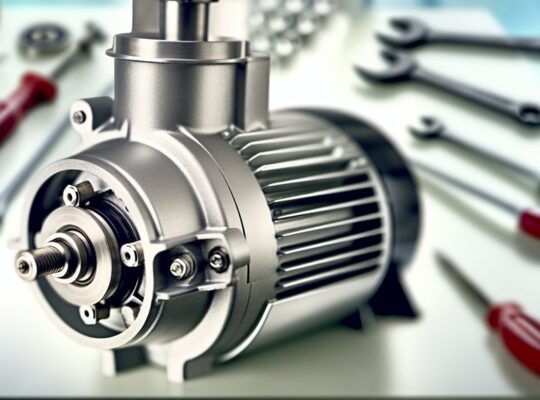
What does RPM actually tell you about a mixer grinder? It quantifies the rotational speed of the motor shaft in revolutions per minute, so you’ll know how fast the blades turn. RPM is measured with a tachometer or inferred from motor specifications and pulley ratios; manufacturers often list no-load RPM and rated RPM under typical load. You’ll want to check whether stated RPMs are measured at the blade hub or motor shaft, since gearing changes effective speed. For safety, verify measurements against user manuals and service labels, and ensure speed ratings match jar and blade ratings to prevent overload. Accurate RPM knowledge helps you choose compatible accessories and operate within safe limits to reduce wear and hazard. Also consider motor power and safety features like overload protection when matching RPM to real-world grinding tasks.
How RPM Affects Grinding, Blending, and Texture
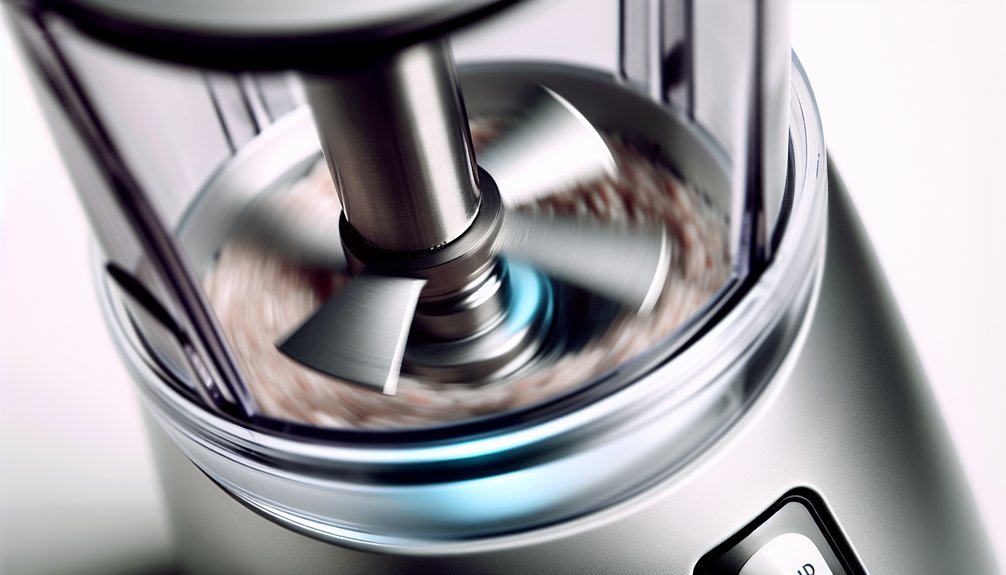
Now that you know how RPM is measured and where it’s applied on the motor or blade, you can see how speed directly shapes what a mixer grinder will do to ingredients. Higher RPMs cut and shear faster, producing finer particles and smoother purees, while lower RPMs preserve texture and reduce heat buildup; you should choose speed to match the desired outcome and safety limits.
- High RPM: rapid particle reduction, finer texture, increased frictional heat—monitor temperature and run short bursts.
- Medium RPM: controlled blending, emulsification, suitable for sauces and pastes with stable texture.
- Low RPM: coarse chopping, minimal aeration, safer for fibrous or heat-sensitive ingredients.
Adjust speed deliberately and avoid prolonged runs to prevent overheating or blade stress. Many 750-watt models from trusted brands include overload protection to help prevent motor damage during heavy or prolonged use.
The Relationship Between RPM, Motor Power, and Torque
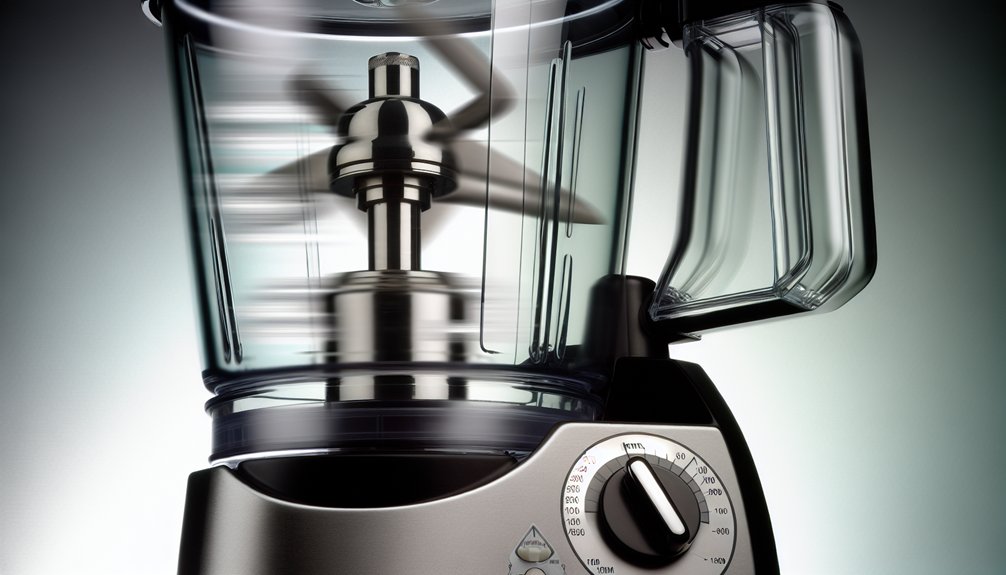
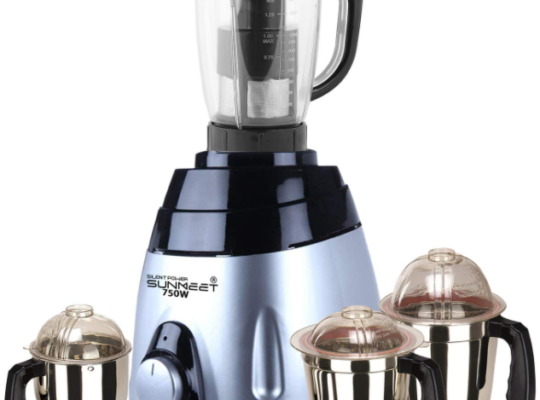
How do RPM, motor power, and torque work together to determine a grinder’s performance? You should view RPM as speed, motor power as available energy, and torque as twisting force. High RPMs let blades pass more frequently through food, but without sufficient torque the motor will stall under heavy loads. Motor power (watts) indicates how much work the motor can sustain; higher power usually delivers more consistent RPMs under load. Torque matters most when you’re processing dense or fibrous ingredients—it’s what keeps RPMs from dropping sharply. For safe, reliable use, choose a grinder where rated power and torque complement the RPM range, and avoid pushing the machine repeatedly beyond its capacity to prevent overheating, motor wear, or electrical hazards. Many silent mixer grinders, like the Silent Power Sunmeet models, balance wattage and design to maintain performance while reducing noise.
Recommended RPM Ranges for Common Kitchen Tasks
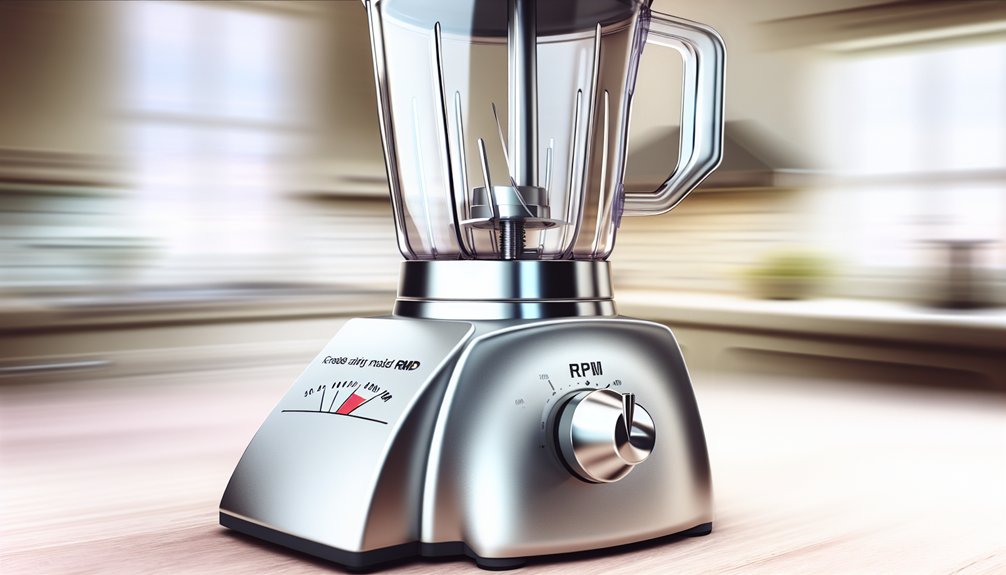
Want to match RPM to the task rather than guessing and hoping for the best? You should choose speeds that balance efficiency and safety: higher RPMs for fine grinding, moderate RPMs for wet blending, and lower RPMs for coarse chopping and heavy-duty tasks to avoid motor strain. Below are practical ranges you can use as a baseline; check your appliance manual and avoid prolonged runs that overheat the motor.
- 18,000–24,000 RPM: fine powders, dry grinding—use short bursts and monitor heat.
- 10,000–16,000 RPM: wet grinding, purees, chutneys—steady speed with periodic pauses.
- 4,000–9,000 RPM: coarse chopping, kneading, whole spices—lower stress on blades and motor.
Adjust within these bands for load and ingredient moisture. Models with higher wattage motors (like those around 750W motor) can sustain higher RPMs more reliably, but always follow the manufacturer’s run-time recommendations.
Tips for Choosing a Mixer Grinder Based on RPM
Those RPM bands give you a useful starting point, but when choosing a mixer grinder you should match the motor speed and control options to the kinds of tasks you’ll actually do. Decide which tasks are routine (wet grinding, dry grinding, chutneys, batter) and pick a model whose low and high RPMs cover those ranges. Prefer variable-speed control or discrete speed settings so you can start slow for safety and texture control, then ramp up as needed. Check torque ratings as well as RPM — high speed without torque stalls on heavy loads. Verify motor cooling and thermal cut-off features to prevent overheating. Inspect jar and blade construction for secure fitting at rated speeds. Finally, follow manufacturer load recommendations to avoid unsafe overloading. Also consider a motor of around 500 watts or higher for reliable performance on common household tasks, especially when grinding tougher ingredients with 500W motors.
Frequently Asked Questions
How Does RPM Affect Noise Level During Operation?
Higher RPM usually raises noise because faster rotations create more aerodynamic and mechanical noise; you’ll hear more vibration, motor hum, and blade turbulence. Maintain secure mounting, balanced loads, and proper lubrication to reduce noise and ensure safe operation.
Can RPM Settings Influence Energy Consumption?
Yes — higher RPMs generally use more power, so you’ll consume more energy during fast, heavy tasks; lower RPMs save energy but may prolong run time, so balance speed, load, and efficiency to maintain safe operation.
Do RPMS Vary With Different Jar Sizes on the Same Grinder?
Yes — you’ll see RPMs change with different jar sizes because load and inertia vary, so the motor’s effective speed and torque shift; you should match speeds to jar capacity to avoid overheating or instability.
Can RPM Cause Overheating or Shorten Motor Lifespan?
Yes — high RPMs can cause overheating and shorten motor life if you overload the grinder or run it continuously; you should match jar load to speed, use duty cycles, and allow cooling to protect the motor.
Is RPM Calibration Possible or Needed Over Time?
Yes — you can calibrate RPM on some grinders, and you should periodically verify it. Use proper tools, follow manufacturer procedures, and adjust only within safe limits to prevent overheating, wear, or voiding warranties.