You can get excellent dosa batter from a mixer grinder, but it takes the right machine and technique to match stone-ground results. Pay attention to motor power, jar design, pulse control and short grind cycles to avoid heat and starch damage. Proper soaking, separate grinding of rice and urad dal, and controlled water addition matter too — keep these factors in mind if you want consistent texture and fermentation, and then consider…
Key Takeaways
- A quality mixer grinder with variable speeds and pulse mode can produce smooth dosa batter if used with correct jar geometry and blades.
- Control heat by using short grind pulses and pauses to prevent starch gelatinization and preserve fermentation activity.
- Soak rice 4–8 hours and urad dal 3–4 hours, drain well, and grind dal slower than rice for optimal aeration and texture.
- Target rice:water ≈2.5–3:1 for fermentation, and final batter temp 25–32°C with pourable, shear-thinning viscosity for good spreading and gas retention.
- Regular maintenance (cleaning, blade inspection, motor cooling, overload protection) ensures consistent grinding performance and batter quality.
Why Batter Texture Matters for Dosas
Why does batter texture make such a measurable difference in dosa quality? You’ll find that particle size distribution, hydration level, and rheological properties determine gas retention, spreadability, and final porosity. A finer, uniformly milled batter increases surface area for water absorption and enzymatic activity during fermentation, yielding predictable CO2 production and controlled pH reduction. Conversely, coarse particles disrupt film formation, producing uneven crepes and increased tearing risk. Optimal viscosity (shear-thinning, measured via viscometry) enables rapid radial flow on a hot griddle while maintaining enough yield stress to trap fermentation gas bubbles; that balance governs crispness versus sponginess. Safety-wise, consistent texture reduces the need for overcooking and minimizes exposure to excessive heat, lowering burn risk. You should monitor solids concentration and grind uniformity, use calibrated instruments where possible, and adjust water incrementally to achieve target rheological metrics rather than relying on subjective feel. Modern grinder designs often include precision-balanced rotors and acoustic features that help produce more uniform, low-vibration grinding results.
Mixer Grinder Vs Traditional Stone Grinder
When comparing a modern mixer grinder to a traditional stone (sil-batta) grinder for dosa batter, focus on measurable outcomes: particle size distribution, temperature rise during grinding, shear profile, and fermentation kinetics. You’ll find mixer grinders produce a narrower particle size distribution faster, but at higher instantaneous shear and heat generation; measure exit temperature and cumulative energy to quantify thermal load. Stone grinders yield broader, often bimodal distributions with lower peak temperatures due to slower, abrasive action and greater surface contact, which can favor controlled enzyme activity. For fermentation, particle surface area and temperature history influence microbial growth rate and acidification curves; track pH and CO2 evolution to compare. From a safety perspective, monitor metal wear, hygiene of contact surfaces, and thermal denaturation thresholds to prevent off-flavors or microbial risk. Use calibrated sieving or laser diffraction, thermocouples, and pH/CO2 sensors for objective comparison rather than relying on subjective mouthfeel. Also consider appliance-specific factors like motor cooling, jar ventilation, and grinding speed which affect results—especially when using fiber-reinforced bodies and higher rpm units.
Choosing the Right Mixer Grinder for Batter
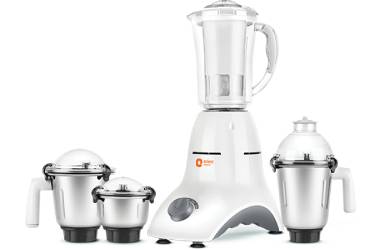
How do you pick a mixer grinder that consistently yields batter with targeted particle size and minimal thermal stress? You should prioritize motor wattage (for sustained torque), rpm control (for gentle shear), and jar material/geometry (for controlled flow and minimal heat buildup). Choose stainless-steel or food-grade composite jars with baffles to reduce cavitation. Prefer motors with overload protection and temperature sensors to avoid overheating and microbial risk. Look for variable-speed settings (ideally 300–2000 rpm range) and pulse modes for iterative grinding; documented torque curves are a plus. Ensure seals and lids are food-safe and easy to sanitize.
A model with a sturdy build and reliable service network can reduce downtime and performance drift, so consider brands known for widespread service.
| Feature | Why it matters |
|---|---|
| Motor wattage | Sustains torque; prevents stalling |
| Variable rpm | Controls shear; limits heat |
| Jar design | Promotes uniform grind; reduces friction |
| Safety sensors | Prevents thermal damage; auto-shutoff |
| Food-grade seals | Prevents contamination; enables cleaning |
Inspect build quality and manufacturer test data to verify thermal rise and particle-size consistency before purchase.
Preparing Rice and Urad Dal for Optimal Grinding
You should soak rice until the grains hydrate uniformly (typically 4–6 hours for parboiled or 6–8 hours for raw rice) to achieve a slurry that yields fine particle size without releasing excess starch. For urad dal, maintain a shorter soak (about 3–4 hours) to ensure puffing of the cotyledons, which promotes entrainment of air and a light, aerated batter during grinding. Controlling soak times and final water ratios for each ingredient is critical for predictable grind texture and fermentation kinetics. Using a mixer grinder with Stone Pounding technology can help preserve traditional spice textures and improve overall batter consistency.
Rice: Soaking and Texture
Why does soaking rice and urad dal to specific times and moisture levels matter for grinder performance and dosa batter quality? You’ll get predictable hydration that governs particle size, grind shear, and enzymatic activity. For rice, target 4–6 hours in clean water at ambient 20–25°C to achieve ~30–35% moisture uptake; this softens endosperm without overhydration that causes pasty clumping. Drain thoroughly before grinding so slurry viscosity stays within the grinder’s optimal torque range; excessive free water reduces abrasive grinding, too little increases motor load and heat. Use measured batches, change water if cloudy, and avoid prolonged soaking to limit microbial growth. After soaking, rice should yield distinct, slightly translucent grains under pressure—indicating readiness for controlled, efficient milling. Bullets and mixer grinders differ in capacity and torque, so choose the appropriate appliance based on batch size and required grind consistency.
Urad Dal: Soak Time
Having set rice to soak for controlled hydration, shift focus to urad dal, whose soak profile and moisture uptake differ materially and set the stage for batter aeration and enzymatic activity. You should soak whole or split dehusked urad dal 3–5 hours at 20–25°C; shorter times risk underhydration, longer times can over-ferment and increase lipase activity, altering flavor and safety. Aim for dal to swell ~1.5–2× initial volume and feel uniformly soft when pinched. Use clean, potable water with a 3:1 water:dal ratio to allow expansion; change water if cloudy. Maintain sanitary containers and refrigeration if ambient exceeds 30°C to inhibit undesirable microbial growth. Drain thoroughly before grinding to control final batter viscosity and oxygen incorporation. Kenstar mixer grinders, with their durable motors and multiple jar options, can help achieve consistent grinding results when preparing batter versatile jar sizes for different textures.
Grind Settings and Techniques to Achieve Silky Batter
1 key factor in achieving a silky dosa batter is matching grind settings and blade action to the ingredient properties: you need controlled shear and intermittent pulse to disrupt cell walls without overheating. Use short pulses with pauses to prevent motor heating and starch gelatinization; test grind fineness by passing a small sample through a fine mesh. Select the lowest effective speed for urad dal and a slightly higher for rice to balance particle size and surface area. Maintain equipment safety: secure lid, dry hands, and cool motor before prolonged use.
- You’ll feel satisfaction when the batter is uniformly smooth and cohesive.
- You’ll trust repeatable settings that minimize motor strain and thermal risk.
- You’ll avoid rancid flavors by preventing heat buildup.
- You’ll appreciate consistent particle size for predictable crepe formation.
- You’ll value durable blades and proper maintenance for safe operation.
Measure outcomes objectively (particle size, temperature) and adjust protocol incrementally for reproducible results. Sujata’s overload protection can help prevent motor damage when grinding large batches.
Water Ratios and Temperature Tips for Fermentation
For reliable fermentation you should target a water-to-rice ratio of about 2.5–3:1 by weight (adjusting within 0.1 increments for grain type) to ensure optimal porosity and enzymatic activity. Ferment between 25–32°C, where lactobacilli and wild yeasts show maximal growth rates, and monitor pH decline as an objective endpoint. If ambient temperature is below range, provide consistent warmth (proofing box, insulated container, or controlled heating pad) to prevent stalled fermentation. Use clean equipment and maintain good hygiene to avoid contamination and ensure consistent results with the batter, particularly when using a stainless-steel jar.
Water-To-Rice Ratio
How much water you add to rice and dal before grinding directly determines batter consistency and fermentation kinetics: aim for a rice-to-water ratio that yields a thick pourable batter (approximately 1:1.1–1.3 by weight for soaked rice) because over‑dilution slows acidification and under‑hydration hampers enzymatic starch breakdown; measure by weight when possible, adjust incrementally during grinding, and note that ambient temperature will change the optimal hydration needed for predictable fermentation. You should target repeatable hydration: record weights, use calibrated scales, and add water in small increments to avoid overshooting. Proper hydration supports safe microbial succession and predictable gas production; underhydrated batter ferments unevenly, overhydration risks overacidification and texture loss. Also consider using a mixer grinder with good heat management and a pulse function to maintain nutrient-preserving batter texture and avoid overheating during grinding.
Ambient Temperature Range
Having the right water-to-rice ratio is only part of the equation—ambient temperature governs fermentation rate and consequently the effective hydration you’ll want to aim for. You should target a stable ambient range of 25–30°C for optimal lactic-acetic acid bacterial activity; yeast and heterofermentative LAB operate efficiently here, producing predictable acidification and gas. Below 20°C fermentation slows markedly; you’ll risk under-fermentation and stickier batter unless you increase resting time. Above 35°C, proteolysis and off-flavor-producing microbes accelerate, and you face safety risks from uncontrolled microbiota. Monitor room temperature with a calibrated thermometer and adjust initial batter hydration by ±5% water when average ambient deviates more than 5°C from 27°C. Record times and pH to validate changes safely and reproducibly. Also consider that appliance choice affects texture: high-RPM grinders produce finer batter particles that can shorten fermentation time and improve softness — see high RPM.
Warmth During Fermentation
Want your dosa batter to ferment reliably? You’ll control warmth and hydration precisely: aim for 30–35°C, maintain 1:1.5–1:2 rice:urad water ratio by weight after grinding, and keep the batter’s viscosity such that it flows slowly but coats a spoon. Use safe, evidence-based methods to sustain temperature and prevent contamination.
- Wrap the container to retain heat and prevent drafts, reducing microbial risk.
- Use a thermostatic proofing box or insulated cooler with a heat pack for stability.
- Monitor with a calibrated probe thermometer; fluctuations >3°C slow fermentation.
- Avoid overheating (>40°C) which denatures enzymes and kills beneficial bacteria.
- If ambient is cool, place the batter near a warm appliance, ensuring no direct heat contact.
Troubleshooting Common Batter Problems
Why does your dosa batter sometimes turn out too watery, overly sour, or fail to ferment evenly? You need to control water ratio, grind fineness, and temperature. Too much water or over-grinding damages starch and weakens gas retention; use targeted absorption testing and pulse grinding. Over-souring results from prolonged fermentation or high ambient temperature; shorten time or refrigerate at 4–6°C to arrest acidification. Uneven fermentation often stems from inconsistent temperature or contaminated equipment; sanitize bowls and maintain 30–35°C.
| Problem | Likely cause | Corrective action |
|---|---|---|
| Watery batter | Excess water / over-grinding | Adjust water by 10–15% less; coarser grind |
| Over-sour | Excess fermentation time/heat | Refrigerate; reduce ferment time |
| Poor fermentation | Low temperature / contamination | Use controlled warm environment; sanitize |
Follow calibrated measurements, maintain hygiene, and verify with smell, texture, and small test cook to ensure safety and repeatability.
Enhancing Batter Flavor and Variations
To optimize flavor and texture you’ll need to control soaking and fermentation timing precisely, since enzyme activity and lactic acid production scale with time and temperature. Adjust rice-to-urad ratios to target desired porosity and batter rheology—higher urad increases aeration and crispness, higher rice yields a denser crepe. Consider quantified flavor add-ins and techniques (fenugreek percentages, millets, parboiled rice, tempering) as variables that alter acidity, Maillard potential, and mouthfeel.
Soaking and Fermentation Timing
Although the exact timings depend on grain type, ambient temperature and desired sourness, soaking and fermentation together control batter hydration, microbial activity and enzyme-mediated starch breakdown, so you should treat them as a coordinated process: typically soak urad dal 4–6 hours and rice 4–8 hours (or up to 12 for older rice), then ferment the ground batter 6–12 hours at 30–35°C for a mildly tangy dosa, extending to 12–18 hours for pronounced acidity; shorter or colder fermentations produce less sourness and lower leavening, while over-fermentation can lead to excessive proteolysis and off-flavors.
- Anticipation: you’ll notice gradual rise and bubbles.
- Caution: discard if off-odors or visible contamination appear.
- Satisfaction: proper timing yields light texture.
- Frustration: cold environments slow fermentation; use warmth safely.
- Confidence: controlled timing gives reproducible flavor and safety.
Rice-To-Urad Ratios
How much rice versus urad you use directly determines batter rheology, fermentation behavior, and sensory profile, so select ratios based on desired texture and regional style. For a classic crisp dosa, use 3:1 to 4:1 rice:urad by weight; higher rice yields lower viscosity and greater spreadability. For softer, thicker dosas or idli-like crumb, use 2:1 to 2.5:1. Whole rice, parboiled rice, or idli rice proportions alter starch availability and gelatinization; account for this by adjusting water and grind fineness. Maintain urad at 20–33% for sufficient protein and fermentable substrate; lower percentages risk weak fermentation, higher can produce sourness and stickiness. Always measure by weight, control water content, and ferment under hygienic, temperature-controlled conditions to ensure safety and consistent results.
Flavor Add-Ins and Techniques
Having settled rice-to-urad ratios that set your batter’s rheology and fermentation kinetics, you can now modify flavor through targeted add-ins and processing choices that alter taste precursors and volatile formation. You’ll want to consider enzymatic activity, Maillard potential, and microbial metabolites when adding ingredients. Small quantities of fenugreek, cooked rice, or poha influence sweetness and aroma via residual sugars and lipases; roasted dals add nutty volatiles. Pulse-safe handling and measured salt maintain fermentation control and safety.
- Nostalgia: a pinch of fenugreek evokes ancestral kitchens.
- Comfort: roasted dal yields warm, rounded notes.
- Surprise: grated coconut adds fresh ester-like aromas.
- Precision: controlled salt keeps yeast/lactobacilli balanced.
- Confidence: consistent grinding limits contamination risk.
Cleaning and Maintenance to Preserve Grinder Performance
Why should you treat cleaning and maintenance as part of your grinder’s operating procedure? Regular cleaning prevents starch and oil buildup that degrade blade sharpness and motor ventilation, increasing wear and thermal stress. After each use, disassemble jars and lids; remove visible residue with a soft brush and warm water (50–60°C) plus a neutral detergent. Rinse immediately to prevent enzymatic or microbial growth. Sanitize periodically with a 200 ppm chlorine solution or food-safe sanitizer, then air-dry completely to avoid corrosion.
Inspect blades, coupling, and mounting pads weekly for nicks, looseness, or polymer fatigue; measure blade clearance against manufacturer tolerances and replace worn blades to maintain shear efficiency. Check motor vents and cooling fan for lint; vacuum gently without opening sealed housings. Verify electrical cord integrity and grounding; discontinue use if insulation is damaged. Keep maintenance records: date, action, part replaced, and operating hours. Proper, documented maintenance preserves performance, reduces contamination risk, and extends safe service life.
When to Consider a Wet Grinder Instead
When should you opt for a wet grinder instead of a mixer grinder? You should choose a wet grinder when consistent particle size, controlled shear, and low-temperature milling are critical for batter quality and food safety. Wet grinders reduce starch damage and heat generation, preserving fermentable substrates and minimizing microbial risk.
- You want predictable, uniform granularity that yields reliable fermentation and texture.
- You’re concerned about overheating that denatures enzymes and alters flavour profiles.
- You need larger batch capacity with continuous, low-stress grinding for household safety.
- You require durable stone/conical surfaces that avoid metal abrasion and contamination.
- You value reduced noise and vibration to limit operator fatigue and handling errors.
Evidence shows wet grinders maintain batter temperature within optimal fermentation range more effectively than high-speed blade mixers. For safe, repeatable dosa batter production, a wet grinder is the technically superior, risk-averse choice.
Frequently Asked Questions
Can Mixer Grinder Batter Be Frozen for Later Use?
Yes — you can freeze mixer-grinder dosa batter safely. Portion it, cool quickly, use airtight containers or vacuum bags, label with date, defrost in fridge overnight, stir well, and use within 1–2 months for best quality.
Can I Make Dosa Batter With Brown Rice?
Yes — you can make dosa batter with brown rice. Use soaked brown rice and urad dal, grind to a smooth, slightly coarse consistency, ferment longer due to lower starch, and maintain hygienic, warm conditions for safe, reliable fermentation.
Does Soaking Time Differ for High-Altitude Locations?
Yes — you’ll need longer soaking at high altitude due to cooler temperatures slowing hydration and enzymatic activity. Increase soak time by about 25–50%, monitor grain texture, and ensure sanitary conditions to prevent microbial growth.
Are Probiotic Starters Useful for Faster Fermentation?
Yes — probiotic starters can speed fermentation by introducing concentrated lactic acid bacteria and yeast, lowering pH faster and reducing risk of pathogen growth; use validated strains, follow dosages, monitor temperature and acidity for safe, controlled results.
Can Dishwasher-Safe Parts Be Washed Hot for Sterilization?
Yes — you can wash dishwasher-safe parts in hot cycles for sanitation; use ≥65°C (149°F) cycles when available, confirm manufacturer temperature tolerance, avoid delicate seals, and assure complete drying to prevent microbial regrowth and material degradation.