You’ll pick low‑fiber, high‑water fruits and chill them first to reduce foam. Cut produce uniformly, peel citrus, and remove seeds so the blades work efficiently. Use the liquidizing jar with the multi‑pronged stainless blade, pulse at low RPM, then run medium for 20–30 seconds. Strain and adjust pulp, then refrigerate promptly — but there are key settings and safety steps you shouldn’t skip.
Key Takeaways
- Select low-fiber, high-water fruits (citrus, watermelon, ripe peaches) and include small amounts of firm apples or pears for body.
- Wash, peel where needed, remove cores/pits, and cut fruit into uniform pieces that fit the jar easily.
- Use the liquidizing/wet-grinding jar with a stainless-steel blade, start with short low-RPM pulses, then run medium RPM for 20–30 seconds.
- Strain the blended mixture through a fine mesh strainer, cheesecloth, or nut-milk bag, pressing gently to control pulp and texture.
- Dilute with 10–20% chilled water or coconut water, add a teaspoon of lemon juice per cup, and refrigerate immediately.
Choosing the Best Fruits and Ingredients for Mixer-Grinder Juices
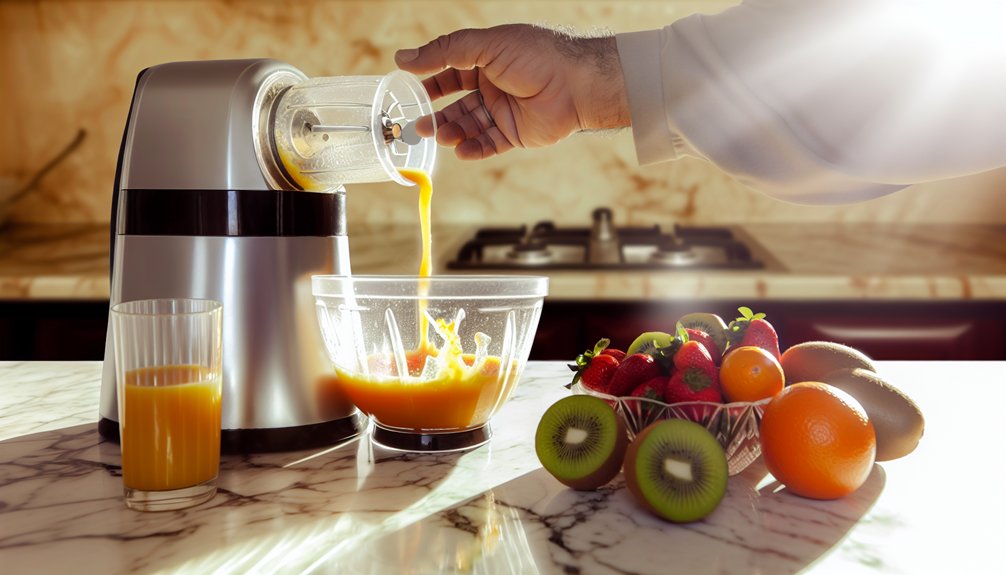
Which fruits and additions will give you the cleanest extraction and best texture? You’ll prioritize low-fiber, high-water fruits—citrus, watermelon, ripe peaches—for efficient cellular rupture and minimal pulp. Avoid overly fibrous options like celery or unripe mangoes unless you plan additional filtration. Include firm, crisp apples and pears in small ratios to add body without clogging. Additions: chilled water or coconut water at 10–20% volume reduces viscosity; a teaspoon of lemon juice per cup stabilizes enzymatic browning. Use small amounts of sugar or honey only for palatability, not extraction. Chill ingredients and blades to limit bacterial growth. Inspect for bruises, mold, and stems; discard compromised produce. Follow proportion limits and sanitation protocols for safe, consistent juice. For best results with a home 750-watt mixer grinder, match the jar configuration and speed settings to the ingredients to avoid overloading the motor and ensure smooth extraction jar configurations.
Preparing and Cutting Fruits for Optimal Texture and Flavor
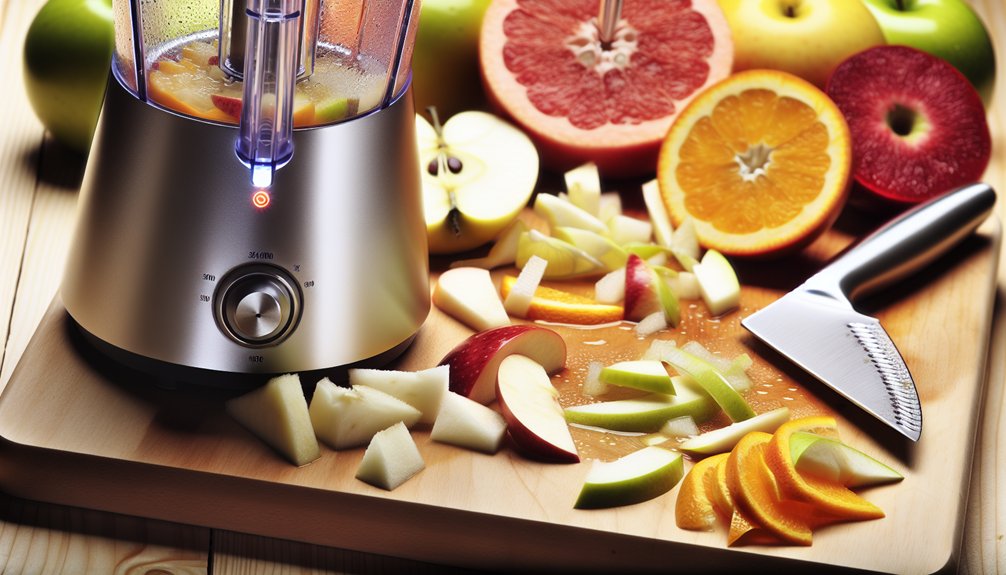
Now that you’ve selected low-fiber, high-water fruits and the right additives, the way you prepare and cut them will determine how cleanly your mixer grinder extracts juice and how smooth the texture will be. You should wash, peel when necessary, and remove inedible parts; inspects for bruises and discard compromised areas. Cut fruit into uniform pieces sized to the grinder jar and blade clearance to avoid jamming. Hard cores and pits must be removed to protect blades; soft fruits can be halved or quartered to expose flesh. Chill firm fruits slightly to reduce foaming.
- Rinse under running water, use a brush for skins
- Peel citrus and remove membranes
- Core apples and pears, discard seeds
- Halve berries if large
- Remove pits from stone fruits
For optimal results with a household appliance, remember that a 550 watt mixer grinder offers suitable power and efficiency for extracting juice from most fruits.
Proper Mixer-Grinder Settings and Attachments to Use

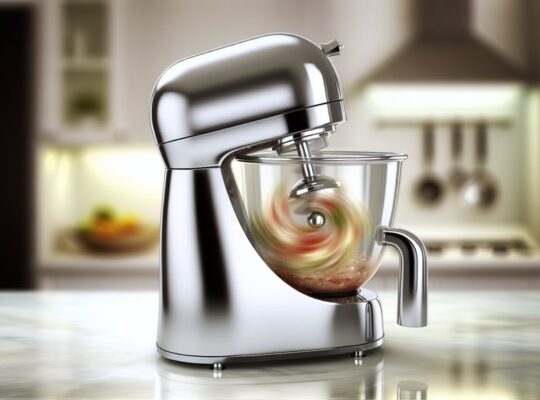
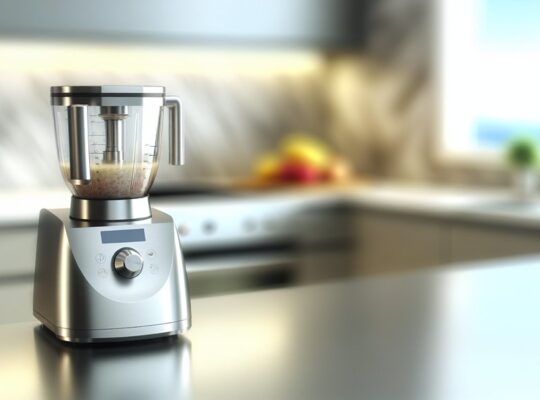
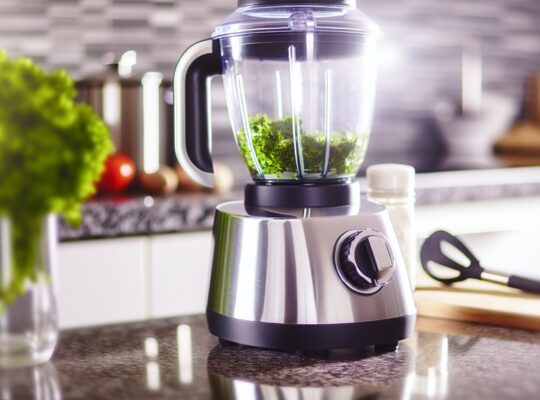
Typically you’ll start with the jar and blade assembly designed for wet grinding or liquidizing, because those attachments provide the low-clearance, high-turbulence flow needed for efficient juice extraction. Select a stainless-steel, multi-pronged blade; inspect for burrs and secure the lid with its safety interlock engaged. Use short pulse bursts at low RPM to break cell walls, then increase to medium RPM for 20–30 seconds to homogenize without overheating. Avoid high RPM continuous runs—heat degrades enzymes and flavor. If your unit has a speed dial, choose settings 2–4 (manufacturer-dependent) and monitor temperature; stop if the jar becomes warm. For fibrous or hard fruit, use the tamper cautiously to prevent blade contact. Always unplug before changing attachments. Choose food-grade S304 Stainless Steel jars when possible for safety and durability.
Straining, Diluting, and Adjusting Pulp for Smooth Juice
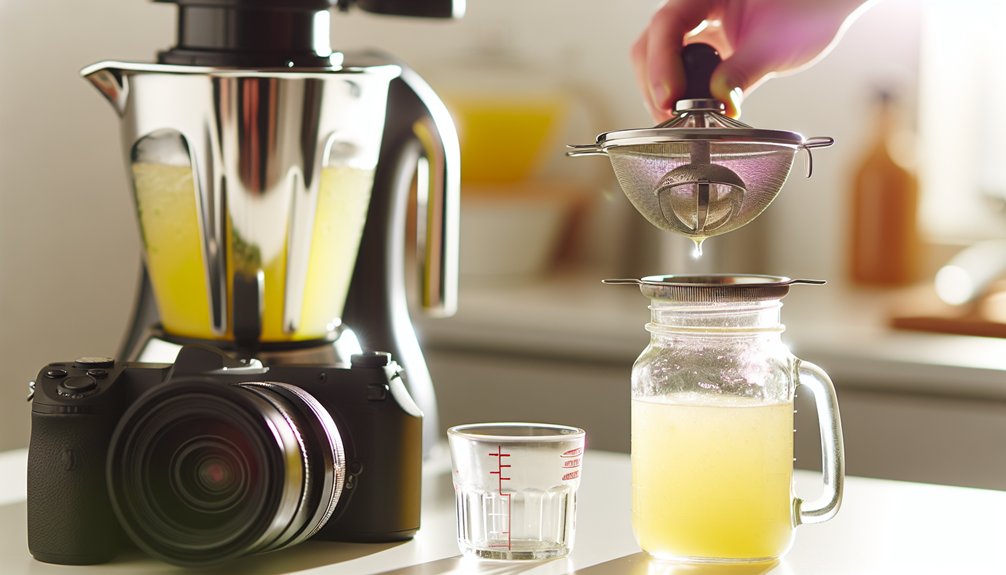
Once you’ve finished pulping at the recommended speeds and stopped the motor, you’ll need to separate liquid from solids to achieve a smooth mouthfeel. Use a fine mesh strainer, cheesecloth, or nut milk bag; work methodically and keep hands clear of blades. Press gently with a sanitized spoon or spatula—don’t force pulp through rapidly. If juice is too thick, dilute incrementally with chilled water or filtered ice; measure dilution to maintain flavor and safe storage pH. For fiber control, blend brief pulses and re-strain. Taste after each adjustment and refrigerate promptly.
- Position strainer over a clean container at a slight angle
- Pour pulp in small batches to avoid overflow
- Use calibrated measuring spoons for dilution
- Press consistently, record extraction volume
- Discard or compost solids safely and promptly
Also consider the motor wattage when pulping tougher fruits to ensure efficient extraction and prevent overload.
Cleaning, Safety, and Maintenance Tips for Your Mixer-Grinder
How will you keep your mixer-grinder safe, sanitary, and operating efficiently? Start by unplugging before disassembly. Rinse blades and jars immediately to prevent residue hardening; use a soft brush and neutral detergent. Inspect seals and gaskets for cracks; replace any compromised parts to prevent leaks and contamination. Dry components thoroughly to inhibit microbial growth. Lubricate motor shaft per manufacturer intervals using specified grease only. Check power cord integrity and test the safety interlock; don’t operate if either is damaged. Sharpen or replace dull blades to reduce motor strain. Store jars inverted in a clean, dry area. Schedule periodic professional servicing for bearings and electrical checks. Keep a log of cleaning and maintenance dates for traceability and safety compliance. Many users appreciate Kenstar’s balance of affordability and quality when choosing a reliable mixer-grinder.
Frequently Asked Questions
Can I Use a Mixer Grinder to Juice Leafy Greens Like Spinach or Kale?
You can, but it’s not ideal: mixer grinders won’t extract juice efficiently from spinach or kale. You’ll get pulpy slurry; strain thoroughly, use short pulses, refrigerate promptly, and clean blades and seals to prevent bacterial growth.
Will Nuts or Seeds Damage the Grinder When Juiced?
No, nuts or seeds can damage the grinder if you do it. You shouldn’t grind hard, dry nuts or whole seeds; they’ll stress bearings and blades. Chop, soak, or use a dedicated blender/food processor to avoid harm.
How Long Can Mixer-Grinder Juice Be Stored Safely in the Fridge?
You can safely store mixer-grinder juice in the fridge for up to 24–48 hours in an airtight container at ≤4°C; for best safety and nutrient retention, consume within 24 hours and discard if off-odor, discoloration, or fermentation appear.
Can I Make Carbonated or Alcoholic Beverages With Mixer-Grinder Juice?
You can’t carbonate directly with a mixer‑grinder; you’ll need proper carbonation equipment. You can ferment juice into alcohol using sanitized containers, controlled yeast strains, and time, but follow strict hygiene and legal/safety regulations throughout.
Do Motor Warranties Cover Damage From Juicing Acidic Fruits Like Oranges?
Usually no — warranties often exclude damage from misuse or corrosive substances, so you’ll need to check terms. If acidic juice isn’t listed as safe, avoid it or contact the manufacturer for approved procedures and service options.