If you’re teaching a child to use a mixer grinder, you’ll want simple, low‑power equipment, clear rules, and close supervision. Show them each part, how lids and locks work, and why blades are dangerous. Set up a stable, uncluttered workspace and enforce a “stop and unplug” rule for any problem. Keep going to learn step‑by‑step training, safe cleaning, and what to do in an emergency.
Key Takeaways
- Choose a low-wattage mixer with simple controls, child-friendly attachments, and a locking lid before allowing a child to use it.
- Set up on a stable, uncluttered surface with non-slip feet, good lighting, and cords secured away from edges.
- Teach and supervise step-by-step: assemble jar, lock lid, add small amounts, plug in, start low, and stop before opening.
- Use shatter-resistant jars, covered or rounded blades, and models with double-locking and overload protection for extra safety.
- Clean and store unplugged after cooling, inspect cords for damage, and practice emergency unplugging drills with children.
Choosing the Right Mixer Grinder and Child-Appropriate Accessories

Which grinder is best for a child to use? You’ll want a model with simple controls, low wattage, and a locking lid so it won’t run unless fully secured. Choose rounded, child-friendly attachments without sharp exposed edges, and prefer plastic or covered blades designed for stirring or soft-food blending rather than heavy chopping. Look for safety certifications and easy-to-read indicators for on/off and speed. Pick a lightweight jar that’s shatter-resistant and has a secure handle sized for small hands to steady, but don’t let kids operate alone. Include non-slip feet to prevent tipping. Teach them to ask an adult before adding ingredients or changing accessories, and store sharp parts out of reach when not supervised. Consider models with a double locking safety system for extra protection while children are nearby.
Setting Up a Safe Workspace and Power-Use Rules

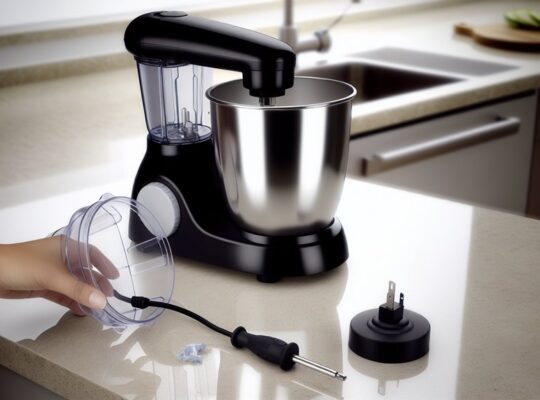
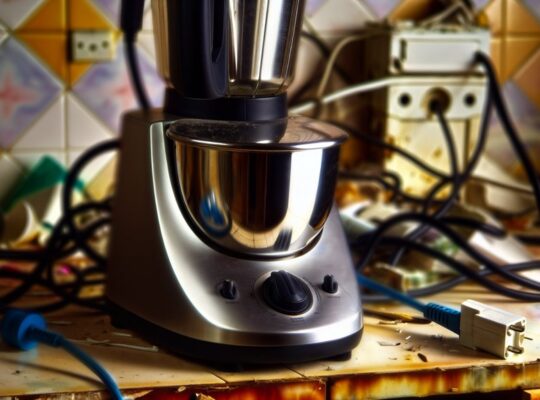
Want to make a kid-safe workstation for using a mixer grinder? Set a stable, uncluttered surface at a comfortable height so the unit won’t tip. Keep cords away from edges and out of reach; use cord organizers or clips and plug into a GFCI-protected outlet. Mark a clear child-safe boundary with tape so kids know where to stand. Ensure good lighting and dry surroundings to prevent slips or electric hazards. Always switch the grinder off and unplug before cleaning or changing jars; teach kids to wait until blades stop fully. Store attachments and blades locked or high when not in use. Post simple, visible rules (no hands near openings, ask before touching) and supervise until they consistently follow them. Consider choosing models with overload protection to prevent motor damage and enhance safety.
Step-by-Step Training for Hands-On Operation

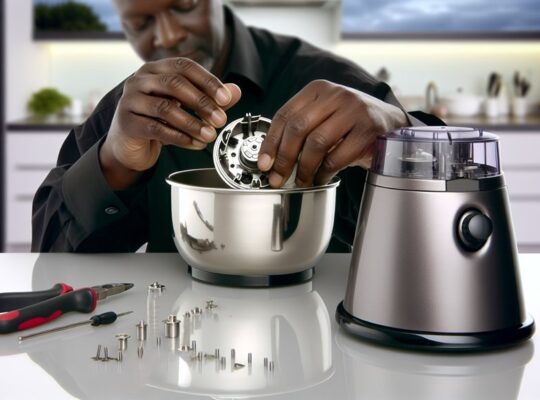
Now that the workspace and power rules are set, it’s time to teach hands-on operation step by step so kids learn to use the mixer grinder safely. Begin by showing each part—jar, lid, blade, base—and explain their function. Demonstrate assembling and securing the jar, then let the child try under close supervision. Teach how to add ingredients safely: use small amounts, keep hands away from the lid gap, and never touch blades. Show the correct sequence: plug in, select speed, start on low, and stop before opening. Emphasize using a stable surface and two hands when appropriate. Practice emergency stopping: unplugging immediately if unusual noise, smell, or vibration occurs. Reinforce safe habits with short, supervised practice sessions until confident. For better results with tougher ingredients, consider using a 750-watt motor mixer grinder designed for higher grinding efficiency.
Cleaning, Maintenance, and Storage Practices for Safety
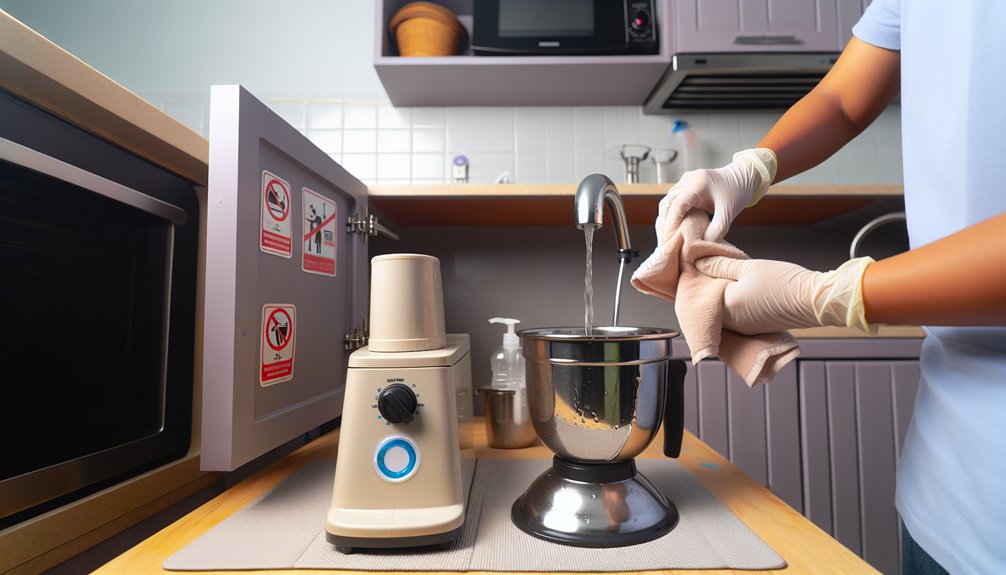
Before you clean or store the mixer grinder, always unplug it and let all parts cool, then disassemble the jar, blade, lid, and gasket so you can inspect and wash each piece safely. Wipe the motor base with a damp cloth—never immerse it in water—and check the cord for frays before plugging in again. Clean blades carefully using a brush and gloves to avoid cuts, and rinse jars thoroughly to remove food residues that attract pests. Dry every component completely to prevent rust and mildew, then reassemble only when dry. Store the appliance and accessories in a clean, dry cabinet out of children’s reach. Schedule routine checks and replace worn gaskets or blades promptly to keep operation safe and reliable. Consider models with overload protection for added safety during heavy use.
Emergency Actions and Teaching Risk Awareness
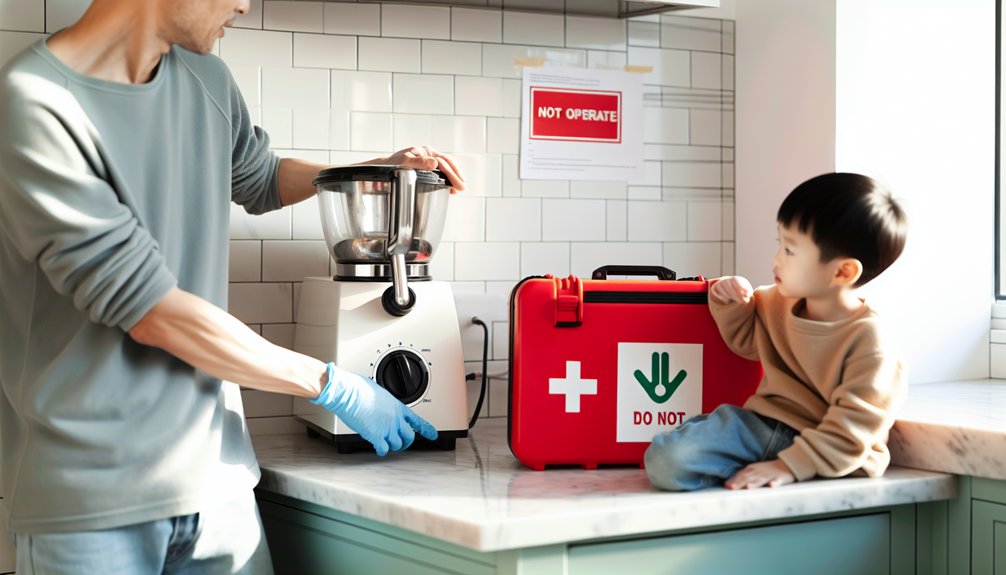
What should you do if something goes wrong—quick, calm actions can prevent injuries. First, cut power immediately: unplug the grinder or switch off the socket, and keep kids back. If someone’s hurt, stop bleeding with clean cloth pressure and seek medical help for deep cuts or severe pain. Don’t try to remove embedded objects; stabilize and get professional care. Teach children simple steps: never touch blades, call an adult if they see smoke, and step away from loud or sparking appliances. Practice drills so responses feel natural. Explain risks honestly but without alarm—show where cords, lids, and blades are hazardous. Reinforce that safety rules protect everyone and that reporting problems promptly prevents accidents. Also consider choosing appliances with motor overload protection to reduce the risk of electrical faults.
Frequently Asked Questions
Can a Child Use a Mixer Grinder Unsupervised for Short Tasks?
No — you shouldn’t let a child use a mixer grinder unsupervised, even for short tasks. Stay close, supervise operation, teach safe techniques, secure lids and cords, and insure they’re mature enough before reducing oversight.
What Age Is Appropriate for Teaching Electrical Safety Concepts?
You can start teaching basic electrical safety concepts around 5–7 years, building to practical rules and supervised tasks by 8–10, and more advanced understanding and responsibility from 12+, always reinforcing supervision, boundaries, and safe habits.
Are There Kid-Friendly Recipes for Mixer Grinder Use?
Yes — you can try simple, safe recipes like smoothies, fruit purees, and mild pancake batters while supervising closely; you’ll teach measuring, loading low-speed blades, and unplugging between steps to keep things controlled and accident-free.
Can Mixer Grinders Cause Long-Term Hearing Damage to Children?
Yes, prolonged exposure to loud mixer grinder noise can harm your child’s hearing; you should limit duration, use quieter models, keep kids at a safe distance, provide ear protection, and supervise closely to prevent cumulative damage.
Do Blade Guards Reduce Injury Risk While Grinding Dry Spices?
Yes — blade guards reduce injury risk while grinding dry spices by preventing direct contact with sharp blades, containing fragments, and limiting accidental insertion. You should always use guards, supervise kids closely, and follow manufacturer safety instructions.