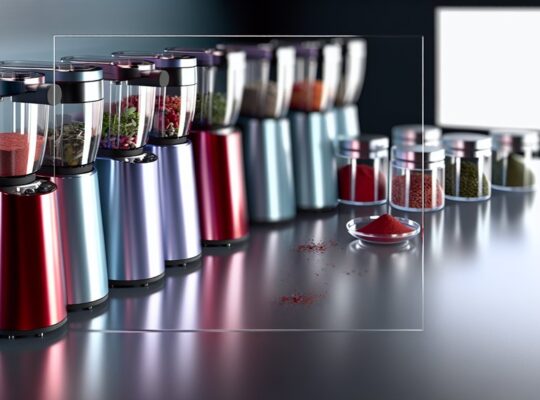
If you cook for a family daily, you’ll want a mixer grinder that’s robust, reliable, and built for varied Indian tasks like chutneys, wet grinding, and dry spice powders. Look for 750–1000 W copper motors, stainless steel jars, secure lids, and thermal overload protection to avoid frequent breakdowns. I’ll compare the key specs, jar types, and real-world durability so you can pick one that lasts—and handles everything from idli batter to masala.
Key Takeaways
- Choose 750–1000 W (copper or BLDC) for reliable batter, chutneys, and spice grinding without motor strain.
- Prefer stainless-steel (SS304) jars: 0.4–0.5 L chutney, 1–1.2 L wet, 1.5–2 L batter for task-matched batches.
- Look for thermal overload protection, secure lid gaskets, robust metal couplings, and non-slip feet for safety and durability.
- Select models with detachable blades, vibration-dampening base, clear speed settings, and accessible service centers for easy maintenance.
- Favor brands/models offering at least 2-year motor warranty, genuine spares, and user reviews confirming sustained heavy-family use.
Why Choosing the Right Mixer Grinder Matters for Indian Kitchens
Why does the right mixer grinder matter in an Indian kitchen? You’ll need equipment that handles wet and dry grinding, chutneys, batter, and spice pastes reliably without overheating or leaking. Choosing appropriately reduces risk: motor burnout, jar detachment, electrical faults, and cross-contamination. Compare wattage, build quality, and cooling design—higher wattage with efficient ventilation usually sustains longer grinding cycles needed for idli/dosa batter. You’ll want secure locking mechanisms and gasketed lids to prevent splatter during high-speed operations. Noise, vibration, and blade metallurgy affect both performance and safety; stainless or hardened steel blades resist corrosion and stay sharp, lowering grinding time and heat generation. Consider torque and speed control for varied recipes; low-speed torque is crucial for coarse grinding, high RPM for fine pastes. Properly matched capacity and ergonomics minimize operator strain and accidental spills. Selecting a mixer grinder based on these practical, technical comparisons helps ensure consistent results and a safer daily cooking routine. For families who need sustained performance, a 1000 Watt motor often provides the balance of power and durability required for frequent, heavy-duty use.
Key Features to Look for in a Family Mixer Grinder
How do you pick features that actually matter for a family mixer grinder? You’ll want practical, safety-focused criteria that let you compare models objectively without getting sidetracked by marketing. Focus on build quality, sealing, and control interfaces that reduce risk during heavy daily use.
- Durable stainless-steel jars with secure lids to prevent leaks and contamination.
- Robust locking mechanism and non-slip feet for stable operation under load.
- Heat management features (ventilation, thermal cut-off) to prevent motor overheating.
- Ease of cleaning: detachable blades and smooth interiors to avoid bacterial traps.
- Clear speed/control settings and overload indicators for predictable, safe performance.
Compare materials (ABS vs. metal housing), jar capacity suited to family portions, and warranty terms covering electrical faults. Prioritize units with certified safety standards and straightforward maintenance. That way you’ll choose a grinder that’s efficient, reliable, and safe for everyday Indian cooking. A model with overload protection and thermal cut-off is especially important for frequent use to extend motor life and prevent accidents.
Optimal Wattage and Motor Types Explained
You’ll want a mixer grinder with a wattage that matches your cooking habits — 500–750 W handles daily grinding and chutneys, while 800–1000 W is better for heavy-duty tasks like wet grinding idli/dosa batter. Compare induction motors (quieter, longer life, better for continuous use) with traditional high-speed motors (more torque for tough grinding but noisier and heat-prone). Consider the trade-offs of power, noise, and thermal protection to pick a motor-wattage combo that suits your family’s workload. Higher-watt units (800–1000 W) often offer better torque and speed for faster grinding of tough batters and spices.
Suitable Wattage Range
Wondering what wattage you should pick for a mixer grinder that handles everyday Indian cooking? You’ll want a balance of power, efficiency, and safety. Choose based on typical tasks and family size to avoid overload and overheating.
- 300–500 W: light duty — chutneys, grinding soft ingredients; safest for small families, low heat buildup.
- 500–750 W: medium duty — frequent grinding, small batches of batter; good thermal margin.
- 750–900 W: heavy household use — larger quantities, coarse grinding; runs cooler under load.
- 900–1200 W: commercial-level at home — continuous operation, multi-day prep; needs proper ventilation and wiring.
- Safety tip: higher wattage needs better cooling, circuit protection, and secure jar locking to prevent motor strain.
- For regular heavy tasks like coarse batter, grinding hard spices, or kneading, consider a higher-wattage model with overload protection to reduce stall risk and motor overheating.
Motor Type Differences
Which motor should you pick for the jobs you do most—induction, universal (brushed), or BLDC (brushless DC)? You’ll choose based on efficiency, torque, noise, and safety. Induction motors run cooler, offer high torque for grinding, and need minimal maintenance. Universal (brushed) motors are cheaper, deliver high starting torque but wear brushes and need more servicing. BLDC motors provide precise speed control, high efficiency, and low noise with electronic protection features. Match motor type to wattage: higher wattage with induction or BLDC for wet grinding and batter; universal is fine for light grinding. Ensure thermal overload protection and proper earthing regardless of type. Models with a 750W copper motor are preferred for toughest tasks and batter grinding, so consider that when choosing 750W copper.
| Motor Type | Key Benefit |
|---|---|
| Induction | Durable, high torque |
| Universal | Cost-effective, high start torque |
| BLDC | Efficient, controllable |
| Safety | Thermal cut-off, earthing required |
Jar Types, Capacities, and Blade Designs for Everyday Tasks
You’ll want to match jar types to tasks—tall jars for liquids and chutneys, wide jars for batter and grinding, and small jars for dry spices. Compare capacities to household needs so you’re not overfilling the motor or wasting space: choose 0.4–0.5 L for chutneys, 1–1.2 L for wet grinding, and 1.5–2 L for batter. Pay attention to blade geometry and material—angled, hardened steel blades handle wet grinding and grinding whole spices differently, so pick designs optimized for your common chores. Regularly inspect and properly seat gaskets and lids to prevent leaks and spills during operation, ensuring the jar sits squarely and the locking mechanism is fully engaged with proper sealing.
Jar Types & Uses
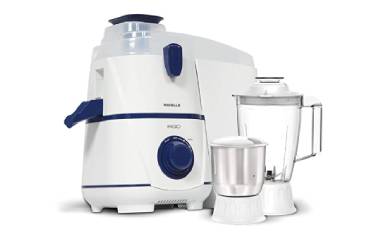
A typical mixer grinder setup includes three main jar types—wet, dry, and chutney—each designed for specific capacities and blade profiles to handle everyday Indian cooking tasks efficiently. You’ll choose jars based on quantity, texture, and safety: larger wet jars for batter and gravies, medium dry jars for spices and grains, and small chutney jars for pastes. Compare capacity markings, lid seals, and material (stainless steel vs. toughened glass/plastic) for safe operation. Match jar volume to family portions to avoid overloading and motor strain.
- Wet jar: 1.2–2.0 L, liquid tasks, splash-resistant lid
- Dry jar: 0.5–1.0 L, powdering, pulse control
- Chutney jar: 0.2–0.5 L, small batches
- Jar materials: durability vs. weight
- Safety: secure locks, venting
Modern mixer grinders often include overload protection to automatically cut power or limit motor load when current or temperature exceed safe limits.
Blade Design & Capacity
How do blade geometry and jar volume change the way your grinder handles everyday Indian tasks? You’ll notice flat, angled blades shear faster for wet grinding—ideal for batter—while serrated or multi-level blades create turbulence for dry spice grinding. Stainless steel blades resist corrosion; thicker mounts reduce flex and heat transfer. Choose jar capacities by task: 0.3–0.5 L chutneys and masalas, 1.0–1.2 L wet grinding, 1.5–2.0 L for larger batter or dough. Smaller jars spin faster with less motor strain; larger jars need more torque but prevent splatter. Check secure lid locks and anti-skid bases; blade assemblies should disengage easily for safe cleaning. Match blade profile and jar size to typical batch volumes to optimize performance, longevity, and user safety. Regularly inspect and replace dull or chipped blades to maintain optimal performance and prevent damage, as part of routine maintenance blade inspection.
Durability, Warranty, and Build Quality Considerations
Why should durability and build quality be top priorities when picking a mixer grinder for daily Indian cooking? You rely on sustained torque, frequent wet and dry use, and high-temperature kitchens, so materials, assembly, and warranty affect long-term performance and safety.
Compare motor housing materials (die-cast vs plastic), jar construction (SS 304 vs thin alloys), and shaft coupling robustness. Prioritize models with serviceable parts and clear warranty scope.
- Look for metal gear couplings and stainless-steel shafts to resist wear and reduce vibration.
- Prefer jars with thicker gauge SS 304 for corrosion resistance and thermal stability.
- Check warranty length and what it covers: motor, jars, and service labor vs only parts.
- Verify availability of authorized service centers and genuine spare parts in your region.
- Assess assembly tolerances and IP rating for splash resistance to minimize electrical risk.
Make choices based on measured durability metrics and warranty terms so you get predictable uptime and safer operation over years. Also perform pre-use checks like inspecting jars, blades, cord, and ensuring the base sits flat on a dry counter to reduce electrical and mechanical hazards from the start; these simple safety checks help prevent damage and accidents.
Safety Features and Noise Levels to Compare
Because you’ll be running the grinder multiple times daily and often with wet ingredients, prioritize safety features like overload protection, thermal-cutoff, and splash-resistant sealing to prevent electrical faults and motor damage. Check that the thermal cut-out resets manually or auto-resets with clear indicators; manual resets are safer because they force inspection before reuse. Overload protection should trip before bearings or windings overheat — compare trip thresholds (amps) to motor rated current. Splash-resistant lids and sealed switches reduce shorting risk; look for IPX ratings or gasketed lids. Noise levels affect comfort and perceived safety — high decibel peaks can mask motor distress. Compare measured SPL (dB) at 1 m in specs or reviews; under 75 dB is preferable for repeated home use. Also evaluate vibration damping: rubber feet and balanced impeller designs lower both noise and mechanical stress. Prioritize models with clear safety documentation, accessible service centers, and visible safety certifications (BIS/CE) for reliable, low-noise operation. Prefer models with sturdy ABS bodies and good service networks like Philips HL7505/00 for the best balance of safety and after-sales support.
Top Brands and Models for Family Use (2026 Update)
Having covered safety and noise, let’s look at which brands and models actually deliver those protections alongside performance for family kitchens in 2026. You’ll want grinders that combine robust motors, thermal and overload cutoff, and low-vibration engineering. Below are five models that balance torque, build quality, and certified safety features:
- Preethi Zodiac Pro 1000W — high-torque motor, auto-cutoff, stainless steel jars, well-rated for chutneys and batter.
- Philips Viva 950W — efficient BLDC motor, low noise, reinforced lid locks, compact for daily use.
- Bosch SilentMixx 900W — vibration-dampening base, thermal protection, precision blades for wet and dry grinding.
- Maharaja Whiteline Turbo 1000W — overload protection, sturdy couplings, economical for large families.
- Havells NutriBlend 950W — corrosion-resistant jars, safety interlocks, optimized for pulse control.
Compare torque, safety certifications (ISI/CE), and service network in your region to choose the one that matches your family’s cooking load and safety expectations.
Maintenance, Cleaning Tips, and Long-Term Care
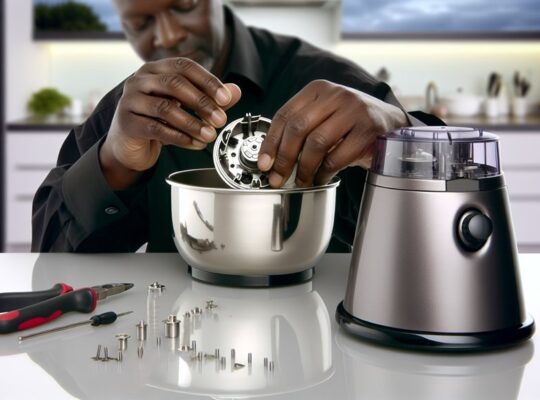
Regularly maintaining and cleaning your mixer grinder will keep torque, efficiency, and safety devices working as intended, so you won’t face unexpected breakdowns or degraded performance. Clean jars, lids, and blades after each use with a soft brush and mild detergent; rinse immediately to prevent acidic stains and oil buildup that increase motor load. Inspect blade assembly for bluntness or wobble every month; replace blades or tighten screws when vibration exceeds manufacturer specs. Descale metallic and plastic components periodically if you have hard water—use diluted vinegar and flush thoroughly to protect seals. Lubricate rubber gaskets lightly with food-grade silicone where recommended; never oil electric contacts. Ventilation slots must be vacuumed or brushed to prevent overheating; compare models with removable grills for easier access. Store the appliance in a dry, dust-free area, disconnecting power when idle. Follow scheduled professional servicing per warranty intervals to preserve insulation resistance and prolong safe, reliable operation.
Frequently Asked Questions
Can a Mixer Grinder Make Idli or Dosa Batter Effectively?
Yes — you can; a heavy-duty mixer grinder with sharp blades and adequate motor torque yields smooth, aerated idli/dosa batter faster than wet grinders, but watch overheating, batch sizes, and blade wear to ensure safety and consistent texture.
Are Mixed-Material Jars (Steel+Plastic) Food-Safe Long-Term?
Yes — mixed-material jars can be food-safe long-term if the plastic is food-grade (BPA-free), stainless steel contact surfaces resist corrosion, seals are durable, and cleaning avoids abrasives; compare certifications, temperature limits, and warranty before buying.
Can I Use My Mixer Grinder for Nut Butters Regularly?
Yes — you can, but only if your mixer grinder’s motor and blades are rated for heavy, continuous torque; compare wattage, duty cycle and jar design, use small batches, pulse often, and avoid overheating to ensure safety and longevity.
Do Voltage Stabilizers Protect the Motor in Indian Homes?
Yes — they protect motors by keeping supply voltage within safe limits, reducing overheating and insulation stress. You’ll compare stabilizer ratings, response time, and capacity to match appliance load for practical, safe long-term motor protection.
Is Professional Servicing Available Nationwide for Top Brands?
Yes — you’ll usually find nationwide professional servicing for top brands, but availability, response times and authorized-center density vary by brand and region, so compare service networks, warranties, and emergency support before choosing for safer, reliable maintenance.