You’ve probably seen how Indian kitchens changed from stone grinders and hand-cranked chakki to compact electric machines. Out of the 1950s–60s workshop culture came the first mixer grinders, built tough and repaired locally. Over decades jars, mounts and safety features evolved as brands and standards shaped everyday cooking. There’s more to the story—about design choices, social shifts and safety reforms—that explains why the appliance became so central.
Key Takeaways
- Mixer grinders appeared in India in the 1950s–1960s, originating in urban workshops and showrooms.
- Early models were bulky cast-iron units with steel jars, basic overload protection, and exposed wiring.
- Designs evolved to insulated housings, grounded plugs, stainless-steel jars, anti-vibration mounts, and clearer manuals.
- Adoption spread from urban homes to rural users, small eateries, and shared community use, supported by local repairs.
- Regulation, warranties, and brand trust drove safer materials, earthing, fuses, and service networks.
Early Grinding Tools and Traditional Mills in India
How did Indians grind spices and grains before electricity changed kitchen life? You’d encounter heavy, time-tested tools: stone querns, mortar and pestle, and the chakki. These were crafted for durability and controlled use, so you’d feel secure handling them. Women and men steadied a round upper stone against a lower base to crush millet or flour, applying steady pressure rather than sudden force to avoid slips. The mortar’s concave bowl kept ingredients contained; the pestle’s ergonomic weight reduced strain. Community mills, often animal- or hand-powered, let you process larger batches while maintaining safety through supervised operation. Wooden danda and sil batta offered more delicate control for spice pastes; you’d use rhythmic strokes and maintain dry, clean surfaces to prevent contamination. Records show these methods prioritized predictability and low risk. You’d learn sensible postures, routine maintenance, and shared protocols that preserved both food quality and well-being across generations. These traditional practices also embodied principles of predictive maintenance and care that echo in modern appliance design.
Advent of Electric Domestic Appliances
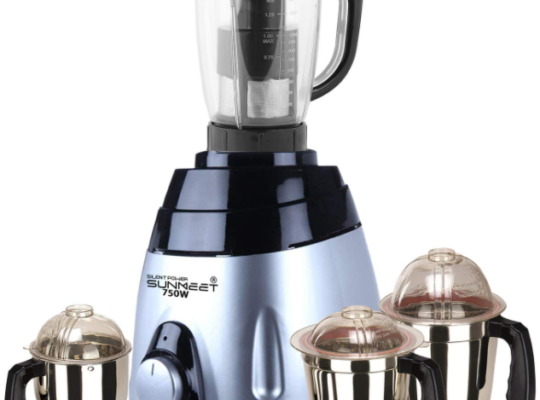
You’ll notice that early electrical innovations—motors, wiring standards and compact electric components—made small kitchen machines technically possible. Over the mid-20th century those advancements gradually spread from urban workshops and colonial bungalows into Indian homes, changing how everyday food preparation was thought about. This shift set the stage for the first commercially viable mixer grinders adapted to local culinary needs. Many manufacturers then began producing durable, high-powered models with features like 750W motors and multiple jars to suit Indian cooking.
Early Electrical Innovations
When did the hum of motors first slip into Indian kitchens? You trace early electrical innovations through archival catalogs, dusky photographs, and patent sheets showing robust, insulated motors and ceramic fuses designed for cautious homes. You read about manufacturers testing sealed switches, grounded metal casings, and standardized plugs to prevent shocks. Engineers adapted to erratic supply by adding thermal cutouts and rewindable armatures so appliances survived surges. Community notices advised safe placement away from water and children; manuals emphasized earthing and routine servicing. These documentary fragments show innovation paced by safety concerns as much as convenience. They reveal a responsible, measured introduction of powered tools that aimed to protect households while demonstrating electric potential. Early household appliances also began incorporating thermal cut-off and overload protection to cope with voltage fluctuations and ensure longevity.
Spread to Indian Homes
From careful engineering and safety-conscious manuals, the conversation in catalogs and repair shops soon moved into the kitchen: electric appliances began appearing on counters and in neighborhood shops as practical answers to everyday chores. You’d notice boxed mixers and grinders with clear instructions, grounded plugs, and illustrated warnings; retailers and instructors taught safe handling, storage, and cleaning. Households adopted these machines slowly, prioritizing reliability and maintenance over novelty. Repair cycles, spare-parts inventories, and user habits left an archival trail—receipts, service booklets, and annotated manuals—that shows how safety standards shaped usage. As you integrated a mixer grinder, you learned to respect power limits, secure lids, and routine inspections, keeping both family and appliance safe while transforming domestic work. Longer, clearer warranties that covered motors and switches also encouraged users to maintain and register their appliances, reducing repair costs and downtime warranty coverage.
Emergence of the First Mixer Grinders
Although early electric motors were modest in power, they set the stage for the first mixer grinders in India, which began appearing in urban workshops and household showrooms in the 1950s and 1960s. You’d have encountered bulky cast-iron bases, steel jars and exposed wiring in early displays, a reminder that safe handling and proper installation mattered from day one. Craftsmen adapted small motors to rotating blades, prioritizing sturdy mounts and basic overload protection to prevent sparks and motor burnouts. Retailers and technicians kept archival records of serial numbers and service dates, so you could verify maintenance histories. In homes, users learned safe practices: secure lids, dry hands, and matched voltage to equipment. Documentary photos and trade catalogues document these first models as utilitarian tools rather than sleek appliances, showing metal finishes, knob controls and instruction cards. Those early efforts laid a cautious, safety-conscious foundation for wider adoption without touching on later design or technical refinements. Manufacturers later introduced S304 Stainless Steel jars as a durable, food-safe material.
Technological Innovations and Design Evolution
You’ll see how motor and power advancements transformed grinder performance, shifting machines from bulky, single-speed units to compact, multi-speed motors better suited to Indian cooking. You’ll also trace changes in ergonomics and aesthetics as manufacturers responded to kitchen layouts, user comfort, and evolving tastes. This section ties those technical and design shifts to broader social and domestic trends. Manufacturers like Bajaj, Philips, and Preethi introduced higher-power 750-watt motors and features such as overload protection and multiple jar configurations to meet diverse household needs.
Motor and Power Advancements
When you trace the motor’s evolution in Indian mixer grinders, you’ll see how incremental engineering shifts — in winding techniques, rotor balance, and insulation materials — translated into tangible gains in torque, efficiency, and durability; these advances not only reduced overheating and noise but also allowed manufacturers to offer higher-power models that met changing culinary demands while fitting familiar domestic designs. You’ll note documented transitions from basic universal motors to improved single-phase induction and brushless variants, each step recorded in company archives and safety bulletins. You’ll learn how better heat management, standardized safety cutouts, and tighter manufacturing tolerances minimized fire and shock risks. Reading period manuals and service notes, you’ll appreciate how pragmatic power increases were balanced against household safety and maintainability. Modern designs also emphasize overheating prevention through improved cooling, thermal cutouts, and user guidelines to reduce fire and electrical hazards.
Ergonomics and Aesthetic Shifts
How did mixer grinders shift from purely utilitarian machines to objects of everyday design? You’ll see that ergonomic research and archival design choices guided that shift: handles were recontoured for safer grip, lids gained locking mechanisms, and weight distribution was adjusted to prevent tipping. Designers archived user feedback—especially concerns about slippage, heat, and noise—and translated it into tactile switches, insulated housings, and anti-vibration mounts. Aesthetic changes followed functional needs: rounded corners, muted palettes, and compact silhouettes reduced injury risk and improved kitchen integration. You’ll notice labels and instructions became clearer, and serviceability was prioritized so repairs stay safe. These incremental, documented evolutions made mixer grinders both visually familiar and materially safer for everyday use. Manufacturers also began matching design changes to performance needs by offering models across different power ranges like 750W options to suit varied household demands.
Role of Brands and Local Manufacturers
Why did certain names come to define kitchens across India? You’ll find the answer in catalogues, factory records, and market stalls where brands promised reliability and safe operation. Established firms emphasized tested motors, grounded plugs, and durable jars; their adverts and manuals read like safety briefs, reassuring you that your household was protected. Simultaneously, local manufacturers adapted designs to regional needs, offering affordable repairs, spare parts, and hands-on guidance so you could maintain equipment safely. Archival photographs show branded showrooms beside neighborhood workshops, a pragmatic ecosystem where reputation meant warranty and accessible service. When regulatory standards tightened, both national brands and local makers adjusted materials and labeling to meet compliance, and you benefited from clearer instructions and safer components. In that layered history, brand trust and community-based manufacturing combined to make mixer grinders not only familiar tools, but safer, serviceable fixtures in Indian homes. Sujata’s emphasis on stainless steel components and overload protection also illustrated how manufacturers balanced performance with durability and safety.
Impact on Urban Lifestyles and Cooking Practices
A shift in urban kitchens is visible in family photographs, apartment inventories, and municipal housing reports where the mixer grinder becomes a regular entry on shopping lists and dowry inventories; you can trace how its arrival compressed time, standardized preparations, and nudged cooks toward new recipes that fit apartment life. In archival terms, procurement records and household budgets show a new line item: powered convenience. You notice routines changing — spice blends, chutneys, batters — becoming reproducible across households, easing knowledge transfer between generations and neighbors. Descriptive census-like notes and oral histories record a safer kitchen: fewer open flames for prolonged grinding, reduced physical strain, and clearer sanitation practices as utensils and surfaces were standardized. If you’re examining cookbooks and community newsletters, you’ll find recipes recalibrated for electric speed and jar capacities. The mixer grinder didn’t just save minutes; it reshaped urban culinary habits into predictable, shareable practices that fit denser living and concern for household safety. Many Indian households now favor compact, efficient models like the Glen 4045 NG Mini Grinder for small kitchens and quick tasks mini grinder.
Adoption in Rural Areas and Small Businesses
Urban kitchens offer one side of the story; rural households and small enterprises tell another, where availability, cost, and local practices shaped uptake in different ways. You’d see early adopters in larger villages who traded communal labor for mechanical convenience, often sharing a single machine among neighbors. Small tea stalls, chutney makers, and roadside eateries integrated grinders to speed preparation and standardize texture, documenting a shift in daily routines. You’d also encounter adaptations: locally repaired motors, improvised pulleys, and protective covers to extend service life in dusty settings. Affordability drove choices, so simpler single-function grinders remained common alongside multipurpose units. Records and oral accounts show gradual trust-building as spare parts networks and repair knowledge spread. For you studying this history, these patterns highlight pragmatic innovation and community resourcefulness, underscoring how access and economic logic guided adoption more than style or novelty.
Safety, Standards, and Regulatory Changes
How did safety and standards evolve as mixer grinders moved from workshops into every Indian kitchen? You witnessed a shift from ad-hoc metalwork to regulated appliances: earthing, fuse protection, and insulated wiring became standard. Regulatory bodies stepped in, testing for electrical safety and materials that wouldn’t contaminate food. You learned to trust certified labels and clearer user manuals that reduced accidents and burns.
| Era | Safety Feature | Impact |
|---|---|---|
| Early workshop models | Minimal insulation | Higher shock risk |
| Mass-produced units | Earthing, fuses | Fewer electrical incidents |
| Modern certified units | BPA-free, ISI/CE marks | Safer food contact, consumer trust |
Archival records show recalls, public advisories, and incremental code updates that hardened manufacturing practices. You’ll find that standards didn’t appear overnight; they grew from consumer complaints, forensic investigations, and industry lobbying. If you value safety, you now check certifications, follow grounding advice, and keep service records—small habits that reflect a long regulatory arc.
Future Trends and Smart Kitchen Integration
What will mixer grinders look like when they’re fully folded into the smart kitchen? You’ll see devices that preserve archival design cues — robust housings and clear safety markings — while adding sensors, secure connectivity, and predictive maintenance. They’ll fit into a documented lineage, so you’ll recognize heritage features even as firmware manages performance.
- Connected safety: auto-shutoff, child-lock, and encrypted firmware updates.
- Context-aware controls: recipe-linked speeds and load sensing to prevent overheating.
- Sustainable operation: energy-usage logs, recyclable components, and mandated disposal guidance.
- Serviceability: diagnostic histories accessible to you and certified technicians.
This future keeps your safety central: manufacturers will publish compliance records and update notices, and your interface will give simple alerts and consent prompts. Integration will be descriptive and restrained, letting you trace each change back to standards and past models, so you can adopt new smart functions without losing the certainty and reliability you expect.
Frequently Asked Questions
Which Celebrity Endorsed the First Popular Mixer Grinder in India?
You’d learn that actor M. G. Ramachandran endorsed the first widely popular mixer grinder in India, his image lending trust and safety; archival ads highlighted reliability, domestic ease, and durable engineering to reassure cautious households.
How Much Energy Does an Average Indian Mixer Grinder Consume?
An average Indian mixer grinder uses about 300–750 watts while running, so you’ll typically consume 0.3–0.75 kWh per hour; for safety, keep usage short, ensure proper earthing, and avoid extended continuous operation.
Are There Vintage Mixer Grinders Valuable to Collectors?
Yes — you’ll find vintage mixer grinders valued by collectors for rarity, brand provenance, intact components and original badges. Handle them cautiously, check wiring, rust, and documentation, and store them safely to preserve condition and value.
Which Mixer Grinder Models Were Recalled Historically in India?
You’ll find recalls like Maharaja Whiteline’s earlier faulty motor units, Philips’ occasional overheating models, and local brands’ safety-driven recalls; archival notices stress fan failure, insulation breakdown, and mandatory replacements for consumer protection.
How Did Mixer Grinder Prices Compare to Salaries in the 1970S?
You’d find mixer grinders were relatively expensive versus 1970s salaries, often costing several weeks’ wages; archival price lists and pay records show they were luxury household investments, bought cautiously for long-term safety and utility.