You’ll want the right grinder for the job, since motor torque, jar shape, and blade design change results dramatically. Think beyond basic blenders to personal units, food processors, mixer grinders, and wet grinders—each handles different textures, speeds, and load types. I’ll explain how features like overload protection, blade angle, and jar material affect performance so you can match a machine to your cooking needs and avoid costly mistakes.
Key Takeaways
- Mixer grinders combine high-torque motors with multiple jars and blades for wet grinding, dry grinding, and chutneys in Indian kitchens.
- Single-speed basic models suit light chopping and chutneys, while variable-speed models give better control for diverse tasks and batter consistency.
- Models with overload protection, thermal cut-off, and non-slip feet prevent motor damage during heavy or prolonged grinding.
- Jar and blade design matters: tall, angled blades for wet grinding; flatter jars and harder blades for dry pulverizing.
- Choose capacity and duty-cycle ratings based on batch size, and prefer stainless-steel jars with sealed lids and rubber gaskets for leak-free operation.
Understanding Blenders and Personal Blenders
Wondering which blender fits your routine? You’ll compare countertop blenders and personal blenders by capacity, motor power, blade design, and safety features. Countertop units handle larger volumes and tougher tasks—soups, nut butters—so look for motors ≥700W, stainless-steel blades, and durable jars with secure lids and locked-base interlocks. Personal blenders excel for single-serve smoothies and quick prep; prioritize high-RPM motors (20,000+ RPM), BPA-free travel cups with leak-proof seals, and one-touch safety switches.
You’ll assess control options: variable speed and pulse give precision; preset programs simplify repeatable results. Noise, thermal protection, and overload cutouts reduce risk during heavy loads. Cleaning matters—detachable blade assemblies and dishwasher-safe components lower contamination risk. Match the blender to typical ingredients and batch size, and always follow manufacturer torque and fill guidelines to avoid jams or motor strain. Proper use and regular inspection will keep performance consistent and safe. Consider choosing a model with at least a 750-watt motor for tougher grinding tasks to ensure smoother results and longer motor life.
Food Processors and Their Specialty Attachments
How do food processors expand your prep capabilities? You’ll get a versatile, high-torque motor housing multiple specialty attachments that handle slicing, shredding, julienning, kneading, and emulsifying without swapping appliances. Choose blade materials and speeds matched to tasks: stainless-steel S-blades for purees and chopping, reversible discs for uniform slices, and dough hooks for low-speed kneading. Safety interlocks prevent operation unless the bowl and lid are properly secured; always engage them and never bypass guards. Feed tubes with pusher accessories let you process while keeping hands clear; use recommended feed rates to avoid overloading. Optical or tactile controls and pulse functions give precise control for texture-sensitive tasks like pesto or mayonnaise. For maintenance, detach blades with care using protective gloves, and follow manufacturer torque and duty-cycle limits to prevent motor burnout. By selecting the right attachment set and observing safety protocols, you’ll streamline prep, reduce cross-contamination, and get consistent results safely and efficiently. Many processors now include robust design features such as fiber-reinforced bodies and extended motor warranties to improve durability and user confidence.
Mixer Grinders for Everyday Indian Cooking
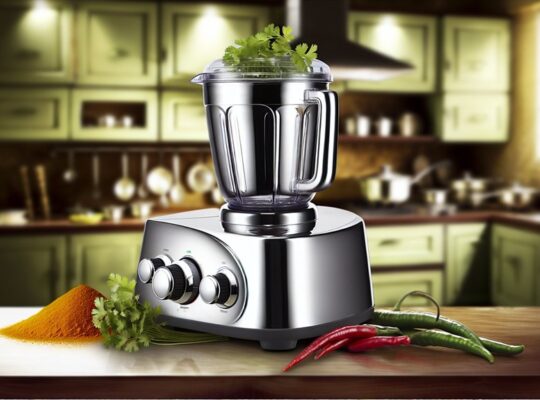
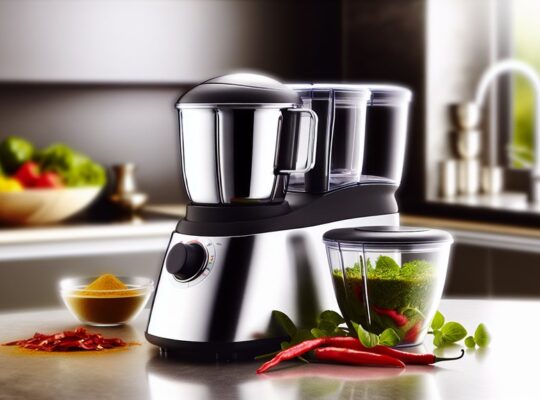
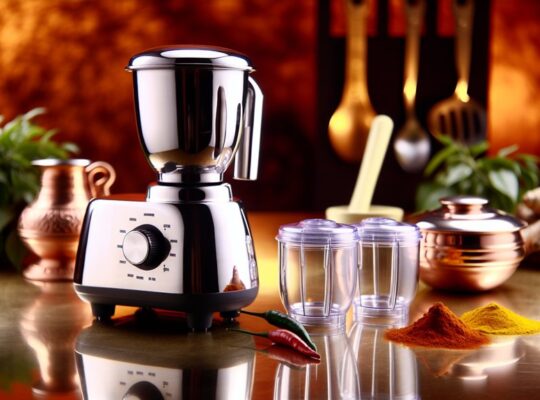
Mixer-grinders are the workhorse appliances of Indian kitchens, combining high-torque motors with a set of purpose-built jars and blades to handle daily tasks like grinding chutneys, wet masalas, battering dosas and idlis, and dry-spice pulverizing. You’ll rely on a multipurpose unit for quick chutneys, spice blends, and paste-based gravies; choose one with variable speed control, overload protection, and sturdy stainless-steel jars. Look for sealed lids and rubber gaskets to prevent leaks and ensure safe operation under pressure. Blade material and jar shape affect shear and circulation — angled blades and tall jars improve wet grinding, while flatter jars suit dry powders. Prioritize safety features: thermal cut-off, locking mechanisms that prevent start without secure assembly, and non-slip feet. Maintain your grinder by avoiding prolonged runs, letting the motor cool, and cleaning blades carefully with gloves or brush. Proper selection and safe use will give you consistent results and longer equipment life. Many silent mixer grinders, such as the Silent Power Sunmeet models, offer powerful motors with noise-reducing features and multiple jars to suit varied tasks.
Wet Grinders for Batter and Traditional Dishes
Many kitchens rely on a wet grinder when they want authentic idli, dosa, or vada batter that’s aerated and smoothly ground. You’ll find wet grinders use heavy granite or steel grinding stones that shear and crush soaked rice and lentils, producing consistent particle size and trapped air for better fermentation. Choose a model with sealed motors, thermal overload protection, and non-slip feet to reduce risk during operation.
- You’ll appreciate slower RPMs for less heat buildup and preserved enzymes.
- Look for easy-clean drums and food-grade seals to prevent contamination and ensure safe storage.
- Opt for a timer and sturdy lids to avoid splatter and accidental contact while running.
For safety, always unplug before cleaning, never immerse the motor assembly, and follow recommended capacity limits to avoid overloading. Proper maintenance—periodic stone inspection and bearing lubrication—extends life and keeps batter quality reliable for traditional dishes. Many users also find that slower RPMs help prevent overheating and preserve batter texture.
Frequently Asked Questions
Are Mixer Grinders Loud During Operation?
Yes — mixer grinders can be loud during operation; you’ll hear high RPM motor and blade noise. Choose models with insulated motors, rubber mounts and lower decibel ratings, wear hearing protection if exposure exceeds safe limits.
How Energy-Efficient Are Different Mixer Grinder Types?
You’ll find efficiency varies: induction-motor grinders use less power for heavy duty, BLDC models are most efficient and cooler, universal-brush motors draw more energy and run hotter—choose lower-wattage, efficient-rated units for safer operation.
Which Models Are Easiest to Clean and Maintain?
You’ll find compact, single-jar and stainless-steel jar models easiest to clean and maintain; they’ve detachable blades, smooth seams and IP-rated motor housings, reducing contamination risk and simplifying safe disassembly, washing and periodic lubrication.
Do Mixer Grinders Come With Warranty and Service Support?
Yes — most mixer grinders include a manufacturer warranty and service support; you’ll get parts coverage and authorized repairs for a specified period. Register your product, keep receipts, and follow safety guidelines to guarantee valid, prompt service.
Can Mixer Grinders Handle Ice Crushing for Cocktails?
Yes, many can crush ice, but you shouldn’t assume it. Check motor power, blade design, and manufacturer guidance; use short pulses, avoid overfilling, and ensure safety locks and cooling intervals to prevent overheating or blade damage.