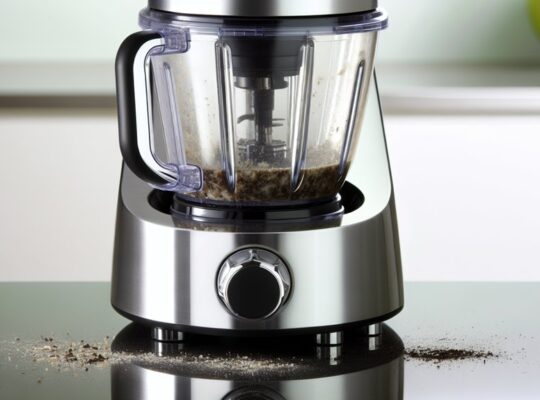
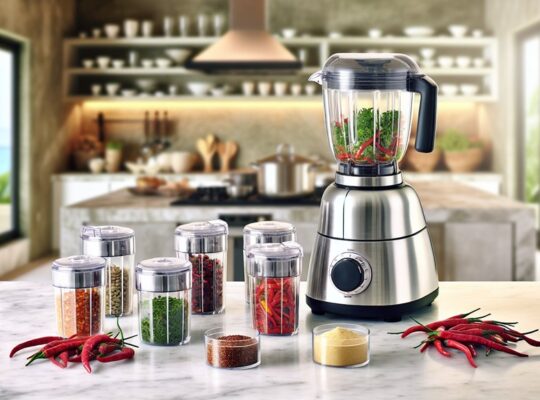
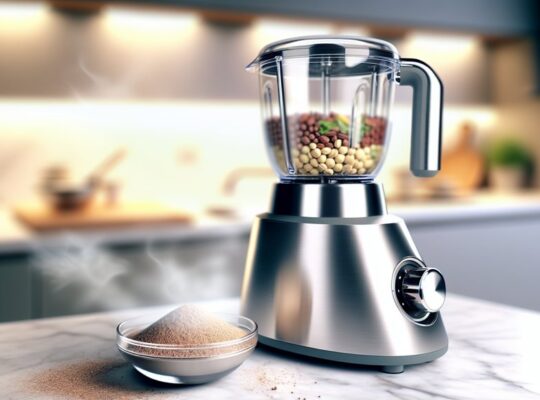
RPM in a mixer grinder tells you how many times the blades spin per minute, so you’ll know how fast it can chop, grind, or blend. It’s usually a no-load measurement taken with a tachometer and doesn’t tell the full story—motor torque, blade design, and jar shape also matter. Understanding RPM helps you pick the right speed for textures, but there’s more to consider before you pick a model.
Key Takeaways
- RPM (revolutions per minute) is how many full rotations the mixer-grinder’s motor or blade assembly makes each minute.
- No-load RPM is the manufacturer’s quoted speed measured without load using a tachometer or sensor.
- Higher RPMs cut and shear ingredients faster, producing finer textures but generating more heat.
- RPM alone doesn’t equal power; motor wattage and torque determine how well speed holds under load.
- Use lower speeds or short pulses for heat-sensitive or oily ingredients, and match RPM to jar/blade design.
What RPM Means and How It’s Measured
What does RPM actually mean on your mixer grinder and how is it measured? RPM stands for revolutions per minute — the number of full rotations the motor or jar assembly makes every minute. You’ll see RPM specified for no-load motor speed and sometimes for loaded conditions; manufacturers usually quote no-load RPM measured with a tachometer. To measure it, a technician uses a contact or optical tachometer aimed at the rotating shaft or coupling, or reads the motor’s built-in sensor if present. Accurate measurement requires the grinder to be run under standard conditions: correct voltage, secured jars, and no unusual friction. For safety, you should never try to measure RPM manually with exposed rotating parts; always stop the machine and use proper tools or let a professional perform the check. Understanding RPM as a measurable rotation rate helps you evaluate speed without assuming performance or safety limits. For elderly users, choose models with low-noise operation and stable, easy-to-lock jars to reduce startle risk and handling difficulty.
Why RPM Matters for Grinding Performance
Why does RPM matter for grinding performance? You’ll notice RPM determines how quickly blades contact ingredients, affecting particle size, consistency, and heat generation. Higher RPMs usually give finer, faster grinding because blades create greater shear and impact forces. Lower RPMs yield coarser results and need longer processing time.
You should match RPM to the task: delicate spices or nuts may need controlled speeds to avoid burning or releasing oils, while tougher items like pulses benefit from sustained higher RPM for uniform grind. Pay attention to batch size and feed rate—overloading at high RPM raises temperature and risks motor strain; underloading can cause uneven cutting.
For safety, always stop and unplug before adjusting jars or blades. Let hot batches cool to prevent thermal damage to seals and to avoid scalding. By choosing the right RPM and following safe handling, you’ll get consistent texture without compromising equipment or safety. Many users also choose an appropriate motor power (such as 750W models) to balance torque, processing time, and thermal stress.
RPM Vs Motor Power: What’s the Difference?
How do RPM and motor power relate, and why you shouldn’t treat them as the same thing? RPM measures how fast the blades spin; motor power (watts) measures how much work the motor can do. You’ll need both for safe, effective grinding: high RPM without sufficient power can stall or overheat the motor; high power at low RPM may be safe but won’t achieve desired particle size.
Think of it visually:
- A racing car (high RPM) with a weak engine (low power) that overheats.
- A truck (high power) crawling slowly (low RPM) carrying heavy load.
- A balanced machine (adequate RPM and power) running smoothly and cool.
When choosing or using a mixer grinder, check both specs and follow manufacturer limits: avoid overloading, allow cooling periods, and use correct jars and blades. That keeps the motor from burning out and reduces risk of accidents. An effective overload protection system like a thermal cutoff helps prevent motor damage by interrupting operation when the motor overheats.
Typical RPM Ranges and Their Uses
You’ll typically see low RPMs around 2,000–6,000, medium RPMs from 6,000–12,000, and high RPMs above 12,000. Low speeds are best for wet grinding and gentle mixing, medium speeds suit everyday grinding and coarse tasks, and high speeds handle fine powdering and fast blending. Keep RPM in mind when matching a grinder to the foods and textures you need. Commercial units with thermal overload protection are recommended for continuous use in hotel and small-business kitchens.
Low RPM: 2,000–6,000
Low RPM settings—about 2,000 to 6,000 rpm—are meant for gentle, controlled processing where heat and over-grinding are concerns. You’ll use this range for tasks that need patience: crushing ice chunks slowly, making coarse chutneys, or pulping soft fruits without turning them to mush. Low speeds reduce blade friction, so ingredients stay cooler and aromas remain intact; that also lowers burn risk and preserves texture. Always secure the lid and don’t overload the jar; short pulses help you monitor progress. For visual guidance, imagine:
- Slow, tumbling ice pieces reducing size without melting.
- Chunky chutney with distinct bits and bright scent.
- Smooth, pulpy fruit with minimal foam or warmth.
For many home kitchens, these low speeds are often sufficient and more energy-efficient than using higher-wattage, high-RPM modes like those found in 750W models.
Medium RPM: 6,000–12,000
What happens when you bump the speed to the 6,000–12,000 rpm band? You get a versatile middle ground: enough power to grind tougher ingredients yet not so fast that heat or over-processing becomes immediate. Use this range for nut pastes, wet chutneys, coarse spice blends, and grinding soaked grains. It breaks down textures efficiently while letting you control consistency—pulse to retain some chunkiness or run continuously for smoother results. For safety, secure the lid, avoid overfilling, and let the motor rest after heavy batches to prevent overheating. Monitor temperature; if the jar or smell indicates strain, stop and cool down. This RPM band balances performance and control for everyday, slightly demanding tasks. Philips models often have thermal cut-off and overload protection to help prevent motor damage during heavy use.
High RPM: 12,000+ Uses
Push the speed past 12,000 rpm and the mixer grinder shifts from versatile workhorse to high-performance tool for fine, fast results. You’ll use high RPM for ultra-smooth purees, superfine flour, and emulsions where speed reduces heat exposure time but increases risk if misused. Always secure lids, don’t overfill, and pulse to control heat buildup.
- Silky purees — blitz vegetables or soaked legumes rapidly for smooth textures.
- Fine flours — short bursts grind grains to powder; watch for overheating.
- Emulsions & nut butters — high shear creates creamy consistency, but stop to scrape and cool.
Operate in short intervals, check temperature, and keep hands and utensils away while rotating. Consider using a low-vibration mat to reduce noise and vibration for safer, quieter operation.
How RPM Affects Texture and Consistency
When you change RPM, you control particle size: higher speeds usually give finer grinds while lower speeds leave coarser pieces. Higher RPM also generates more heat and can release moisture or cause slight cooking, which alters texture and can make pastes smoother or drier. Balance speed and time to get the consistency you want without overheating the food. Also consider motor torque and power, since insufficient torque can cause the RPM to drop under load and affect results, especially with dense ingredients (motor torque).
Particle Size Control
How finely do you want your ingredients ground? You control particle size by adjusting RPM: higher speeds cut particles faster and produce finer, more uniform textures; lower speeds leave coarser particles and more bite. Aim for consistent batches by monitoring time and pulse intervals, and always secure lids and use safety guards.
- High RPM — smooth pastes, fine flours, uniform particle distribution.
- Medium RPM — coarse purees, controlled texture for sauces and batters.
- Low RPM — chunky results, visible pieces for salads or salsas.
Check samples periodically to prevent over-processing. Use short bursts and let blades settle between runs to maintain control and reduce wear. Clean components after each use to avoid contamination and ensure predictable particle-size outcomes. Models with 750W motors and overload protection handle tougher ingredients and maintain consistent RPMs.
Heat and Moisture Effects
Curious how RPM changes heat and moisture in your mixture? Higher RPMs generate more friction and heat, which can dry out ingredients, melt fats, or release volatile aromas. Lower RPMs keep temperatures down, preserving moisture and preventing thermal degradation of sensitive components. You’ll adjust speed depending on target texture: use high RPM briefly for smooth purees, but monitor temperature to avoid steam or scorched flavors. For wet batters or doughs, slower speeds retain hydration and produce consistent viscosity. Always pause intermittently at high speeds to let the bowl cool, and use short pulses for controlled processing. Maintain a safe workflow: wear protective gloves if needed, avoid overfilling, and follow manufacturer guidance to prevent motor overload or overheating. Food processors and mixer grinders differ in typical power and control, so choose settings based on power and control to match your appliance’s capabilities.
RPM’s Role in Handling Tough Ingredients
Ever wondered why some mixer grinders chew through coconut or tough spices while others stall? RPM determines the cutting and impact frequency: higher RPMs deliver more strikes per second, breaking hard particles faster, while lower RPMs rely on torque and slower crushing. You’ll choose RPM based on ingredient toughness and safety.
- Visualize fast RPM as many tiny hammers hitting quickly, reducing particle size rapidly.
- Picture moderate RPM as fewer, stronger blows—safer for controlled grinding of dense items.
- Imagine low RPM as slow pressure that prevents overheating but may leave large fragments.
You should match speed to the task: start lower for safety, increase gradually, and pulse to avoid jamming. Always secure the lid, avoid overfilling, and stop if you smell burning. Proper RPM use reduces stress on the motor, minimizes heat build-up, and gives predictable results when you process coconuts, whole spices, or other stubborn ingredients.
Blade Design, Jar Shape, and Their Interaction With RPM
You’ll notice blade angle and profile change how ingredients are sheared and lifted at different RPMs, so choosing the right blade affects cutting efficiency. Jar volume and taper influence flow patterns and how quickly food reaches the blades, which interacts with speed to determine consistency. Together, blade geometry and jar shape set the ideal RPM range for faster grinding and uniform results.
Blade Angle and Profile
How does blade angle and profile change what a mixer grinder actually does to food? You’ll notice cutting geometry controls flow, shear, and safety. Steeper angles slice faster; flatter profiles scrape and blend. Matching RPM to blade shape prevents splatter and overheating.
- High-angle, sharp edges: fast shearing, finer particles, needs higher RPM and secure lid.
- Low-angle, curved profiles: gentler folding, steady emulsions, safer at mid RPM.
- Serrated or stepped blades: grip fibrous items, reduce slip, may require pulse control.
You should select blades that suit ingredient texture and recommended RPM ranges. Always keep lids locked, avoid overfilling, and let motors cool to ensure safe, consistent results when changing blade types.
Jar Volume and Taper
The jar’s volume and taper shape how ingredients move under the blades and what RPM will deliver consistent results, so you should match jar geometry to your recipes and speed settings. Choose a jar volume that leaves headspace for circulation; overfilling reduces shear and increases load on the motor. A tapered (conical) jar guides solids toward the blade at lower RPMs, improving chopping and safe pulse operations. Straight‑sided jars require higher RPM or different blade angles to keep ingredients engaging with the cutter. For wet grinding, a wider base with slight taper helps vortex formation at moderate speeds, lowering splatter risk. Always follow manufacturer fill limits, secure lids, and start at low RPM to test flow before increasing speed for consistent, safe results.
Variable Speed Controls and When to Use Them
When should you dial the speed up or down? You’ll use variable speed controls to match ingredient texture and safety needs. Lower speeds prevent splatter and overheating with liquids, while higher speeds handle hard, dry items efficiently. Use the dial gradually; sudden jumps can stress the motor or cause spills.
- Soft ingredients: start low to avoid splattering, then increase slightly for smooth consistency.
- Hard or fibrous items: begin medium and move to high for efficient grinding without stalling.
- Sauces and emulsions: maintain steady low-to-medium speed to control heat and prevent separation.
Always secure the lid and keep hands clear before adjusting. Watch motor strain—unusual sounds or overheating means stop and reduce load. If your grinder offers presets, use them as guides but trust tactile feedback: feel resistance, listen for bogging, and adjust slowly. Variable control gives precision and safer results when used deliberately.
Practical Tips for Choosing the Right RPM for Your Needs
Wondering which RPM setting will give you the best results? Start by matching speed to task: use low RPM for wet grinding and herbs to avoid overheating, medium for chutneys and batters, and high for dry grinding and quick pulverizing. Always check your grinder’s manual and don’t overload the jar; that reduces efficiency and raises risk. Let the motor rest between long runs and use pulse mode for control. Choose RPMs that let you maintain a steady, safe load rather than maximum speed.
| Task | Recommended RPM range |
|---|---|
| Wet grinding (dal, batter) | Low–Medium |
| Chutneys, pastes | Medium |
| Dry spices, coffee | High |
| Herbs, soft ingredients | Low |
| Tough items (nuts) | Medium–High |
Monitor heat: stop if the jar or motor feels hot. Secure lid and use correct jar size. These steps keep you safe and deliver consistent results without stressing the appliance.
Common RPM Myths and Marketing Claims to Ignore
Ever been dazzled by RPM numbers and wondered what actually matters? You should focus on safe, real performance, not hype. Marketers often push big RPM figures as proof of superiority, but that can mislead you about durability, torque, and heat — the things that affect safety.
Here are three misleading claims to ignore:
- “Higher RPM = faster for all tasks” — ignores torque loss and overheating.
- “Peak RPM guarantees performance” — peak is momentary; sustained RPM and motor quality matter more.
- “RPM alone equals durability” — ignores build materials, cooling, and bearings.
When you compare models, check torque ratings, thermal protection, serviceability, and warranty. Look for tested safety features like overload cut-off and certified electrical standards. Don’t let flashy RPM labels replace sensible evaluation; choosing a balanced, well-built unit keeps you safer and prevents motor failure, overheating, or injury.
Frequently Asked Questions
Can RPM Damage the Grinder Motor Over Time?
Yes — high RPMs can wear the motor faster if you overload or run it continuously; you’ll avoid damage by using proper speed for tasks, not forcing heavy loads, allowing cooling breaks, and following manufacturer guidelines.
Does RPM Affect Noise Levels During Operation?
Yes — higher RPMs usually raise noise because faster blades and motor vibrations produce more sound; you should use lower speeds for quieter operation, ensure tight fittings, and maintain bearings and housing to reduce harmful noise and wear.
Is Higher RPM Always Better for Smoothies?
No — higher rpm isn’t always better for smoothies. You’ll get finer blends faster, but excessive speed can overheat ingredients, damage blades, or create froth. Match rpm to ingredients, pulse when needed, and prioritize safety.
Can RPM Influence Energy Consumption Significantly?
Yes — higher RPMs can increase energy use, but not always significantly; you’ll draw more power under heavy load or prolonged runs, so choose appropriate speed and duty cycle to avoid overheating and excessive consumption.
Do RPM Ratings Include Blade Wear Over Time?
No, RPM ratings don’t include blade wear over time; they’re measured for new equipment. You should monitor blades for dulling, follow maintenance schedules, replace worn blades promptly, and avoid exceeding recommended loads to maintain safe, efficient operation.