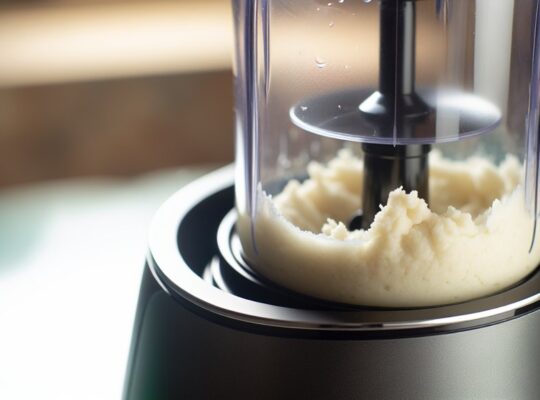
When you choose between stainless steel and hard plastic jars, you trade off measurable thermal and mechanical properties: steel’s higher thermal mass and option for vacuum insulation dramatically reduce heat transfer and retain temperature, while plastics are lighter and damp vibrations but equilibrate faster and can scratch or absorb odors over time; the choice affects sterilizability, noise, and lifespan — and which matters most depends on how you plan to use the jar.
Key Takeaways
- Vacuum-insulated stainless steel jars retain heat far longer than hard plastic, reducing temperature loss during storage or blending.
- Stainless steel’s much higher strength and fatigue resistance make jars more impact- and wear-resistant than hard plastics.
- Non-porous stainless steel resists staining, odors, and microbial buildup better than scratched or porous plastics.
- Hard plastic jars damp vibration and radiated noise more effectively, lowering perceived motor noise and hand discomfort.
- Upfront cost for stainless steel is higher, but longer lifespan and lower replacement frequency often reduce lifecycle costs.
Thermal Performance and Heat Retention
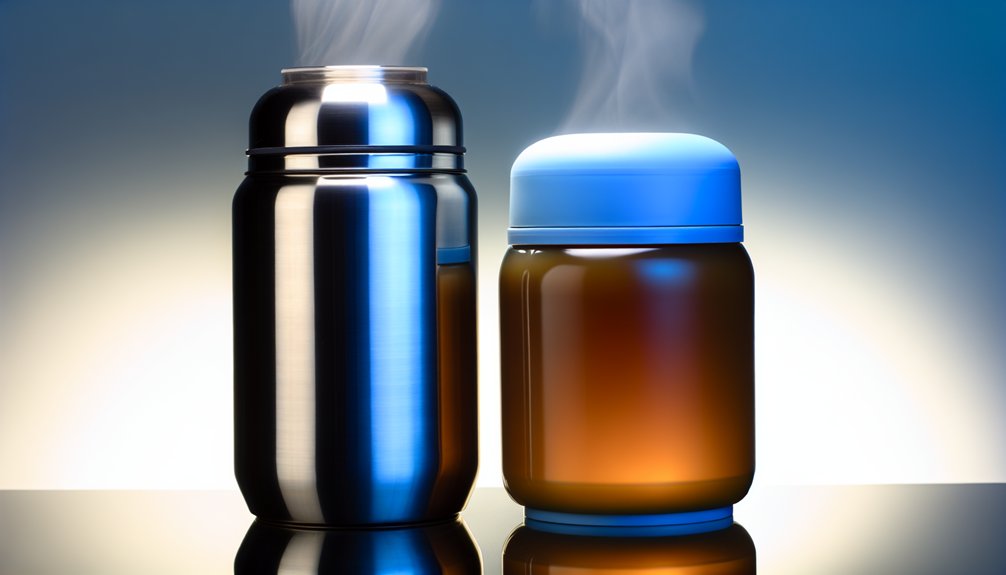
How long do you need your contents to stay at a target temperature? You’ll expect stainless steel, especially vacuum-insulated double-wall designs, to provide superior thermal resistance: low thermal conductivity (~16 W/m·K for steel vs ~0.2 W/m·K for common plastics? Note: plastics vary) and minimized convection via vacuum gap reduce heat transfer rates. Empirical tests show multi-hour retention for hot and cold contents when seals are intact. Hard plastic jars conduct heat faster, so they equilibrate with ambient temperature sooner; they may suit short-term use or lower temperature differentials. For safety, prioritize tested R-values, verified vacuum integrity, and reliable lid seals to prevent burn risk or bacterial growth from prolonged warm zones. Choose materials based on measured retention curves for your use case. Manufacturers with overload protection and robust designs also influence long-term performance.
Durability and Impact Resistance
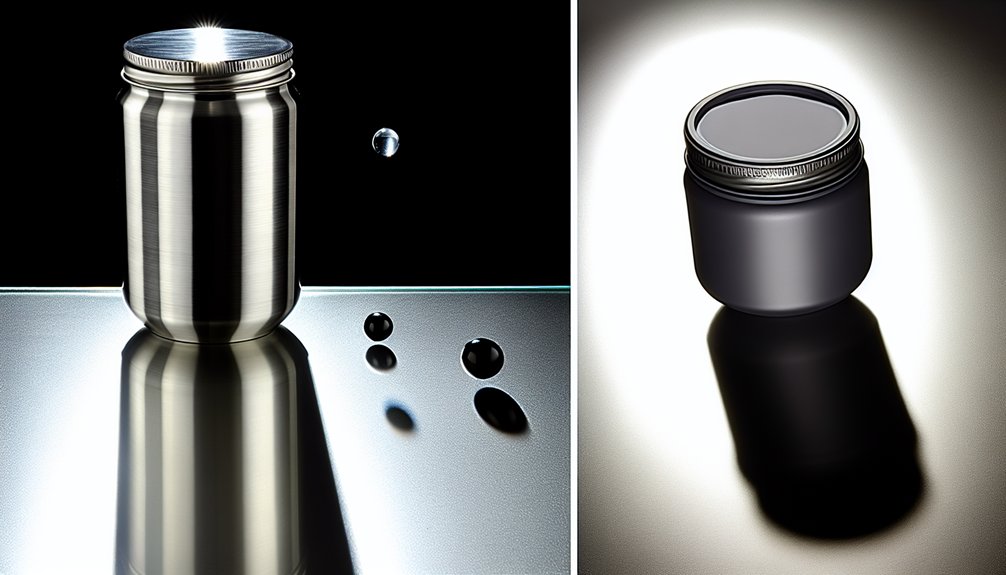
Want to know which jar material will survive drops, dents, and repeated use? You’ll find stainless steel outperforms most hard plastics in tensile strength, yield strength, and fatigue life. Typical 18/8 stainless has tensile strength ~520–700 MPa and exhibits ductile deformation, so it absorbs impact energy without brittle fracture. Common food-grade plastics (polypropylene, Tritan) have tensile strengths ~30–70 MPa and lower elastic moduli, so they deform more and can crack under concentrated impact. Corrosion resistance of stainless maintains structural integrity over time, reducing stress-corrosion cracking risk. Hard plastic may resist minor abrasion but shows cumulative microcracking and UV-induced embrittlement. For safety-critical use where drops and repeated mechanical load occur, stainless steel provides a predictable, higher-margin resistance to catastrophic failure. A clear warranty that covers motor, switches and proper service support can influence long-term replacement and repair outcomes.
Food Safety, Staining, and Odor Retention
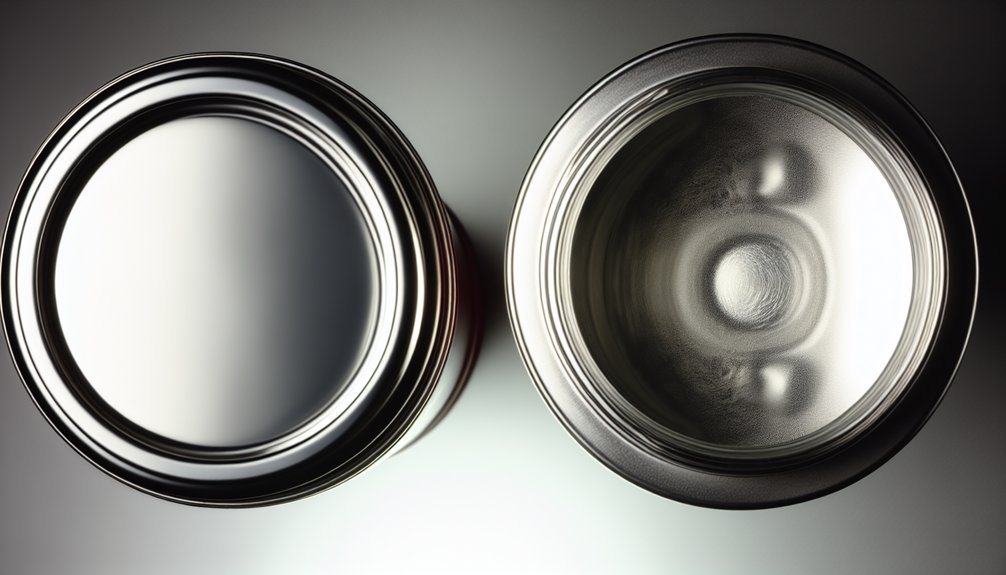
Curious whether your jar will taint sauces or harbor bacteria over time? You should know stainless steel (typically 18/8 or 18/10) is non-porous, corrosion-resistant, and resists leaching under normal kitchen pH and temperature ranges; laboratory tests show negligible metal migration when passivation is intact. Hard plastics (polycarbonate, Tritan, ABS) vary: some are engineered to be BPA-free, but micro-scratches increase surface area and can trap organics, raising microbial adherence and staining risk. Staining agents like turmeric or tomato pigments bind more readily to hydrophobic polymer surfaces than to polished stainless. Odor retention correlates with surface energy and porosity: stainless cleans effectively with standard detergents and heat; scratched plastics may require harsher solvents or replacement to restore sanitary conditions. Stainless steel jars are also generally preferred for durability and corrosion resistance in heavy-use kitchen appliances.
Noise, Vibration, and Handling Comfort
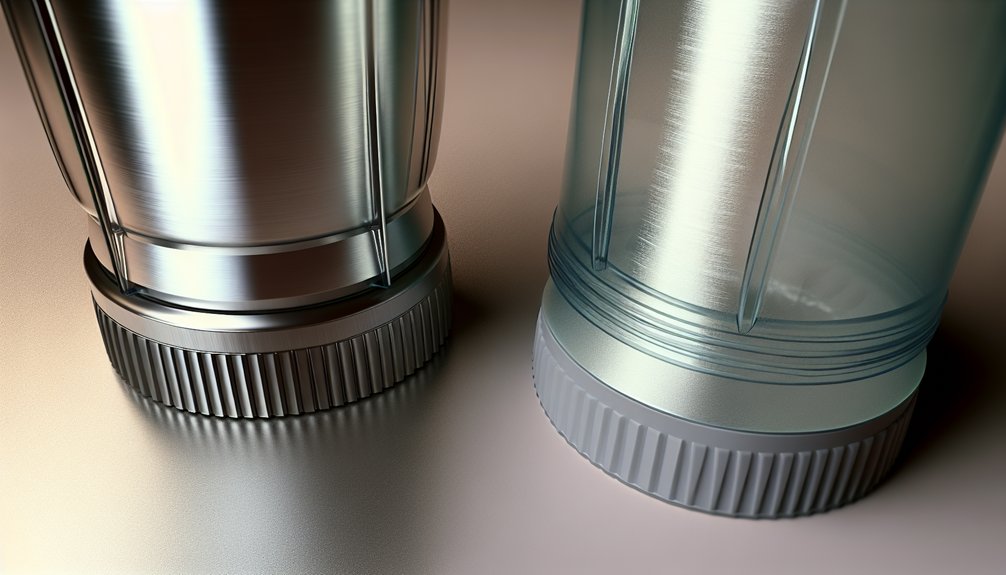
Ever noticed that a blender jar’s material can change not just sound level but vibration transmission to your hands? You’ll detect measurable differences: stainless steel conducts vibration more efficiently, raising tactile feedback and perceived noise, while hard plastic dampens high-frequency components, reducing hand fatigue. Use objective metrics—decibel and acceleration readings—to compare jars; safe handling requires minimizing sustained transmission above 2 m/s². Consider these practical implications:
- Stainless steel: higher structure-borne vibration, higher radiated noise.
- Hard plastic: lower transmitted vibration, better damping of harmonics.
- Handle ergonomics: thicker walls reduce hand-transmitted acceleration.
- Mounting isolation: rubber bases cut radiated noise and vibration.
Choose materials and anti-vibration features based on measured levels to protect hearing and reduce repetitive-strain risk. Stainless steel’s superior heat resistance and durability also make it preferable for high-stress or high-temperature use.
Maintenance, Longevity, and Cost Considerations
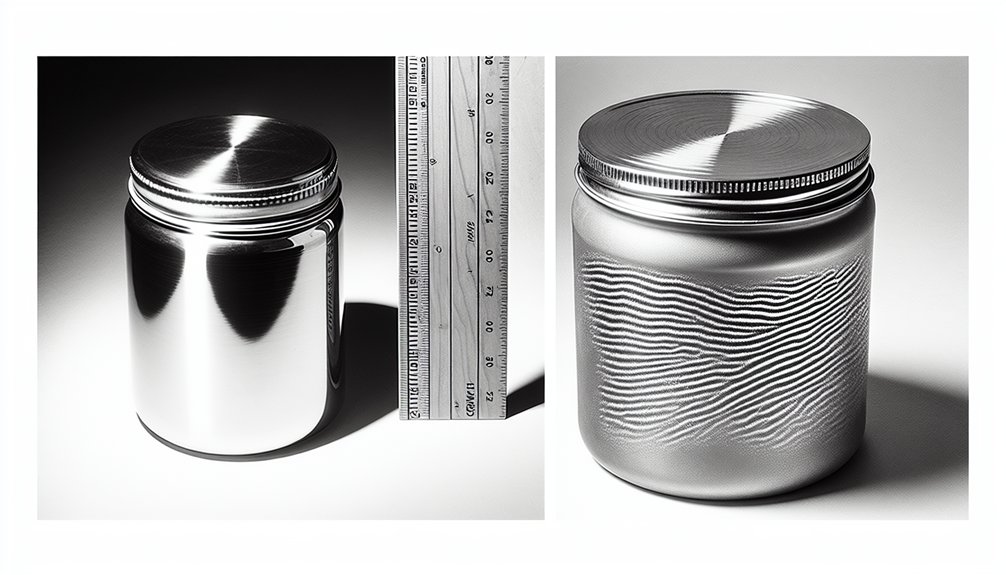
When comparing stainless steel and hard plastic blender jars, consider their differing maintenance needs, expected service life, and total cost of ownership, because material properties directly affect wear mechanisms, cleaning regimes, and replacement frequency. You’ll find stainless steel resists staining, odor absorption, and micro-scratching better, so you can use higher-temperature sanitization and abrasive cleaning with lower risk of material degradation; that reduces biofilm risk and extends service life. Hard plastic is lighter and cheaper initially but can craze, retain odors, and degrade under repeated heat or solvent exposure, increasing replacement frequency. Calculate lifecycle cost by combining purchase price, expected years to failure under your use profile, maintenance labor, and potential safety costs from contamination; choose the material that minimizes total risk-adjusted cost. Consider also that motor power and build quality influence overall value and should factor into your material choice.
Frequently Asked Questions
Can Jar Material Affect Blending Efficiency or Motor Strain?
Yes — you’ll see measurable differences: stainless steel resists flex and vibration, preserves blade alignment, reduces noise and motor load; hard plastic can flex, absorb impact, increase wear and heat, potentially stressing the motor over time.
Do Material Choices Influence Flavor Transfer Between Different Foods?
Yes — material influences flavor transfer: stainless steel is non-porous, inert, and resists odor absorption; hard plastic can adsorb oils and odors over time, increasing cross-contamination risk unless cleaned and maintained rigorously.
Are There Environmental Impacts Specific to Stainless Steel Vs Hard Plastic?
Yes — stainless steel has lower long-term environmental impact due to recyclability and durability, whereas hard plastic often involves higher lifecycle greenhouse gases, microplastic pollution risk, and limited recycling; you’ll want to prioritize reuse and certified materials.
Can Jar Material Alter Cooling Times for Hot Ingredients?
Yes — jar material changes cooling times: stainless steel conducts heat faster and cools hot contents quicker than hard plastic, which is more insulating; for safety, expect shorter exposure to high temperatures with metal jars.
Do Materials Affect Compatibility With Induction or Magnetic Appliances?
Yes — ferromagnetic materials are required for induction. If a jar or base isn’t magnetic, it won’t work on induction cooktops or magnetic appliances. You should verify material composition and manufacturer compatibility for safe operation.