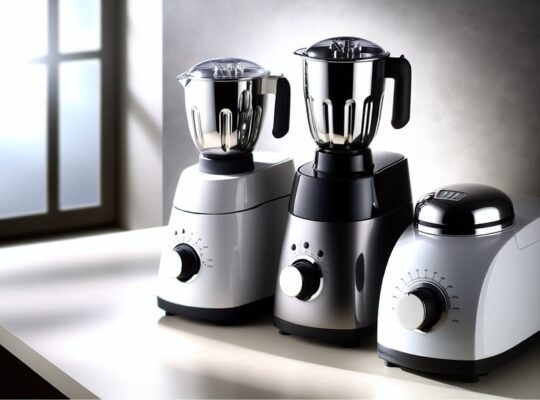
If you’re shopping for the best mixer grinder under ₹3000, focus on practical reliability rather than flashy specs. Compare motor wattage, build quality, jar materials, and safety features like thermal cutoff and secure lids. Expect decent everyday performance but realistic limits on heavy-duty tasks. I’ll outline what matters and how to pick the model that lasts — so you don’t end up replacing it sooner than necessary.
Key Takeaways
- Choose a 500–750W motor with good duty cycle; higher wattage handles chutneys and wet grinding better under ₹3000.
- Prefer stainless-steel jars (0.3–0.5L chutney, 0.8–1.2L wet, 1.5–2L dry) for durability and hygiene.
- Ensure thermal overload protection, secure jar-locks, and sturdy housing to prevent burnout and accidents.
- Check brand service network, warranty terms, and spare-part availability for long-term safety and repairs.
- Prioritize build quality, stable feet, and clear controls over extra speed settings for reliable everyday use.
Why Price Isn’T the Only Factor When Choosing a Mixer Grinder
Why focus only on price? You’ll want a mixer grinder that balances cost with safety, durability, and performance. A cheaper unit may seem attractive, but you’d trade off build quality, motor protection, and reliable controls. Compare models on how they handle heat, overloads, and wobble; these affect safety during everyday use. Think about serviceability and spare-part availability—repairing a slightly pricier, well-supported model can be safer and cheaper long term. Noise and vibration levels matter too: lower vibration reduces wear and the chance of components loosening. Look for clear safety features like sturdy lids, secure jar locks, and thermal cut-offs; these aren’t obvious from price alone. You’ll also want consistent grinding performance to avoid repeated use that stresses the motor. In short, treat price as one dimension among several—choose a model that minimizes risk while delivering reliable performance, even if it means spending a bit more upfront. Many reputable brands, including Vidiem, offer models with advanced cooling and durable SS 304 blades that improve longevity and performance.
Key Specifications to Check Under ₹3000
You’ll want to compare motor power and build quality first, since a stronger, well‑built motor runs longer and handles tougher grinding without overheating. Also check jar material and capacity — stainless steel jars resist staining and tainting, while larger capacities save time for big families. Balancing motor durability against jar design helps you pick the most reliable unit under ₹3000. Consider models with thermal overload protection to protect the motor during heavy use.
Motor Power & Durability
Consider motor power the single biggest factor that decides a grinder’s real-world performance and longevity: under ₹3000 you’ll typically see motors rated between 500W and 750W, and choosing closer to 750W gives you better handling of tough ingredients and lower strain during continuous use. You’ll want a motor that runs cooler and maintains speed under load; higher wattage models usually do. Check for thermal overload protection and copper windings—those features reduce fire risk and motor burnout. Compare duty cycles: shorter run-times need longer cool-downs. Also look at build quality of the motor housing and bearings—sturdier internals mean less vibration and fewer failures. Prioritize models with clear safety certifications and accessible service networks for reliable, safe ownership. For heavier tasks like wet masala pastes and chutneys, consider models with higher torque that are designed to sustain tougher loads.
Jar Material & Capacity
After looking at motors, check the jars—materials and sizes affect performance nearly as much as wattage. You’ll typically see stainless steel, plastic (polycarbonate or ABS), and glass. Stainless steel is durable, heat-resistant and hygienic; it’s best for wet grinding and hot chutneys. Plastic is lighter and cheaper but can scratch, stain, and retain odors; avoid thin, brittle plastics for safety. Glass resists staining and won’t leach chemicals, but it’s heavier and can shatter under impact. Consider capacity: a 0.3–0.5 L chutney jar, 0.8–1.2 L wet jar, and 1.5–2.0 L dry jar cover most needs. Check secure lids, gasket quality, and balanced weights to prevent wobble. Prioritize durable materials and well-sealed jars for safety and longevity. Also consider models that include multiple jar sizes and sturdier construction for better long-term value.
Motor Power and Performance: What to Expect
Look for motors in the 500–750W range, since that’s the typical power band under ₹3000 and it dictates how well the grinder handles wet and dry tasks. Check whether the model offers at least two speed settings so you can match torque to the ingredient instead of overworking the motor. Also verify presence of heat and overload protection—those features prevent damage during heavy use and are more reliable indicators of long-term performance than peak wattage alone. Prefer models with overload protection and an ABS body for safer, longer service life.
Motor Wattage Range
How much motor power do you really need in a mixer grinder under ₹3000? Look for motors typically between 500W and 750W. A 500–550W motor handles daily tasks—wet grinding, chutneys, small batter—while using less electricity and running cooler. A 650–750W motor offers more torque for tougher ingredients like dry masalas and heavier wet grinding, but may draw more current and need better thermal protection.
Compare models by duty cycle and overload cut-off rather than just wattage; safety features matter. Prefer motors with copper windings and certified thermal overload protection to reduce fire and burnout risk. In short, choose 500–550W for light household use, 650–750W if you frequently process heavy quantities, and always confirm safety certifications. Make sure you follow safe blade replacement and handling practices, especially when checking or replacing components like the blade assembly and seals, to prevent injury and maintain performance blade assembly.
Grinding Speed Control
While motor wattage gives you a baseline, grinding speed control determines how that power’s delivered and how versatile the grinder will be. You’ll find basic models offer one or two fixed speeds—adequate for general wet grinding but less precise for textures. Mid-range machines in this price bracket often include three-speed settings plus pulse; that lets you adjust coarseness and reduce splatter when starting. Variable or stepless controls are rare under ₹3000, so compare available increments: smaller steps mean finer control. Also check whether switches are sturdy and labelled clearly to avoid accidental changes during use. Good speed control helps you match tasks—masala, chutney, batter—while keeping operation predictable and safer for household cooking routines. Regular maintenance like cleaning blades and checking for loose components can prevent excess vibration and noise.
Heat and Overload Protection
Because grinders heat up under continuous use, you’ll want clear heat and overload protection to prevent motor damage and interruptions during heavy tasks. You should compare models for thermal-cutoff, auto-reset, and overload cutoff; these features determine longevity and safe operation under stress. Prefer units that signal trips and restart only after cool-down. Simpler fuses may protect but need manual replacement, while electronic sensors are faster and more precise. Commercial units with thermal overload protection are preferred for continuous-use reliability.
| Feature | Benefit | What to check |
|---|---|---|
| Thermal cut-off | Prevents overheating | Automatic shutoff temp |
| Auto-reset | Convenience | Cool-down time |
| Overload cutoff | Protects motor | Trip threshold (W) |
| Fuse | Low cost | Replaceability |
| Indicator | User feedback | Visible/reset status |
Pick grinders with multiple protections for reliable, safe performance.
Jar Types and Capacities for Different Uses
Need help choosing jars for everyday cooking or occasional heavy-duty jobs? You’ll want jars that match tasks and capacity needs without compromising safe operation. Smaller jars are for chutneys and spices; medium ones suit wet grinding and batter; large jars handle pastes and blending; and specialized jars (like juicer or grinding stone alternatives) address niche needs. Consider material, lid fit, and seal quality as you compare.
- 0.3–0.5 L chutney/spice jar: quick pulses, minimal splatter, easy cleaning.
- 0.8–1.2 L multipurpose jar: balanced for chutney, batter, and wet grinding.
- 1.5–2.0 L liquid/large jar: for larger batches, soups, and coarse grinding.
- Specialized mason-style or juicer attachment: for soft fruits, separating pulp, or tenderizing.
Match jar size to meal prep frequency so you don’t overload motors or cause spills. Opt for secure lids and durable materials; they reduce leak and injury risk while keeping performance consistent. Orient’s range often includes models with overload motor protection to prevent overheating and extend motor life.
Safety Features and Build Quality to Prioritize
Having the right jars is only part of the story — build quality and safety features determine how reliably your grinder performs and how long it lasts. You should prioritise a robust motor housing (metal or thick ABS) that resists vibration and heat; cheaper thin plastics warp faster and can expose internal parts. Compare base stability: rubber feet and low centre of gravity cut noise and tipping risk. Look for thermal overload protection and automatic shut-off to prevent motor burnout if the unit overheats or stalls. A secure, interlocking lid and jar-lock mechanism reduce splash and injury risk; avoid models with loose lids or flimsy locks. Check for insulated, heat-resistant wiring and a safety-certified power cord and plug (ISI or BIS marks in India). Finally, prefer stainless steel blades and corrosion-resistant jar fittings for durability and hygiene. These measured choices lower maintenance, improve safety, and give better value over time. Also consider jar material choices like stainless steel jars since they are durable and corrosion-resistant.
Top 7 Models Under ₹3000 Worth Considering
Now you’ll compare seven budget-friendly models that balance power and practical build. Look for machines that deliver consistent motor performance while including useful jars and blades. I’ll highlight strengths and trade-offs so you can pick the best fit for your needs.
Power and Performance
How much power do you really need from a mixer grinder under ₹3000? You’ll balance motor rating, torque, and duty cycle to match everyday tasks—wet grinding, dry grinding, and chutneys. Higher watts give faster results, but efficient design and stabilizing features matter for safety and longevity. Compare models by real-world performance rather than just numbers.
- 500–750 W: adequate for regular wet/dry use; runs cooler, safer for intermittent tasks.
- 750–900 W: better for heavier chutneys and longer runs; watch for vibration control.
- Overload protection: prevents motor damage and reduces fire risk.
- Stabilization and cooling vents: maintain performance under repeated use; reduces overheating.
Choose a model that fits your workload and prioritizes thermal protection and secure operation.
Build and Accessories
When you’re choosing among top mixer grinders under ₹3000, focus on build quality and included accessories since they determine durability and everyday convenience. You’ll want sturdy ABS or metal housings, tightly sealed lids, and shock‑proof plugs to reduce risk. Compare jar material (stainless steel vs. polycarbonate), blade construction, and motor housing vents for cooling. Check if the package includes a chutney jar, wet/dry jars, and extra blades; genuine spare parts and a good warranty improve safety and lifespan. Prefer models with non‑slip feet and overload protection. Use the table below to quickly compare typical offerings.
| Housing | Jars Included | Safety Features |
|---|---|---|
| ABS/Metal | 3 (wet/dry/chutney) | Overload, non‑slip |
| Polycarbonate | 2 (wet/dry) | Basic fuse, vents |
Real-World Performance: Noise, Heat, and Durability
Curious which grinder will stand up to daily use without driving you mad or overheating? You want a unit that’s predictable: some models run quieter but struggle under wet grinding; others roar but maintain speed with heavy loads. Compare decibel levels, motor thermal protection, and casing resilience. Prioritize safety features that prevent motor burn and lid ejection.
- Noise: steady vs. spiking under load—quieter models reduce stress during long tasks.
- Heat: thermal cutouts and cool-down recovery time indicate how much continuous work it can handle.
- Durability: gear quality and jar fittings determine resistance to wear and wobble.
- Safety: locked lids, insulated wiring, and stable feet reduce risk during operation.
In short, choose grinders that balance acceptable noise with proven thermal protection and solid construction. That combination gives reliable daily performance while minimizing safety hazards and unexpected shutdowns — key for a household appliance under ₹3000.
Maintenance Tips to Extend Your Grinder’s Life
Want your grinder to stay reliable for years rather than a few months? Clean components after every use—jars, lids, and blades—so residues don’t corrode parts or promote bacterial growth. Compare dry and wet cleaning: wipe motor housing with a damp cloth; never immerse it. Sharpen or replace dull blades promptly; blunt blades stress the motor and raise heat. Balance loads—avoid overfilling jars or processing very hard items alone; uneven loads cause vibration and bearing wear. Use pulse or short bursts for tough chutneys rather than continuous runs to limit heat buildup. Check and tighten loose screws and jar locking mechanisms periodically to prevent misalignment. Inspect power cord for cuts and replace damaged cords immediately to reduce fire risk. Allow the motor to cool between heavy tasks; cumulative heat shortens lifespan. Store jars and accessories dry and covered to prevent rust. Follow these steps regularly for safer, longer-lasting performance without extra cost.
Smart Buying Tips: Warranties, After-Sales Service, and Deals
How long will your mixer grinder really be protected? You’ll want at least a one-year warranty on the motor and two years on the body or parts ideally; compare brands that offer extended or paid options. Check what’s covered—motor burnout, electrical faults, seals—and what voids the warranty, like non-authorized repairs. After-sales service matters: prefer brands with local service centers and documented turnaround times so you’re not without a grinder for weeks. Look for transparent service charges and genuine spare parts availability.
- Manufacturer warranty vs. dealer/extended warranty: coverage limits and claim process
- Local service network: number of centers, response time, and pickup options
- Spare parts availability and authenticity: genuine blades, jars, and cords
- Seasonal deals and cashback: read terms, avoid reduced warranty or bundled non-covered items
Compare objectively, prioritize safety and documented coverage, and don’t let a low price mask poor support.
Which Grinder Suits Your Cooking Style and Budget
Which tasks do you cook most often and what’s your monthly budget? Decide between wet grinding (idli, dosa batter), dry grinding (spices, coffee), and chopping/blending. If you mostly do wet grinding, pick a model with higher motor power and a dedicated wet jar; if you mainly crush spices, a compact unit with a sturdy dry jar suffices. For mixed use, choose balanced specs: moderate power, multiple jars, and secure lid locks for safety.
On budget, under ₹3000 you’ll trade advanced features for reliability: prioritize build quality, overload protection, and service network over extra speed settings. Compare jar material (stainless steel is safer than flimsy plastic), blade robustness, and warranty coverage. If you rarely grind heavy loads, a lower-power, economical grinder will reduce noise and energy use. Whatever you pick, verify certification, clear user instructions, and accessible customer support to ensure safe, consistent performance.
Frequently Asked Questions
Can This Grinder Crush Ice for Cocktails and Smoothies?
Yes — it can crush ice for cocktails and smoothies, though it handles small, occasional batches better than heavy-duty blizzards. You’ll want short pulses, chilled cubes, and secure lids to avoid overheating or blade stress.
Are Replacement Jars and Blades Widely Available Locally?
Yes — you’ll usually find replacement jars and blades locally, though availability varies by brand and model; compare authorized service centers and spare-part listings, verify material safety and genuine parts to reduce risk and assure proper fit.
How Compatible Is It With Indian Voltage Fluctuations?
Many models handle typical Indian voltage fluctuations poorly; you’ll want one with built‑in thermal overload and voltage stabilization or use a stabilizer/SMPS. Compare wattage and protections, avoid cheap motors lacking safety features for consistent, safe operation.
Does It Have a Child-Lock or Tamper-Proof Lid?
Yes — it has a tamper-proof lid with a safety interlock. You’ll find it more secure than basic models, preventing operation unless locked; it’s a sensible choice if you’re prioritizing child safety and accident prevention.
Can I Grind Wet Batter Without Motor Overload?
Yes — you can grind wet batter without overloading if you choose a grinder with a robust motor, proper wattage, thermal overload protection, and the right jar size; compare torque ratings, duty cycle, and safety features before buying.