When you compare a 3-speed and a 4-speed mixer, you’re weighing control against simplicity: a 4-speed gives finer rpm steps and gentler ramping for heavy doughs, while a 3-speed reduces complexity and user error for routine tasks. Consider torque delivery, start-up behavior, and how accessories respond to each range. The right choice depends on batch size and product variety—so let’s examine where those differences actually matter.
Key Takeaways
- 4-speed mixers offer finer RPM gradations, enabling gentler emulsification and reduced splatter with viscous batters.
- 3-speed units provide simpler control: low for folding, medium for everyday mixing, high for whisking and whipping.
- More speeds let you ramp up gradually to lower startup torque and minimize ingredient ejection.
- Higher-watt motors (preferably ~1000 W) matter more than speed count for heavy doughs and sustained torque.
- Choose 4-speed for frequent large or delicate tasks; 3-speed suffices for small, occasional batches with simpler needs.
How Speed Options Affect Mixing Results
How much difference does an extra speed make? You’ll notice that a 4-speed mixer gives finer gradations between low and high RPMs, enabling gentler emulsification at intermediate settings and reduced splatter when starting viscous batters. A 3-speed unit simplifies selection: low for folding, medium for general mixing, high for whipping; it’s easier to avoid improper speed choice but offers coarser control. From a safety standpoint, more speeds let you ramp up gradually, lowering startup torque and minimizing ingredient ejection. Conversely, simpler controls reduce user error under stress. Quantitatively, a fourth speed typically occupies a transitional RPM band (e.g., 200–600 RPM) reducing shear spikes. You should match speed resolution to typical recipes and prioritize models with secure bowl locks and clear speed markings. Models with overload protection also help prevent motor damage and improve long-term reliability.
Motor Power, Control, and Accessory Compatibility
Why choose a higher-watt motor over a lower-watt one? You want consistent torque under load; higher-watt motors maintain speed with dense doughs, reducing motor strain and risk of overheating. Control architecture matters too: simple stepped controls (3-speed) limit operational granularity, while 4-speed offers finer selection to match viscosity and safety margins. Accessory compatibility is practical—planetary mixers with standardized hubs accept more attachments, but motor rating dictates allowed accessory workload.
- Torque retention: higher watts sustain mixing without stalling.
- Thermal management: beefier motors run cooler under prolonged cycles.
- Control resolution: more speeds let you start slow, ramp safely.
- Accessory load limits: check motor wattage vs. attachment specifications to avoid overloads.
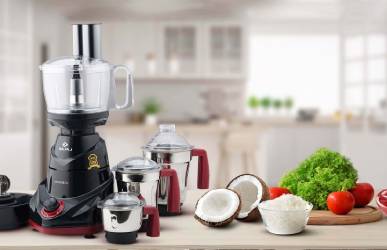
When choosing, consider models with a 1000 watt motor for reliable performance and durability, especially if you frequently handle heavy or continuous tasks with the mixer 1000 Watt Mixer Grinder.
Choosing the Right Mixer for Your Baking Habits
Now that you’ve considered motor power, control granularity, and accessory limits, choosing the right mixer comes down to matching those technical specs to how you bake. You’ll assess batch size: frequent large batches benefit from higher wattage and a 4-speed transmission for steady torque across stages, while occasional small batches are adequately served by a 3-speed model with reliable low and high settings. Consider ingredient types: heavy doughs demand sustained torque and thermal protection; delicate batters need fine low-speed control to avoid overmixing. Factor safety features like automatic shutoff, thermal cutouts, and secure attachments; these reduce risk during prolonged use. Compare serviceability and accessory ecosystems to ensure long-term safe operation and consistent performance aligned with your routine. Also weigh build quality and after-sales support, since models with sturdier shells and wider service networks generally offer better long-term reliability and easier maintenance.
Frequently Asked Questions
Can a 3-Speed Mixer Handle Heavy Bread Dough Long-Term?
Yes — a 3-speed mixer can handle heavy bread dough, but you’ll risk motor strain and overheating over prolonged use; compared to a 4-speed unit, it offers less torque control and shorter duty cycles, so monitor temperature closely.
Do Speed Options Affect Noise Levels?
Yes — more speed options can reduce noise by allowing lower-RPM operation for heavy loads, and finer motor control often lowers vibration. You’ll still want sound-damping mounts and proper maintenance to minimize bearing and gearbox noise.
Are There Safety Differences Between 3-Speed and 4-Speed Mixers?
Yes — you’ll find minimal inherent safety differences; 4-speed mixers can offer finer speed control reducing splatter risk, while both rely on proper guards, overload protection, and user practices to prevent injury or mechanical failure.
Is There a Significant Price Difference Between Them?
Yes — you’ll often pay slightly more for 4-speed units due to added control and components; price gaps are modest, vary by brand, and don’t imply improved safety, so evaluate features, build quality, and certifications.
Do Speed Ranges Impact Energy Consumption?
Yes — wider speed ranges let you match torque to tasks, so you’ll often use less energy at lower speeds; however, overall consumption depends on motor efficiency and use patterns, so a 4-speed isn’t always more efficient.