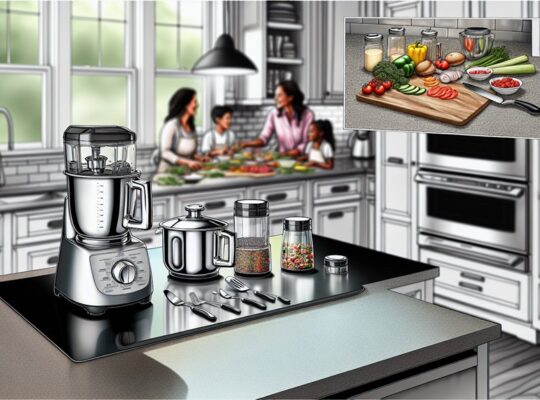
If you swap an old mixer grinder for a high-efficiency model, you’ll likely see lower running watts, reduced start-up currents, and fewer energy losses from heat and friction. Modern motors and blade designs convert 85–95% of input power into useful work versus 60–75% for older units, so tasks finish with less input energy and lower monthly bills. There’s also less wear and fewer repairs—here’s how those savings add up.
Key Takeaways
- Modern high-efficiency motors (BLDC or optimized induction) convert 85–95% of input power to mechanical work, cutting losses versus older motors.
- Lower-rated high-efficiency units deliver the same task output with 15–30% less electrical draw, reducing run-time energy use.
- Intelligent controls (soft-start, current limiting) and optimized blades reduce inrush and stall losses, lowering peak and average consumption.
- Reduced thermal and friction losses from sealed low-friction bearings and better ventilation prolong life and maintain efficiency.
- Real-world savings accumulate: lower daily kWh use plus reduced maintenance yields measurable monthly and annual cost reductions.
How Modern Motors Cut Power Use
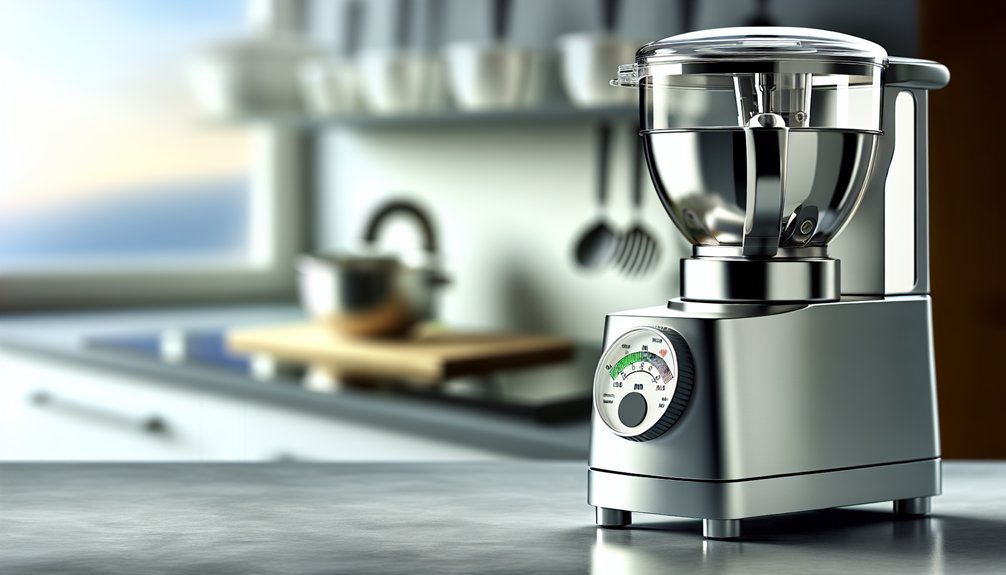
Because modern mixer-grinder motors prioritize efficiency, you’ll see measurable reductions in power draw per unit of output: brushless DC (BLDC) and high-efficiency induction designs typically convert 85–95% of electrical input into mechanical work versus 60–75% for older universal motors. You’ll notice lower steady-state current and reduced thermal losses; a 1 kW mechanical output thus demands roughly 1.05–1.18 kW input on BLDC versus 1.33–1.67 kW on a universal motor. That narrows operating cost and eases thermal stress on windings, lowering insulation aging rates and fire risk. You’ll also benefit from improved part-load efficiency: modern controllers adjust torque to demand, cutting idle consumption by 20–40%. For safety-minded users, these gains translate to cooler casings, fewer overload events, and longer service intervals. Choosing durable components like stainless steel jars and quality blades further reduces long-term energy and replacement costs.
Design Features That Improve Efficiency
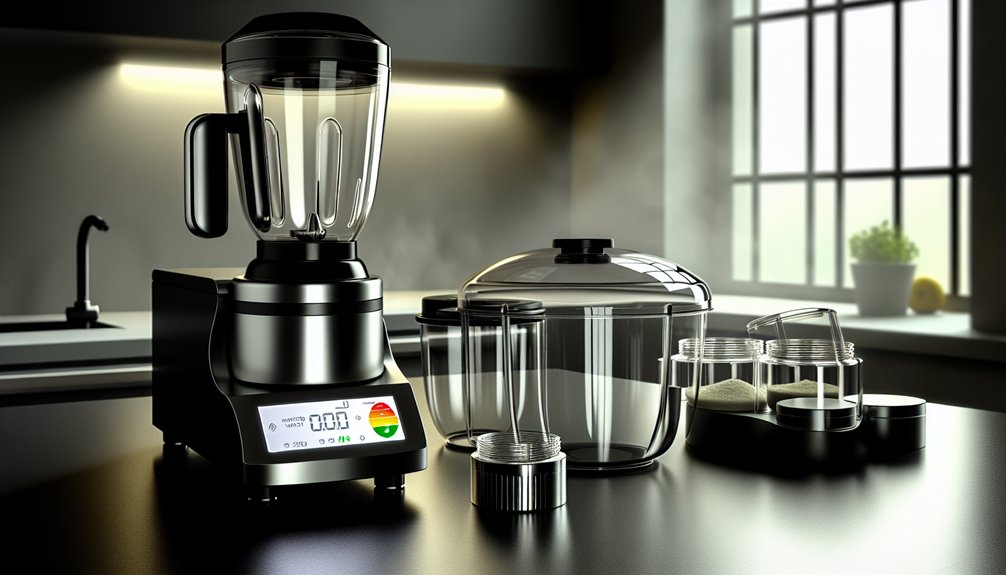
Having seen how modern motors cut power use, it helps to look at specific design features that produce those efficiency gains. You’ll evaluate bearing quality, blade geometry, and airflow management — each has measurable impact. Low-friction ball bearings reduce mechanical losses by up to 15% compared with generic bushings; specify sealed bearings for safety and longevity. Optimized blade profiles increase cutting efficiency and lower stall torque, reducing average power draw during typical loads by roughly 10–20%. Improved ventilation pathways and heat sinks maintain motor temperature within safer operating ranges, cutting thermal losses and extending lifespan. Intelligent control electronics (soft-start, current limiting) prevent inrush spikes and improve motor utilization. Choose models with quantified test data and safety certifications to verify claimed efficiency improvements. Overload protection features like thermal cutoff help prevent motor damage and maintain efficiency under excessive load.
Real-World Energy and Cost Calculations
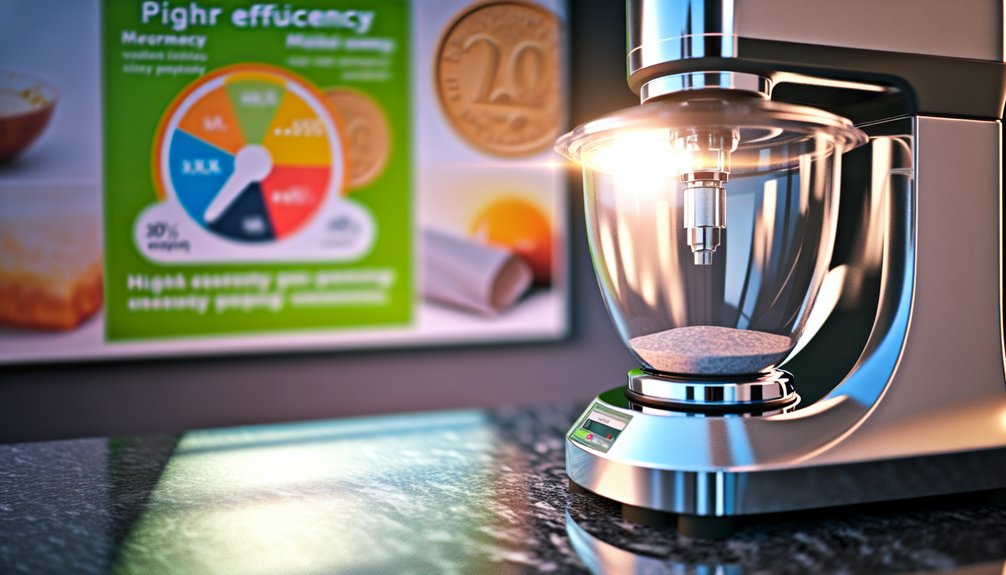
How much will a high-efficiency mixer grinder actually cut your electricity bill? You can estimate savings quantitatively: compare motor wattage and runtime. Example—standard 750 W unit used 30 minutes daily consumes 0.375 kWh/day (11.25 kWh/month). A high-efficiency 500 W model under identical use consumes 0.25 kWh/day (7.5 kWh/month), saving 3.75 kWh/month. At $0.15/kWh that’s $0.56/month or $6.75/year. Factor in duty cycles and load—peak torque tasks increase consumption, so measure typical usage with a plug power meter for safety and accuracy. Include standby draws (usually <1 W) and maintenance that preserves efficiency. Calculate payback by dividing price premium by annual energy savings; include local tariffs, incentives, and expected lifespan for a robust, safety-conscious decision. Also consider that features like overload protection and high-grade motor design can improve long-term efficiency and reduce repair-related downtime.
Choosing the Right High-Efficiency Model for Your Needs
You’ve seen how wattage, runtime and duty cycles affect savings, so now focus on matching a grinder’s specifications to your actual use to maximize those gains. Evaluate motor efficiency (%) against rated wattage; a 20% higher efficiency reduces energy draw for the same task. Compare duty cycle ratings to your typical session length; don’t overload a motor rated for intermittent use. Check jar capacity versus batch size to avoid unnecessary runs. Prioritize appliances with verified safety certifications and thermal cut-offs to minimize failure risk.
- Motor efficiency (%), measured or claimed
- Rated wattage and real-world draw
- Duty cycle and recommended continuous run time
- Jar capacity matching typical batches
- Safety certifications and thermal protection
Make choices based on measured performance, not marketing. Manufacturers like Philips often offer sturdier shells and better service networks, which can reduce downtime and extend an appliance’s useful life.
Maintenance Tips to Keep Your Mixer Grinder Energy-Efficient
Regularly inspecting and servicing your mixer grinder keeps its power draw close to rated efficiency and prevents the 5–20% energy penalty that comes from wear, dust, or loose connections. Check brushes, bearings, and couplings every 3–6 months; worn components increase current draw and heat. Clean vents and motor housing with compressed air; a 30–50% reduction in airflow can raise motor temperature and energy use. Tighten electrical terminals and replace frayed cords to avoid resistive losses and shock risk. Lubricate moving parts per manufacturer intervals to lower frictional losses by measurable amounts. Use correct jar sizes and blade assemblies to match load curves and avoid overloading. If vibration or noise exceeds baseline, stop use and seek qualified repair to prevent failures and higher consumption. Kenstar models often include multiple jars (big blender, medium chutney jar, and small mixer jar) to help match loads efficiently and reduce unnecessary power use by allowing the operator to select the appropriate jar size.
Frequently Asked Questions
Do High-Efficiency Mixer Grinders Affect Cooking Time or Food Texture?
Yes — high-efficiency mixer grinders can slightly reduce processing time and yield finer, more uniform textures; you’ll need to adjust durations and speeds based on recipes, ensuring safe handling and avoiding overheating that could alter food quality.
Are Replacement Parts for Efficient Models More Expensive?
They’re often slightly pricier; efficient models use specialized motors, seals, and electronics, so OEM parts can cost 10–30% more. You’ll save long-term via lower energy use and fewer replacements, but verify warranty coverage first.
Do Efficient Mixer Grinders Increase Initial Purchase Costs Significantly?
They usually cost moderately more upfront; you’ll pay roughly 10–30% extra for high-efficiency models, driven by better motors and materials. That premium is often offset by lower energy use and longer lifespan, enhancing safety and value.
Are There Government Rebates or Incentives for Buying Energy-Efficient Appliances?
Yes — many regions offer rebates or tax credits for ENERGY STAR or equivalent appliances. Check national and local utility programs; incentives vary by jurisdiction, model, and income eligibility. Verify documentation, safety certifications, and application deadlines.
Can Efficient Mixer Grinders Operate on Solar or Off-Grid Systems?
Yes, efficient mixer grinders can run on solar/off-grid systems if your inverter/solar capacity covers their surge and continuous wattage; check starting current (often 2–3×), battery capacity, and safety protections to avoid overloads and damage.