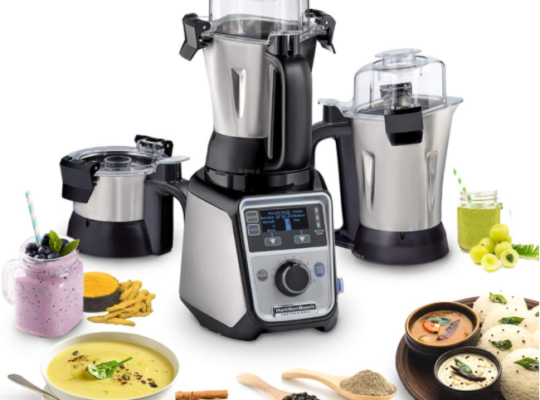
Overload protection in your mixer grinder is a safeguard that cuts or limits power when current, temperature, or torque exceed safe limits to protect the motor and wiring. It uses thermal cutouts, bimetallic trips, magnetic breakers or electronic sensing to detect abnormal load and shut down or throttle output. You’ll want to know how these methods work, what triggers them, and how simple maintenance can reduce nuisance trips.
Key Takeaways
- Overload protection automatically cuts power or limits motor load when current or temperature exceed safe limits to prevent damage.
- It preserves motor windings, bearings, and switch contacts by preventing thermal and mechanical stress during excessive load conditions.
- Common mechanisms include thermal cutoffs, bimetallic trips, electronic current sensing, magnetic trips, and mechanical torque limiters.
- Activation signs include sudden speed loss, a clicking sound, motor shutdown with cool-down cycling, or a tripped reset/LED indicator.
- Prevent overloads by using smaller batches, keeping blades sharp, maintaining cooling vents, and monitoring current after servicing.
How Overload Protection Keeps Your Mixer Grinder Safe
When a mixer grinder draws more current than its motor or wiring can safely handle, overload protection steps in to prevent damage by interrupting power or throttling load. You’ll see that protection minimizes thermal and mechanical stress by detecting abnormal current or temperature rises, then isolating the motor to halt operation. This preserves winding insulation, bearings, and switches, reducing fire and failure risk. You’ll avoid cascading faults that otherwise escalate repair costs and hazards. Properly calibrated protection maintains operational continuity by allowing controlled resets or automatic retries only after safe conditions return. For safety, you should verify that protection settings match motor ratings and that trip elements are periodically tested; this keeps performance reliable and minimizes unexpected downtime. Many modern wet and mixer grinders include overload protection as a key safety feature to protect the motor and increase the appliance’s longevity.
Common Types of Overload Protection Mechanisms
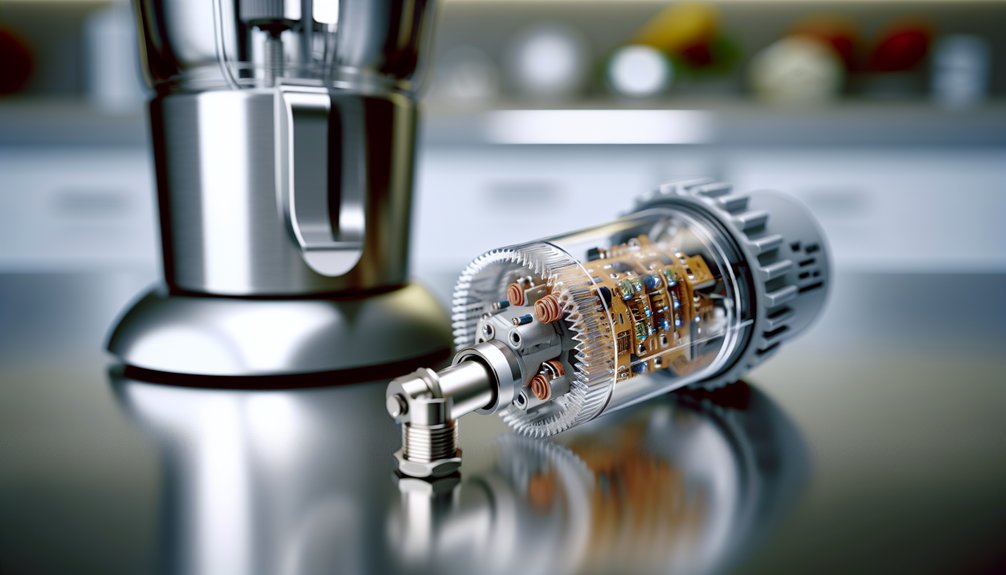
Because different faults and usage patterns demand different responses, mixer grinders use several distinct overload protection mechanisms, each optimized for specific failure modes. You’ll encounter devices that act quickly or progressively to prevent motor damage and hazards. Understand their operation so you can choose and maintain equipment safely.
- Thermal cutoff: opens circuit when temperature exceeds a setpoint, protecting windings from heat buildup.
- Bimetallic trip: bends under heat to interrupt current, then resets after cooling; simple and reliable.
- Electronic current sensing: monitors real-time current and shuts down when thresholds or patterns indicate overload.
- Magnetic (MCB-type) protection: trips on sudden high-current faults like short circuits.
- Torque limiter or slip clutch: mechanically prevents excessive load transfer to the motor, avoiding electrical overload.
Many consumer mixer grinders under 3000 include overload protection features to enhance safety and prolong motor life.
Signs the Overload Protector Is Activating
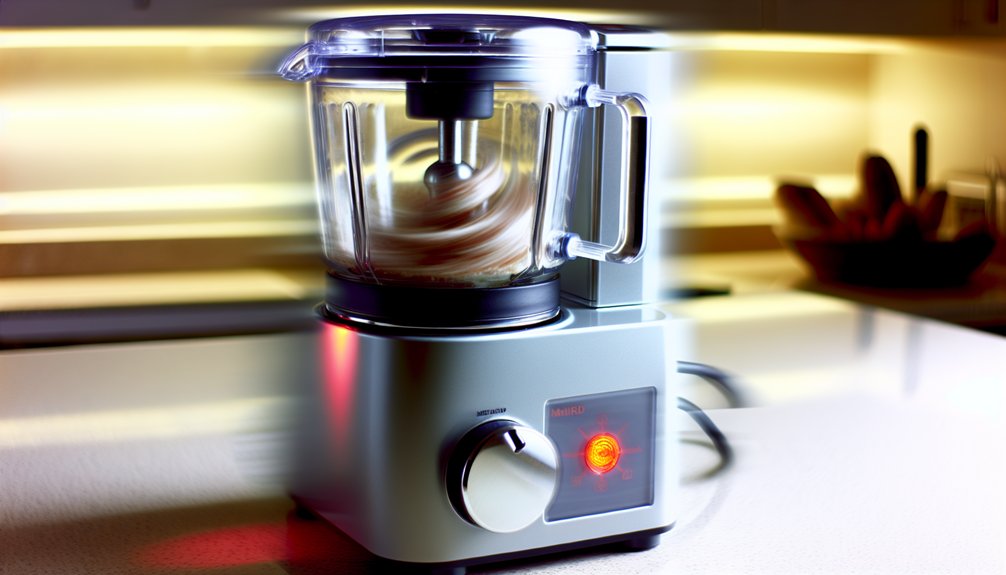
How can you tell the overload protector is kicking in? You’ll notice an abrupt reduction in motor speed or stalled blades under load; the grinder may slow without increased input effort. Audible clues include a distinct click, a faint relay-like snap, or sudden cessation of motor whine. The appliance might cycle off and on: brief operation followed by mandatory cool-down intervals is a common pattern. Visual indicators can be an illuminated fault LED or a tripped reset button protruding from the housing. You may also detect heat reduction at the motor casing as the protector cuts power. These signs are functional safety responses, not cosmetic faults; when observed, power should be removed and the unit inspected before reuse to ensure safe operation. Some higher-powered models, like those with overload protection in 750–1000 watt ranges, include automatic reset and motor guards for safer operation.
Why Overload Trips Happen and How to Prevent Them

Why does an overload trip occur, and what can you do to stop it? Overload trips happen when motor current or temperature exceeds design limits due to mechanical or electrical stress. You’ll want to identify root causes and mitigate them promptly to maintain safety and performance.
- Overloading the jar with dense material increases torque demand; use smaller batches.
- Dull blades or clogged filters raise mechanical resistance; inspect and replace parts.
- Repeated start-stop cycles heat the motor; allow cool-down periods between heavy tasks.
- Low supply voltage or voltage fluctuations cause higher current draw; use stabilized power or surge protection.
- Bearing wear or shaft misalignment creates excess friction; detect via vibration and address quickly.
These steps reduce trip frequency and lower hazard risk. Consider upgrading to a 1000 Watt mixer grinder for improved cooling and higher torque when handling heavy-duty tasks.
Maintenance Tips to Reduce Overload Incidents
Having addressed common causes of overload trips, you can cut their frequency through targeted maintenance practices that keep mechanical resistance and electrical stress within design limits. Inspect blades, seals, and jar mounts weekly for wear or misalignment; replace parts showing deformation to prevent increased torque. Clean vents, motor housing, and cooling fins monthly to maintain thermal dissipation and avoid heat-induced trips. Verify capacitor condition and terminal tightness quarterly; loose connections raise internal resistance and thermal stress. Lubricate bearings per manufacturer intervals with specified lubricant to reduce frictional load. Use a clamp meter to monitor running current after service—spikes indicate residual issues. Document maintenance actions and observed currents so you can correlate interventions with reduced trips and improve preventive schedules. Also ensure you follow the manufacturer’s recommended warranty and safety guidelines to preserve long-term motor performance and coverage.
Frequently Asked Questions
Can Overload Protection Wear Out Over Time?
Yes — overload protection components can degrade with repeated trips, heat, vibration, or age, so you’ll see reduced sensitivity or failure over time; inspect, test, and replace worn thermal or electronic protectors to maintain safety.
Can Overload Protect Against Short Circuits?
No, it typically won’t; overload protection is designed to guard against sustained overcurrent from motor stall or heavy load, not instantaneous short-circuit faults. You should install proper fuses or circuit breakers for short-circuit protection.
Is Overload Protection User-Replaceable?
Generally no — you shouldn’t replace overload protection yourself. Manufacturers often integrate thermal cutouts or PTCs into motor assemblies; improper replacement risks incorrect rating, voided warranty, electrical hazard. Have qualified service handle it.
Does Overload Protection Affect Grinding Performance?
Yes — overload protection can affect grinding performance; it prevents motor overheating by tripping under excessive load, so you’ll see temporary interruptions or reduced torque until reset, preserving motor life but potentially slowing or pausing grinding cycles.
Are Overload Protectors Universal Across Brands?
No — you can’t assume universality. Overload protectors vary by design, trip current, reset method and mounting; compatibility depends on motor type, voltage, mechanical fit and manufacturer specs, so check datasheets and warranty terms.