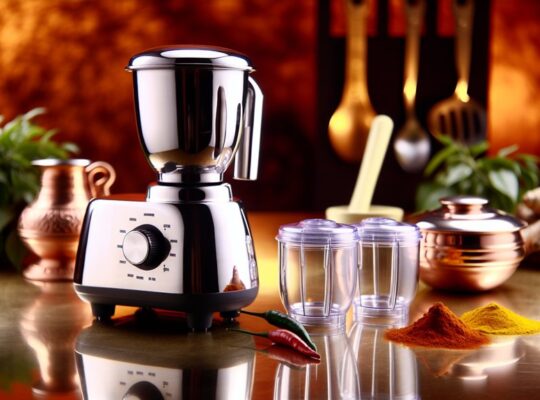
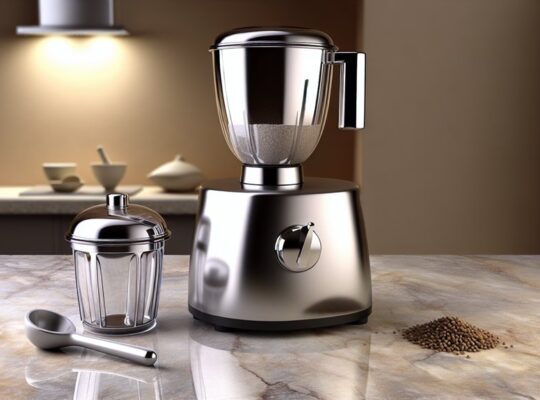
When you’re choosing a grinder for idli batter, wattage matters because it controls torque, heat generation, and grind consistency. Pick too little power and you’ll get long grind times and uneven texture; pick too much and you risk overheating the batter and stressing the motor. The right range depends on batch size and duty cycle, and there are simple rules to match wattage to use that make selection straightforward—here’s how to decide.
Key Takeaways
- For small domestic batches (250–500 g), a 200–400 W motor usually delivers smooth, consistent grinding without overheating.
- For medium household batches (500 g–1 kg), aim for 400–700 W to maintain torque and finer texture under typical duty cycles.
- For large batches or frequent use, choose 700–1200+ W continuous-duty motors to prevent speed drop and heat buildup.
- Prefer motors rated for continuous (S1) duty or with thermal cutouts to avoid motor stress and burnt batter from excessive heat.
- Monitor bowl temperature (keep below ~35–38°C) and use short pulses or cool-downs regardless of wattage to protect batter quality and motor life.
Why Motor Wattage Matters for Batter Quality
Why does motor wattage matter for idli batter quality? You’ll find wattage directly affects grinding consistency, heat generation, and motor torque. Lower wattage can struggle with wet, heavy mixtures, causing uneven particle size and incomplete starch release; that yields dense idlis. Higher wattage maintains blade speed under load, producing a uniformly fine grind that promotes proper fermentation and airy texture. You’ll also notice wattage influences run-time stability: a sufficiently rated motor won’t overheat or stall during typical batch sizes, reducing burn risk and mechanical failure. For safety, you’ll want a motor that handles expected loads without prolonged strain, minimizing electrical and thermal hazards. In practice, balance power with build quality and user precautions—avoid continuous overloading, ensure ventilation, and follow manufacturer duty-cycle guidelines. That way, you’ll get consistent batter characteristics while protecting equipment and users. Always follow proper maintenance and blade care, including safe removal and sharpening procedures to preserve performance and blade sharpness.
Typical Wattage Ranges for Home Grinders
Home kitchen grinders typically span 200–1200 watts, with lower-watt units suited to small daily batches and higher-watt models handling larger or tougher grinding tasks. Manufacturers rate motors as induction or universal (brushed) types, and the continuous versus peak wattage spec tells you how long a grinder can run reliably. Match the motor type and continuous wattage to your usual load—short bursts at higher peak power won’t substitute for sustained continuous power when you’re making large quantities. For many households, a 750W balance offers a good compromise between power, efficiency, and versatility.
Power Ranges for Grinders
Curious how much motor power you actually need for idli batter? For home use, grinders typically span three practical power bands: 200–400 W, 500–700 W, and 800–1200 W. If you grind small daily batches, 200–400 W is adequate but expect longer run times and finer control; avoid continuous operation beyond manufacturer duty cycle. The 500–700 W band balances torque and thermal stability for 2–4 cups of batter, giving quicker grind times and reduced heat buildup. For larger families or frequent use, 800–1200 W offers robust torque and shorter cycles, but you must observe safety: secure lids, steady surfaces, and intermittent operation to prevent motor overheating. Match power to batch size and follow duty-cycle limits for safe, consistent results. Also consider using a grinder with motor overload protection for added safety and longevity.
Motor Types and Ratings
How much motor power do you really need for a household idli grinder? You’ll see two common motor types: induction (AC) and universal (AC/DC). Induction motors run cooler, are durable, and suit continuous grinding; typical home ratings range 200–750 W. Universal motors offer high starting torque and compact size, often rated 300–1000 W, but they run hotter and need better ventilation. Look for motors with thermal cut-outs, IP-rated housings, and proper insulation class to reduce risk. Continuous-duty (S1) ratings indicate safe prolonged operation; intermittent-duty (S2/S3) are for short runs. Check declared input power versus output shaft power (efficiency). Choose a motor type and rating that balances torque, duty cycle, and built-in safety protections. Many popular home grinders also pair these motors with stainless steel jars for durability and hygiene.
Match Wattage to Load
Want to size the motor to match what you actually grind? Determine typical loads: small daily batches (0.5–1 kg) need 200–400 W; medium household batches (1–2.5 kg) suit 400–800 W; heavy or frequent use (2.5–5 kg) benefits from 800–1200 W. Match continuous torque, not just peak watts — higher wattage gives better stall margin and cooler operation under load. Factor duty cycle: intermittent use tolerates lower wattage; sustained grinding requires higher-rated motors and proper ventilation. Prioritize safety margins: choose a grinder with at least 20–30% extra wattage above your calculated load to avoid overheating and reduced lifespan. Verify thermal protection, secure mounting, and manufacturer load charts before purchase. AI-enabled mixers can provide predictive maintenance alerts that help preserve appliance longevity and reduce downtime.
Wattage Recommendations for Small-Scale Vendors
If you’re running a small food stall or canteen, prioritize grinders with sustained heavy-duty power (at least 750–1500 W) to handle continuous batches without overheating. You’ll also want designs that minimize maintenance time—easy-access seals, robust bearings, and replaceable blades cut downtime and service costs. Compare duty cycles and serviceability specs before buying to ensure performance and uptime match your daily throughput. Higher-wattage models also provide greater torque for handling dense batters and larger volumes.
Continuous Heavy-Duty Power
Because you’ll be running grinders for hours and often back-to-back, choose motors rated for continuous duty rather than intermittent duty; aim for 1,500–3,000 watts for single-station commercial grinders and 3,000–6,000 watts for multi-station or high-throughput setups. You’ll want torque stability under load: higher wattage maintains grind quality and prevents overheating during long cycles. Match motor rating to typical batch size and cycle frequency to avoid underspecification that causes strain. Ensure your electrical supply and wiring capacity support sustained draw, and verify thermal protection and insulation class on motor nameplates. Prioritize equipment with documented continuous-duty ratings, clear duty cycles, and manufacturer performance curves so you can predict longevity and safe operation under your specific production schedule. Also consider models with low noise operation to improve working conditions during long grinding shifts.
Easy Maintenance Needs
While you’ll rarely need the high continuous-duty wattage of a commercial mill, choosing a grinder in the 400–1,200 W range balances sufficient torque for small batches with easier upkeep and lower power costs. You’ll want a model that’s simple to disassemble, uses sealed bearings where possible, and has serviceable motor brushes. Regular cleaning reduces wear and prevents contamination; inspect seals, blades, and mounts weekly when you grind daily. Prioritize units with detachable bowls and splash guards to avoid electrical hazards during cleaning.
- Choose accessible parts: quick-release clamps, standard fasteners, replaceable brushes.
- Maintain a schedule: lubrication points, belt tension, and moisture checks.
- Keep spare consumables: seals, gaskets, and fuses for rapid repairs.
Manufacturers that offer a longer motor warranty and reinforced construction, like those with a 5-year motor warranty, can reduce long-term downtime and repair costs.
How Wattage Affects Grinding Time and Heat
How quickly your idli batter reaches a smooth, airy consistency depends largely on the grinder’s wattage: higher-watt motors shorten grinding time but can raise bowl temperature, while lower-watt motors take longer and keep heat buildup minimal. You’ll notice that wattage correlates with torque and sustained RPM; higher wattage maintains speed under load, breaking cell walls faster and producing finer particles in less time. That efficiency reduces fermentation risk from prolonged exposure but increases thermal energy transferred to the batter. Monitor bowl and batter temperature; aim to keep batter below about 35–38°C to protect yeast activity and enzyme function. If temperature climbs, use short pulse intervals and allow cooling pauses to prevent overheating. For safety, avoid continuous high-power runs that stress motor windings and seals. Measure grinding time empirically for your recipe and adjust technique: shorter, controlled bursts at appropriate wattage balance speed, texture, and thermal safety without compromising equipment longevity. Use an anti-vibration mat and ensure the grinder sits level to reduce mechanical vibration that can increase noise and wear.
Matching Wattage to Batch Size
Want to match grinder wattage to the batch you’re making? You’ll balance capacity, cycle length, and thermal safety to get consistent batter without overstressing the motor. Assess the volume you grind per session and choose wattage that reduces run time while limiting heat buildup.
- Small batches (250–500 g): Use 200–400 W. Short cycles suffice; lower wattage reduces over-grinding risk and keeps temperatures safe for fermentation.
- Medium batches (500 g–1 kg): Use 400–700 W. Moderate power shortens grind time without excessive heat; monitor duty cycles and allow short rests to prevent motor overheating.
- Large batches (1–2 kg+): Use 700–1500 W. Higher wattage maintains torque and reduces grinding time, but follow recommended continuous-run limits and keep ventilation clear to avoid thermal damage.
Match wattage to your routine, respect duty cycles, and prioritize rest intervals. That minimizes heat transfer to batter and extends appliance life. Also consider jar material and blade quality—choose stainless steel jars and durable blades to improve heat dissipation and grinding efficiency.
Motor Types and Their Effective Power
Now that you’ve matched wattage to batch size, it’s useful to contemplate the underlying motor types because they determine how that wattage behaves in practice. You’ll encounter mainly universal (AC/DC brush) and induction motors. Universal motors deliver high starting torque and rapid speed — useful for short, demanding grind cycles — but they run hot and wear brushes, so you’ll want brief duty periods and secure ventilation. Induction motors run cooler, provide steady torque at lower maintenance, and tolerate sustained operation; they suit repeated large-batch grinding with less risk of overheating. Brushless DC (BLDC) motors combine controlled speed, high efficiency, and lower maintenance; they’re increasingly common in premium grinders where precise RPM control matters. When assessing effective power, consider torque curves and cooling: rated watts aren’t all usable under load. Choose a motor whose duty profile, thermal protection, and maintenance needs align with your typical grind duration to minimize failure risk and ensure safe, consistent batter texture.
Power Efficiency and Energy Consumption
Why does wattage on the spec plate not tell the whole story of running costs? You’ll pay attention to actual energy drawn during use, not just rated wattage, because duty cycle, load, and motor efficiency determine real consumption. Measuring active run-time and average current gives a true picture of operating cost.
- Measure actual consumption: use a plug-in power meter to record watts during typical grinding cycles and idle periods.
- Consider efficiency and duty cycle: efficient motors convert more input to mechanical work; frequent short cycles increase relative losses from start-up and heat.
- Factor in operating schedule: estimate daily/weekly grinding minutes, multiply by measured average watts, then convert to kWh to calculate cost.
You should prioritize models with documented efficiency and thermal protection. That reduces unexpected energy waste and safety risks from overheating. Keep records of measured consumption to compare long-term running costs instead of relying on spec-plate numbers alone.
Signs Your Grinder Needs More or Less Power
Watch the batter’s texture: if it stays grainy or uneven despite normal grinding cycles, you may need more power. Note grinding time—longer-than-expected runs suggest underpowered motors, while unusually short cycles with poor texture can mean inappropriate high speed. Also watch motor strain signs like overheating, burning smells, or frequent stalls, which indicate either overload or mismatched wattage.
Batter Texture Consistency
Texture is the clearest indicator you’re using the right grinder power: if the batter feels uniformly smooth with tiny air bubbles and spreads easily without pulling threads, your motor has enough torque; if it’s grainy, lumpy, or warms quickly during grinding, you need more power or a different speed profile—conversely, an overly silky, runny batter that doesn’t hold shape likely means excess shear from too-high RPMs.
You should monitor texture at regular intervals and avoid overheating. If adjustments are needed, change wattage or pulse duration rather than forcing continuous high speed. Use safety measures: keep lids secured and allow cool-downs.
- Grainy/lumpy: increase torque or reduce feed rate; avoid prolonged runs.
- Warm batter: lower duty cycle; add pauses to protect motor.
- Overly fluid: reduce RPM; increase grind fineness cautiously.
Grinding Time Needed
How long should you run the grinder to get the right idli batter? You’ll typically need 10–20 minutes of cumulative grinding: 10–12 minutes for urad dal to achieve fluffy aeration and 6–8 minutes for rice to reach fine, slightly granular smoothness. Pulse intervals—30–60 seconds on, 15–30 seconds off—prevent overheating and let you assess texture without overworking the mix. If batter becomes gluey within five minutes, you’re using excessive power; stop, cool, and reduce run time or lower wattage. If coarse particles remain after 20 minutes, consider longer grinding or a higher-wattage appliance. Always keep safety in mind: avoid running a hot motor continuously, secure lids, and unplug before scraping or adjusting blades.
Motor Strain Signs
Wondering whether your grinder’s working too hard or you’re underpowered? You should watch for clear, safety-relevant signs that indicate motor strain so you can act before damage or hazard occurs.
- Unusual noises: grinding, whining, or clicking under load can signal overloaded bearings or low torque; stop immediately to inspect and reduce batch size.
- Excess heat and smell: a hot casing or burning odor means the motor’s thermals are being exceeded; unplug, let it cool, and consider a higher-wattage unit or intermittent operation.
- Sluggish performance and stall: if blades slow, stall, or require repeated restarts, the motor lacks sufficient continuous power; choose a grinder with higher rated wattage and built-in overload protection.
Monitor regularly to maintain safe, efficient operation.
Maintenance Tips to Preserve Motor Performance
Because the motor is the grinder’s critical component, regular maintenance directly preserves torque, efficiency, and lifespan. You should schedule inspections every 50–100 hours of operation: check brushes, commutator or bearings, and fasteners. Clean ventilation paths and cooling fins with compressed air to prevent thermal buildup. Lubricate bearings per manufacturer intervals using specified grease; over- or under-lubrication both reduce performance. Monitor electrical connections for discoloration or looseness and tighten to specified torque values to avoid resistance heating.
Measure current draw periodically under a defined load; deviations indicate wear or imbalance. Balance and secure the grinding assembly to minimize vibration, which accelerates bearing and shaft fatigue. Replace worn brushes or seals instead of deferring repairs. Use a thermal cutout and magnetic overload protection to protect against stall conditions. Keep a written maintenance log with dates, readings, and actions so you can trending-failures early. Always disconnect power before servicing and follow lockout/tagout procedures to ensure safety.
Choosing Between Single-Phase and Three-Phase Motors
When deciding whether to use a single‑phase or three‑phase motor for your idli grinder, compare torque requirements, duty cycle, and available electrical supply: single‑phase motors suit light to moderate home or small-shop use with simpler wiring and lower cost, while three‑phase motors deliver higher continuous torque, smoother operation, and better efficiency for commercial or heavy‑duty grinding where frequent starts and long run times are expected.
You’ll evaluate performance, safety, and installation constraints. Single‑phase is adequate if you run short batches and prioritize simplicity; it’s less capable of handling prolonged high-load grinding without overheating. Three‑phase reduces current draw, offers steadier torque under load, and increases motor lifespan when used within rated duty cycles. Consider protective devices, proper wiring, and thermal protection regardless of choice. If supply or budget restricts you, size the motor conservatively and add overload protection.
- Match motor torque to expected load and duty cycle.
- Ensure supply compatibility and install proper protection.
- Prioritize thermal protection and routine inspection.
Frequently Asked Questions
Can Wattage Affect Fermentation Speed of the Batter?
Yes — wattage can indirectly affect fermentation speed: higher-power grinders heat batter more during grinding, raising temperature and accelerating fermentation, while low wattage keeps it cooler; monitor temperature to avoid overheating and ensure safe, controlled fermentation.
Is Grinder Noise Level Correlated With Motor Wattage?
Generally, yes: higher-wattage motors often produce more noise, but design, load, enclosure, and RPM matter too. You’ll want quieter insulation, balanced rotors, and proper mounting to reduce noise hazards and ensure safe operation.
Do Higher-Watt Motors Increase Electricity Bills Noticeably?
They won’t noticeably spike bills for typical home use; higher-watt motors draw more power while running, but short grind cycles mean minimal added energy consumption, so you can safely prioritize performance over marginal cost increases.
Can Wattage Influence Dosa/Other Batter Textures Too?
Yes — wattage affects dosa and other batter textures; higher-watt grinders sustain speed, yielding finer, smoother pastes, while lower-watt units may leave coarser grains. You’ll want appropriate power to guarantee safe, consistent grinding results.
Are Warranty Lengths Related to Motor Wattage?
Not directly — warranty lengths usually depend on manufacturer policy, build quality, and component durability, not just motor wattage. You should check warranty terms and service coverage, ensuring motor protections and safe operating practices are specified.