You can use your mixer grinder to cut weekly meal-prep time and improve consistency, as long as you follow safe, evidence-based steps and match attachments to tasks. Start by sorting jars for wet and dry jobs, pulse in short bursts to avoid overheating, and portion blends for freezing or quick reheating. With a few simple routines you’ll streamline breakfasts, sauces, and chopped veg—but there’s one key habit that makes all the difference.
Key Takeaways
- Use the multipurpose wet jar for smoothies, sauces, and batters; start with liquids and pulse in short bursts for even texture.
- Make dry mixes (oats, spices, powdered milk) in the dry jar, store airtight, and add liquid each morning for quick breakfasts.
- Pulse trimmed raw proteins or vegetables in short bursts for consistent mince or coarse veg, keeping raw and cooked prep separate.
- Portion sauces, pastes, and marinades into labeled containers or ice-cube trays; refrigerate up to 4 days or freeze up to 3 months.
- Always confirm jar locks, inspect seals, let the motor cool between long runs, and stabilize the unit on a non-slip surface.
Essential Mixer Grinder Attachments and Safety Tips
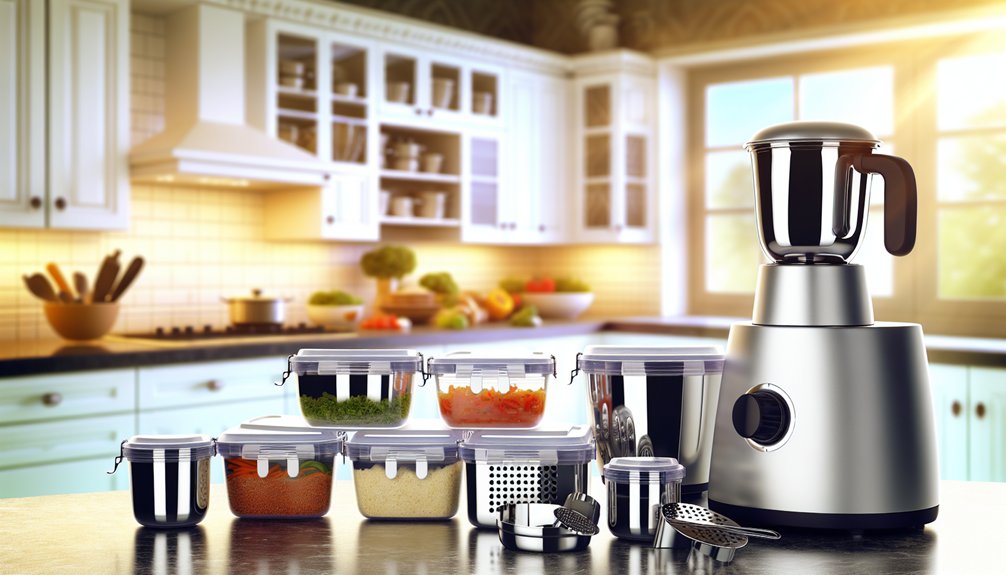
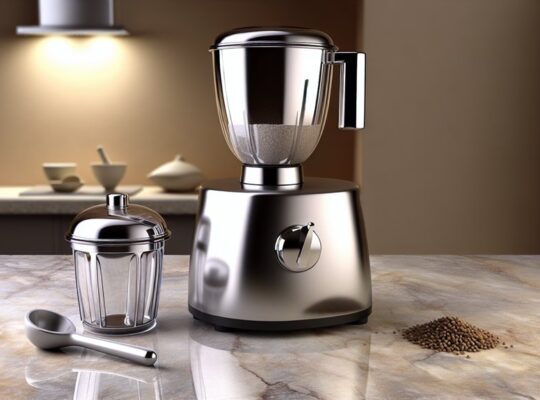
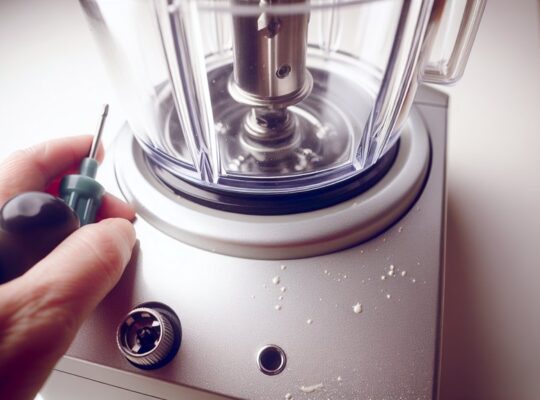
What attachments will you actually need for weekly meal-prep? You’ll want a multipurpose jar for wet grinding (sauces, batters), a dry jar for spices and grains, and a chutney or small jar for pastes and small-quantity tasks. Choose stainless-steel jars with secure lids and well-fitted blades; these reduce contamination and improve durability. Always confirm jar-locking mechanisms engage before running the motor. Use pulse function and short bursts to avoid overheating; let the motor cool after repeated cycles. Fit rubber feet or a non-slip mat to stabilize the unit. Clean blades and jars promptly, using gloves if needed, and inspect seals regularly for wear. Replace cracked jars or frayed cords—faulty parts are a common cause of accidents. Consider a 750-watt motor for better grinding efficiency and durability when handling larger quantities (750-watt turbo motor).
Batch-Prep Breakfasts: Smoothies, Oats Mixes, and Chutneys
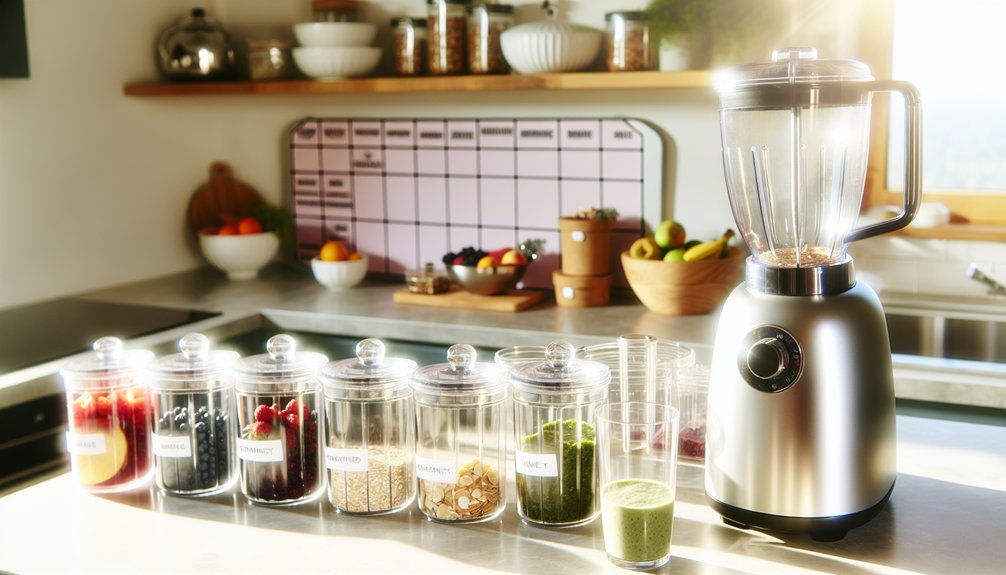
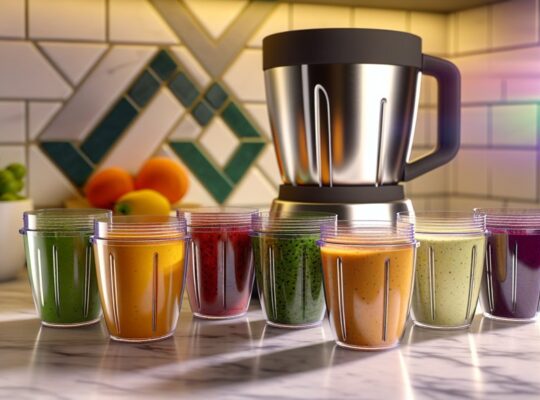
Now that you’ve got the right jars, blades and safety habits down, you can use your mixer grinder to batch-prep breakfasts that save time and improve nutrition all week. Start by making smoothie bases: blend measured fruit, spinach, protein powder and liquid; portion into freezer-safe jars label with date — this preserves nutrients and prevents bacterial growth. For overnight oats mixes, pulse rolled oats, seeds, powdered milk or protein, and spices; store dry in airtight containers so you only add liquid each morning. Prepare small-batch chutneys (mint, tomato, coconut) using short pulses to retain texture; cool completely before refrigerating in sterilized jars. Always cool hot ingredients, seal jars properly, and follow refrigerated shelf-life guidelines (3–5 days) for safety and quality. Consider using a mixer grinder with sturdy jars and reliable overload protection to help maintain consistent results and safety when batch-prepping jar durability.
Sauces, Pastes, and Marinades to Make Ahead
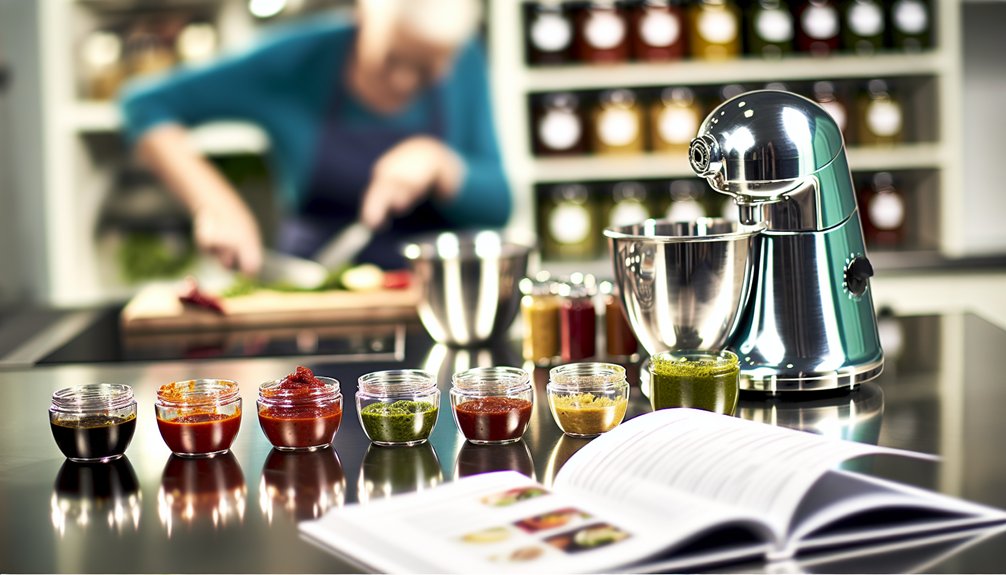
Looking to shave time without sacrificing flavor? Use your mixer grinder to batch up sauces, pastes, and marinades that keep well and deliver consistent results. Measure ingredients and pulse to uniform texture — studies show even particle size improves flavor extraction and marinade penetration. Portion into airtight containers or ice-cube trays, label with date, and refrigerate up to 4 days or freeze up to 3 months to minimize bacterial risk. Acidic components (vinegar, citrus) extend safety; add salt or oil as directed by tested recipes. Thaw in the fridge, not at room temperature. When reheating, bring sauces to a simmer to ensure safety and quality. This approach saves time, reduces waste, and gives you reliable, flavorful meals all week. For best results, start with liquids first and use short pulses to control texture and prevent overheating for consistent results.
Prepping Vegetables and Proteins for Quick Weeknight Meals
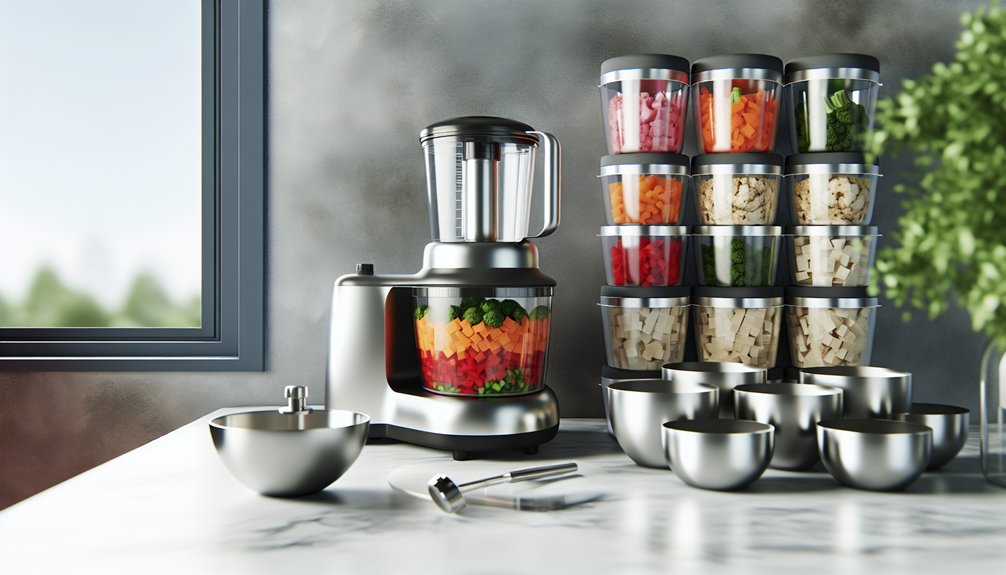
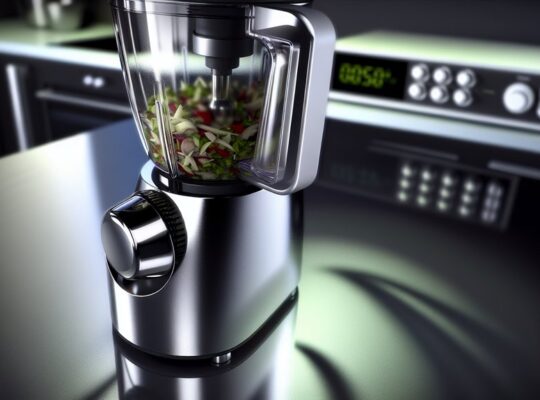
Sauces and marinades are only part of the equation—you’ll get the biggest time savings when your vegetables and proteins are prepped to match them. Use your mixer grinder to create uniform cuts and pulpy mixes: pulse for coarse veg for stir-fries, or blitz to a paste for binding veggie patties. Trim proteins, then pulse in short bursts to make consistent mince—this reduces cooking time and ensures even doneness. Follow food-safety steps: keep raw meat separate, sanitize bowls between uses, and chill minced proteins promptly. Portion proteins and chopped vegetables into meal-sized amounts so you only thaw or cook what you need. These evidence-based, practical steps cut prep and reduce risk, helping you assemble safe, quick weeknight meals. Choose a suitable wattage for your tasks—750W balance often gives the right mix of power and efficiency for family-sized meal-preps.
Storage, Labeling, and Reheating Best Practices
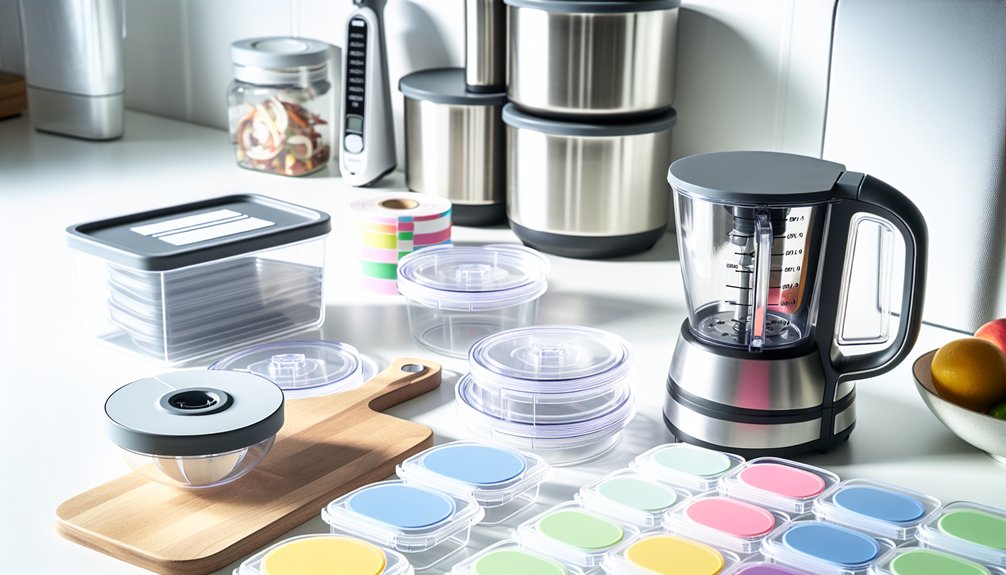
Because safe storage and clear labeling cut waste and food-safety risks, you should portion meals into single-use or family-size servings, chill or freeze them promptly (within two hours), and mark each container with contents and date before shelving. Use airtight, BPA-free containers or heavy-duty freezer bags, leaving headspace for expansion when freezing. Store refrigerated meals at 40°F (4°C) or below for up to four days; freeze for three months for best quality. Thaw safely in the refrigerator or with cold water, not at room temperature. Reheat to an internal temperature of 165°F (74°C) and stir to eliminate cold spots; use a lid or microwave-safe cover to retain moisture. Discard if odor, color, or texture seems off; when in doubt, throw it out. Regularly inspect your appliances and accessories for wear, including blades and seals, to ensure safe operation and prevent contamination.
Frequently Asked Questions
Can a Mixer Grinder Puree Hot Liquids Safely?
Yes — you can, but you shouldn’t unless your grinder’s manual says it’s rated for hot liquids. Let hot contents cool slightly, fill partially, vent lid, blend in short pulses, and avoid overfilling to prevent burns and splashes.
Can I Grind Spices Finely Without a Dedicated Spice Mill?
Yes — you can, but be cautious. Use a dry jar, small batches, pulse to avoid overheating, cool between runs, and sift for consistency. Clean thoroughly to prevent flavor transfer and store spices airtight away from light.
How Do I Prevent Strong Odors Transferring Between Foods?
Always clean and dry thoroughly between uses, run a vinegar-water or baking soda paste cycle, grind a neutral item (rice) to absorb odors, store blades separately if possible, and use airtight containers—it’s safer and reduces cross-contamination.
Is It Safe to Use a Mixer Grinder for Nut Butters Weekly?
Yes — you can safely make nut butters weekly if you clean thoroughly, use dry, fresh nuts, avoid overheating the motor, and rotate wear parts. If you have allergies, label jars and sanitize seals to prevent cross-contact.
Can I Wash Grinder Jars in a Dishwasher?
Yes — many jars are dishwasher-safe, but check your grinder’s manual and jar labels first. If labeled safe, use top rack, gentle cycle, and avoid high-heat drying; otherwise wash by hand to protect seals and blades.