Before you start, make sure you unplug the unit and remove the blade so you’re working safely and cleanly; inspect it for nicks, rust, or a bent edge and note the bevel angle (usually 20–30°). Use the proper tools—diamond or ceramic file for hardened stainless, or a fine bench grinder—clamp the blade with padding, cool frequently, and maintain the original bevel while you sharpen. Do this right and you’ll restore cutting performance—next, learn exact step‑by‑step techniques and troubleshooting.
Key Takeaways
- Unplug the grinder, remove the blade assembly, clean and dry it, and photograph orientation before working.
- Secure the blade in a padded vise while wearing ANSI A4 cut-resistant gloves and eye protection.
- Maintain the original bevel angle (about 20–30°) and use a diamond file, ceramic rod, or medium-fine sharpening stone.
- Sharpen in smooth, even strokes along the bevel, cool frequently in water, and remove burrs with a fine honing stone.
- Reassemble with dry components, torque or snug retaining hardware correctly, run at low speed, and check for vibration or noise.
Assessing Blade Wear and Damage
How worn are the blades, really? You’ll want to start with a careful visual inspection: look for rounded edges, nicks, chips, or rust. With the appliance unplugged and blades removed, hold each blade up to good light and use a magnifying glass if available. Run your fingertip lightly — from heel to tip, not against the edge — to feel for irregularities; any burrs or blunt spots mean reduced cutting performance. Measure blade edge angle and thickness with calipers if you’ve got them; significant thickening near the edge signals metal loss. Check for warping by laying blades on a flat surface; rocking or gaps indicate distortion and replacement may be safer. Also inspect mounting holes and splines for wear that compromises secure fitting. Document findings and photograph damage before proceeding. If you detect cracks, severe chips, or structural deformation, don’t attempt sharpening — replace the blade to avoid catastrophic failure. For ongoing safety and performance, follow regular maintenance like wiping blades dry and inspecting seals after cleaning to prevent moisture buildup.
Identifying Your Mixer Grinder Blade Type
Before you start sharpening, identify the blade’s shape and size so you know which edges to work on and whether you need special tools. Check the material and hardness—stainless steel, hardened steel, or coated blades will require different techniques and safety precautions. Finally, inspect the mounting and fitment to confirm the blade is removable and that any fasteners or spacers are handled correctly before you begin. Consider the blade material and choose appropriate methods for stainless steel versus coated or hardened blades, as stainless steel blades are durable and corrosion-resistant.
Blade Shape and Size
Wondering which blade you’ve got? Check shape first: straight blades are flat with sharp edges for chopping; angled or slanted blades have a beveled face for slicing and require different sharpening angles. Note blade count — single, double, or multi-tier — since more edges mean you’ll sharpen each face carefully. Measure diameter and blade height with a ruler; record those dimensions to match sharpening tools and to keep clearances safe when reinstalling. Inspect mounting holes and hub size so you don’t damage the central fitting during sharpening. Always disconnect power and wear cut-resistant gloves while handling. Photograph the blade orientation before removing it to preserve assembly order and avoid unsafe reassembly that could cause imbalance or binding. Allow the motor to rest between cycles to reduce heat buildup and protect motor torque.
Material and Hardness
Which metal is your blade made of and how hard is it—these two facts determine the sharpening method and the risk of cracking or losing the temper. First, inspect markings or the manual: stainless steel, carbon steel, tool steel, or hardened alloy behave differently. Carbon steel sharpens quickly but needs gentle heat control to avoid temper loss; use coarse stones then fine stones, keeping metal cool. Stainless resists corrosion but can be tougher to cut; use diamond or ceramic abrasives with steady strokes. Hardened tool steels may chip if you grind too aggressively; use light passes and cooling. If you’re unsure, test a small area, feel for brittleness, and err on the side of less material removal to preserve hardness and safety.
Mounting and Fitment
How does your blade actually sit in the grinder and attach to the motor? Check the hub: is it a splined shaft, a single central bolt, a keyed slot, or a press-fit peg? Remove the jar, unscrew retaining nuts, and note orientation—flat face, concave cup, or washer spacer. Measure bore diameter and count splines or keyways; these details determine compatible replacement and sharpening angles. Inspect for play or wobble; any lateral movement means you’ll need shaft repair or a different mounting adapter before sharpening. Label parts as you disassemble to ensure correct reassembly. Never sharpen or test with the blade loosely fitted. Proper fitment prevents imbalance, vibration, and dangerous blade failure—so confirm mounting integrity before you proceed to any grinding or honing. For heavy-duty or frequent use, choose a blade and mounting compatible with higher wattage motors to avoid overheating and reduce wear.
Safety Precautions Before You Begin
Before you touch the blades, unplug the grinder and remove any detachable parts so there’s no chance of accidental power. Put on cut-resistant gloves and handle the blade edges carefully to avoid nicks. Clamp or otherwise secure the blade in a vise or holder so it can’t shift while you work. Always inspect the blade and hub for compatibility and signs of damage before sharpening to ensure safe reassembly.
Unplug and Disconnect Power
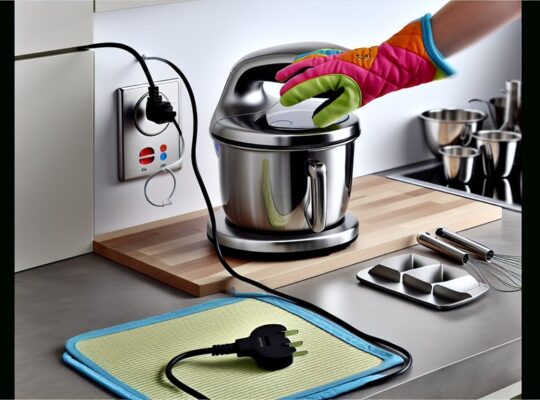
Start by unplugging the mixer grinder from the wall and switching off any nearby isolator or power strip to make sure no electricity can reach the unit while you work. You’ll want to confirm power removal before touching the jar or blade assembly. Visually inspect the cord and plug for damage and keep the area dry. If your unit has a removable battery or backup power source, remove it. Lock or label the outlet if others might restore power.
- Verify plug is removed and cord is slack.
- Switch off adjacent circuits or isolators.
- Remove any detachable batteries or capacitors if present.
- Hang a note on the appliance to prevent accidental reconnection.
These steps reduce electrocution and accidental start risks—don’t skip them. Also consider checking the unit’s thermal overload protection and motor condition before proceeding to ensure safe handling.
Wear Cut-Resistant Gloves
Why would you risk handling sharp blades without proper protection? Put on cut-resistant gloves rated for at least ANSI/ISEA A4 before you touch any blade parts. Choose gloves made from high-performance fibers like Kevlar, Dyneema, or blended composites; they give good dexterity and puncture resistance. Ensure the gloves fit snugly—too loose and they snag, too tight and your grip weakens. Inspect gloves for tears, worn fingertips, or contamination; replace if compromised. Don’t rely on regular rubber or gardening gloves; they’re not cut-rated. Keep a clean pair nearby to change if they get oil or metal filings on them. Using proper gloves reduces laceration risk and helps you handle, position, and move blades safely during sharpening prep. Also, always unplug the mixer grinder and remove the jar before touching blades to prevent accidental startup and electrical shock.
Secure Blade Before Handling
How will you keep the blade from shifting while you work? You’ll need a stable setup before touching the edge. Clamp the blade in a bench vise with soft jaws or wrap the clamp faces with cloth to avoid marring the metal. If you don’t have a vise, secure the blade on a non-slip mat and press firmly with a heavy, flat object. Always wear cut-resistant gloves and eye protection while positioning the blade, and keep your free hand well away from the cutting edge.
- Use a bench vise with padded jaws for firm, even pressure.
- Tighten gradually; avoid overtightening that could warp the blade.
- Use a non-slip mat and weight if a vise isn’t available.
- Recheck stability after any adjustment before sharpening.
For occasional home cooks, choosing a mixer grinder with around 450 watts can reduce strain on the motor and help maintain blade alignment during use 450 watts.
Choosing the Right Sharpening Tools
Which tool you pick depends on the blade type, the damage level, and how comfortable you are with power tools. For fine edges on stainless or hardened steel, use a diamond file or ceramic sharpening rod; they remove metal slowly and let you control angle precisely. For rounded or nicked edges, a small bench grinder with a fine-grit wheel is faster, but you must steady the blade, avoid overheating, and use a light touch. Handheld sharpening stones (wet/dry) are versatile, inexpensive, and safest for beginners—choose medium then fine grit. Rotary tools with abrasive bits work for isolated repairs but require steady hands and respirators. Always select jigs or clamps that keep the blade fixed and maintain the factory bevel angle; mismatched angles reduce performance. Wear cut-resistant gloves, eye protection, and a dust mask. Keep tools sharp and clean, inspect wheels and stones for damage, and replace worn abrasives before use. Bosch mixer grinders often feature stainless steel jars that benefit from properly sharpened blades for more efficient grinding.
Preparing the Blade for Sharpening
Before you touch any sharpening tool, make sure the grinder is unplugged and the blade is fully removed from the jar; you’ll want a stable, well-lit workspace and a clean cloth to rest parts on. Inspect the blade for nicks, bends, rust, or baked-on residue. You’ll clean and dry it thoroughly: use a soft brush with mild detergent, then wipe with a cloth and finish with a drop of oil to prevent flash corrosion while you work. Check mounting hardware and replace any stripped screws or worn gaskets before reassembly. Secure the blade in a non-marring vise or use a pad to prevent slipping and avoid overtightening, which can warp the metal. Verify blade orientation and mark the primary cutting edges with a pencil so you maintain the correct angle during sharpening. Finally, gather personal protective equipment and arrange tools within reach to minimize movement and reduce risk. For heavier or frequent use cases, consider motor and blade power specifications when choosing compatible replacement parts or service.
- Clean and dry blade
- Inspect for damage
- Secure without deforming
- Wear PPE and organize tools
Step-by-Step Sharpening Methods
Anyone can follow these step-by-step methods, but you’ll need to work deliberately and keep safety front and center. First, secure the blade in a vise with padding to avoid marring. Wear cut-resistant gloves and eye protection. Use a flat file or bench grinder depending on blade thickness; keep the original bevel angle (usually 20–30°). Move the file/blade across the edge in smooth, even strokes or, with a grinder, let the tool do the work—don’t force it. Cool the blade frequently in water to prevent tempering. Check progress often and maintain symmetry on each side. Finish with a fine honing stone to remove burrs and restore a sharp, safe edge. Clean debris and lightly oil the blade to prevent corrosion before storage.
| Step | Action |
|---|---|
| 1 | Secure and protect |
| 2 | Match bevel angle |
| 3 | File or grind evenly |
| 4 | Cool, hone, clean and oil |
Reassembling and Testing the Grinder
Now that the blades are sharpened and cleaned, reassemble the grinder carefully and methodically to ensure safe, reliable operation. Begin by confirming the power is disconnected and components are dry. Fit the blade onto its spindle, aligning any notches or pins; don’t force parts—if something won’t seat, reassess alignment. Tighten retaining nuts to the manufacturer’s torque recommendation or snug them firmly by hand with a final quarter-turn using the correct tool. Replace the jar and lid, ensuring seals and locking mechanisms sit flush.
- Verify blade orientation and secure fastening.
- Check gasket condition and proper placement.
- Confirm lid locks and jar mount engage without play.
- Inspect for loose tools or debris before powering on.
For the test run, plug in, start at low speed, and listen for unusual noises or vibration. Stop immediately if you detect wobble, grinding, or smell; troubleshoot fast. Only use the grinder when assembly is confirmed and safety features function.
Maintenance Tips to Keep Blades Sharp Longer
If you want your grinder blades to stay sharp longer, adopt a few simple habits that prioritize proper use, cleaning, and storage. Always unplug the unit before handling blades; that’s non-negotiable. Only process foods the blade and jar are designed for—avoid hard items like bones, frozen chunks, or metal objects. Cut large items into smaller pieces to reduce stress on edges.
Clean blades immediately after use using a soft brush and mild detergent; never soak cast or laminated blades for long periods to prevent corrosion. Dry thoroughly and inspect for nicks or rust; address minor rust with a fine abrasive pad while wearing cut-resistant gloves. Lubricate the shaft per manufacturer guidance to reduce friction that can dull blades.
Store blades separately or wrapped in a clean cloth in a dry place to prevent contact damage. Schedule periodic professional sharpening if you notice decreased performance rather than repeatedly attempting aggressive DIY sharpening, which can remove too much metal and compromise safety.
Frequently Asked Questions
Can You Sharpen Blades Without Removing Them From the Grinder?
Yes — you can, but you shouldn’t unless you’re experienced and take strict precautions: unplug, remove jar, secure blade assembly, wear cut-resistant gloves and eye protection, use a handheld diamond file gently, checking alignment and balance frequently.
Will Sharpening Void My Mixer’s Warranty?
Usually yes, it can void your warranty if you modify or service blades yourself. Check your manual or contact the manufacturer first. If allowed, follow safety procedures, use proper tools, and document any approved maintenance.
How Often Should Professional Blade Balancing Be Done?
You should get professional blade balancing every 12–24 months, or sooner if you notice vibration, noise, or uneven cutting; technicians will inspect wear, clean mounts, and ensure safe alignment to prevent motor strain and hazardous failure.
Can Ceramic Blades Be Sharpened at Home?
Yes — you can sharpen ceramic blades at home, but you shouldn’t. They’re brittle, need diamond abrasives and steady technique; if you try, wear gloves and eye protection, use a proper diamond stone, and proceed very cautiously.
Is It Safe to Sharpen Rusted Blades?
Yes — you can, but you shouldn’t if corrosion’s severe. Wear gloves, eye protection, and mask; remove loose rust with a wire brush, treat with rust remover, then sharpen carefully—discard blades with deep pitting or structural weakness.