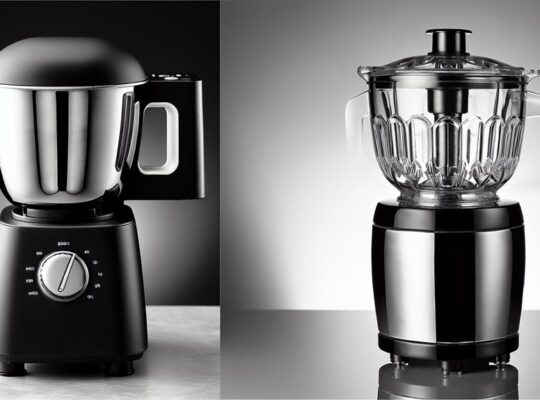
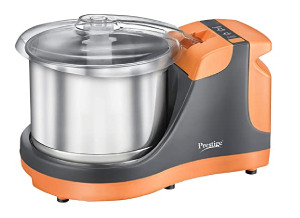
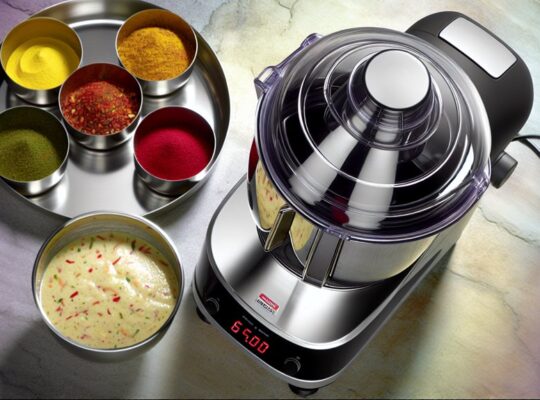
If you want silkier, fresher nut milks than store-bought, a mixer grinder gets you there fast. You’ll feel the nuts go from grainy to creamy, smell the faint warmth as blades work, and adjust texture by time and water. With a few simple steps—soak, grind, strain—you’ll control flavor and thickness. Keep going to learn exact soak times, jar tips, and quick flavor combos that make a better cup.
Key Takeaways
- Soak harder nuts (almonds, hazelnuts) 8–12 hours; cashews can be blended raw for a creamier result.
- Use a sturdy mixer grinder with a sealed wet-grinding jar and sharp blades to achieve smooth, even extraction.
- Blend typical ratios: almonds 1:4 water, cashews 1:3–1:4, oats 1:3–1:4; pulse to avoid overheating or sliminess.
- Strain through a fine nut milk bag or double-layered cheesecloth for silky milk; retain or use leftover pulp in recipes.
- Chill in airtight glass containers, label with date, and consume within 3–4 days; discard if sour or slimy.
Why Use a Mixer Grinder for Homemade Nut Milks
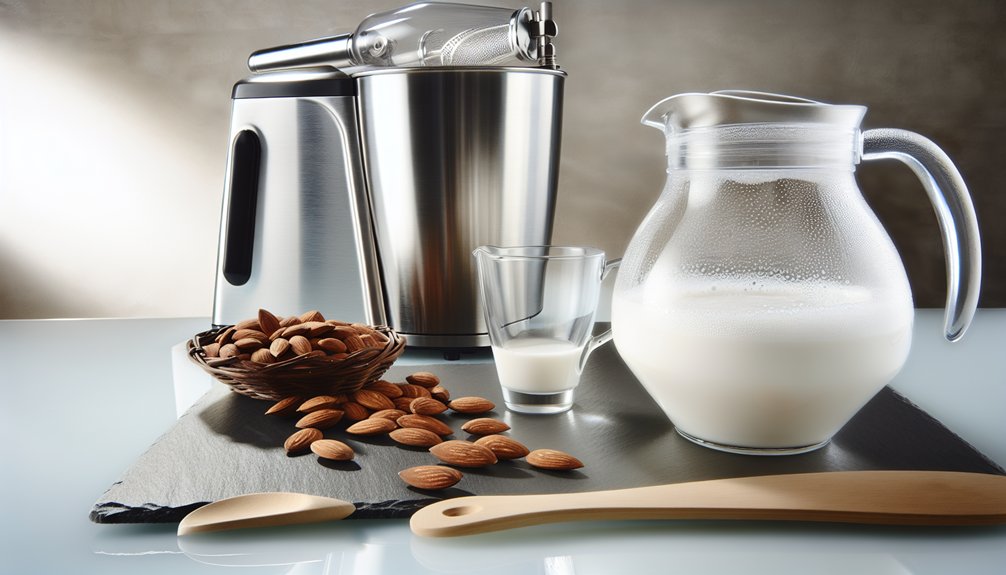
Efficiency matters when you’re making nut milk at home: a mixer grinder breaks nuts down quickly and evenly, releasing rich oils and creamy texture you can both taste and see. You’ll notice the sound change as kernels turn to paste, and the aroma shifts—fresh, nutty, slightly sweet. That efficient breakdown means less blending time, lower heat buildup, and reduced risk of overheating oils, so flavor stays clean. You can control grind fineness to influence mouthfeel: finer for silkier milk, coarser for body. A steady, enclosed system keeps splatter contained, lowering spill and burn hazards. You’ll want to operate at recommended speeds and avoid overfilling, keeping the process safe, predictable, and reliably delicious. Many home cooks prefer a 900 watts motor for powerful, consistent grinding when making nut milks.
Essential Equipment and Ingredients to Gather
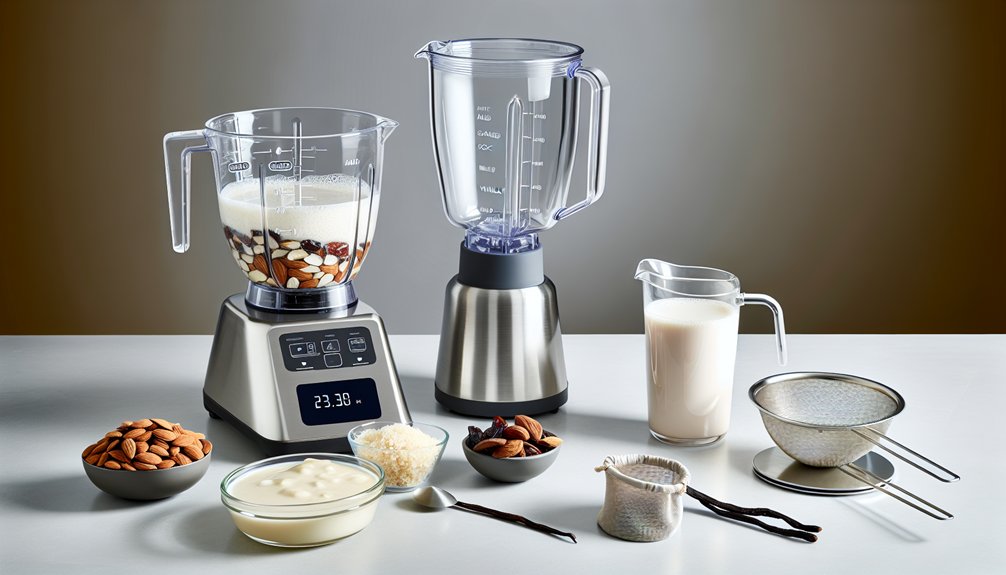
Now that you’ve seen how a mixer grinder shapes texture and flavor, get the right tools and ingredients lined up before you start. You’ll need a sturdy mixer grinder with a wet grinding jar — it must seal tightly and have sharp blades to pulverize nuts into a silky slurry. Have a fine mesh nut milk bag or double-layered cheesecloth for filtering; they’ll give a smooth mouthfeel. Measure with dry and liquid cups, use a digital scale for consistency, and keep a heatproof jug nearby for warmed blends. Gather raw or blanched nuts/seeds, rolled oats if making oat milk, clean filtered water, and a pinch of salt. Optional: vanilla, dates, or neutral oil. Sanitize everything; dry parts thoroughly to prevent slips and contamination. Choose a mixer grinder known for strong motor performance and reliable service, such as the Philips HL7505/00, to ensure consistent results and durability.
Step-by-Step: Making Almond, Cashew, and Oat Milks
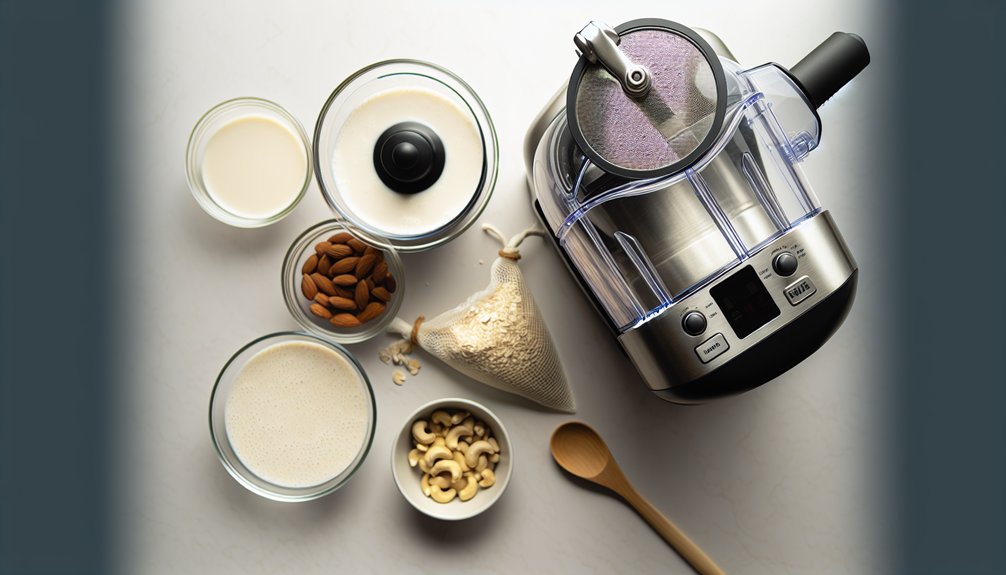
Curious how simple ingredients transform into silky, homemade milks? Start with almonds: soak 8–12 hours, rinse, then add 1 cup soaked nuts to 4 cups cold water in the mixer grinder. Pulse on high 1–2 minutes until frothy and pale; stop, tap the jar to loosen solids. For cashew milk you can skip soaking for a creamier result—use 1 cup raw cashews with 3–4 cups water and blend 1–2 minutes until very smooth. Oat milk needs short soaking or rinsing—combine 1 cup rolled oats with 3–4 cups cold water and blend 30–45 seconds to avoid sliminess. In every case, secure the lid, hold the jar, and unplug before handling blades; work on a stable surface for safety. Use a higher-torque mixer grinder when making larger batches or thicker blends to prevent overheating and ensure smooth texture.
Straining, Texture Choices, and Storage Tips
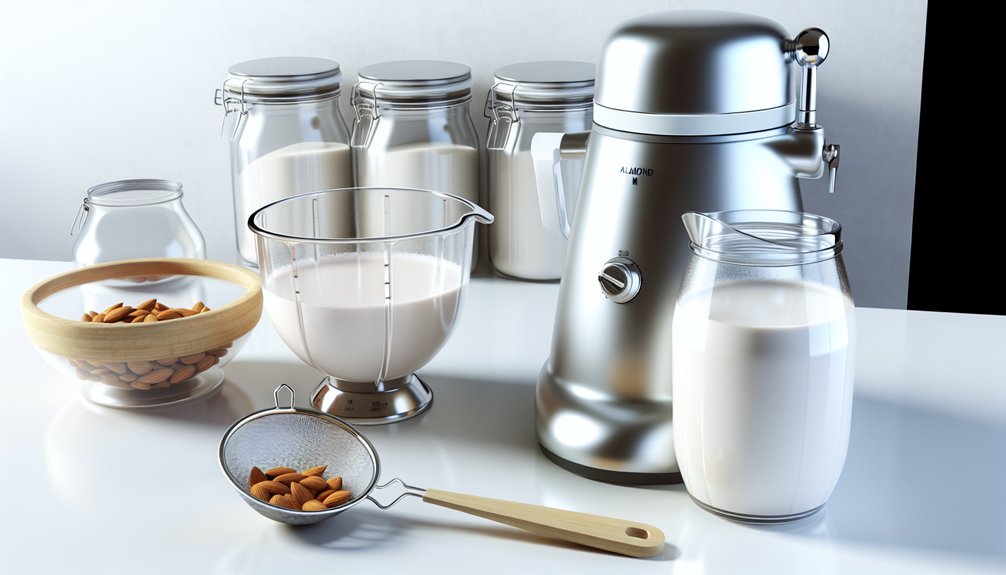
After blending, you’ll decide how smooth or rustic you want your milk—strain for silkiness or leave some pulp for body and fiber. Use a fine nut milk bag or double-layered cheesecloth to capture solids; squeeze gently to release fragrant, creamy liquid without forcing grit through. If you prefer a bit of texture, a single-layer cloth or a small-mesh sieve lets tiny particles remain, giving mouthfeel and fiber. Transfer milk into clean, airtight glass bottles while still cool to minimize bacterial growth; label with date. Store in the refrigerator and consume within 3–4 days, discarding if it smells sour, looks separated beyond gentle stirring, or develops sliminess. Rinse and dry your straining tools thoroughly before next use. For best results, strain with the jar only half-full and use short pulses while blending to reduce heat and preserve aromas and texture.
Flavor Variations, Sweeteners, and Thickening Tricks
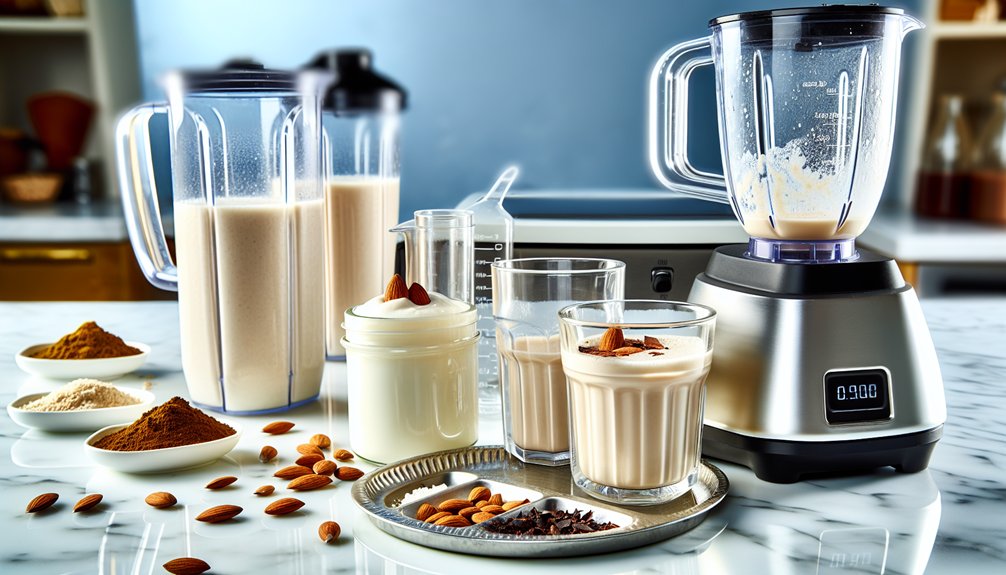
If you want to tailor your nut milk to sweet, savory, or spiced profiles, small additions during blending make a big difference: a pinch of fine sea salt and a splash of vanilla extract will brighten sweetness, while a few soaked dates or maple syrup provide natural, caramelly sugar and body; for savory uses try miso or nutritional yeast for umami. Add spices—cinnamon, cardamom, grated ginger—sparingly and taste as you go; they pop when warm. For thickness, blend with soaked oats, cooked rice, or a spoon of soaked chia or ground flaxseed, then chill to set. Use neutral oils for silkiness, but keep amounts low for safety and digestion. Label and refrigerate; consume within 3–4 days. Modern mixer grinders with fiber-reinforced bodies and good ventilation can help preserve texture and prevent overheating during long blends.
Frequently Asked Questions
Can I Use Roasted Nuts Instead of Raw for Nut Milks?
Yes — you can use roasted nuts, but they’ll give a deeper, toasted flavor and darker color; they’re harder to extract and may yield less milk. Make sure nuts cooled, unsalted, and handled hygienically to stay safe.
Are There Allergy-Safe Cross-Contamination Precautions for Shared Grinder Use?
Yes — you should. Clean thoroughly with hot, soapy water, sanitize, and run a vinegar or bleach solution through. Store dedicated parts or label them, use separate grinders if severe, and communicate risks clearly to others.
Can I Refrigerate Nut Pulp for Later Cooking or Baking?
Yes — you can refrigerate nut pulp for up to 3–4 days in an airtight container; it’ll smell fresh and slightly nutty. Drain excess liquid first, label with date, and discard if it smells sour or slimy.
Will Adding Salt Affect Milk Separation Over Time?
Yes — a small pinch of salt won’t stop separation, but it can slightly alter texture and flavor; you’ll notice subtle watery whey forming faster in salted milk, so chill and shake before serving to be safe.
How Long Can Homemade Nut Milk Be Safely Frozen?
You can safely freeze homemade nut milk for up to three months; it stays best within two. When thawing, expect slight separation and texture changes—shake or blend, smell for off odors, and discard if sour or odd.