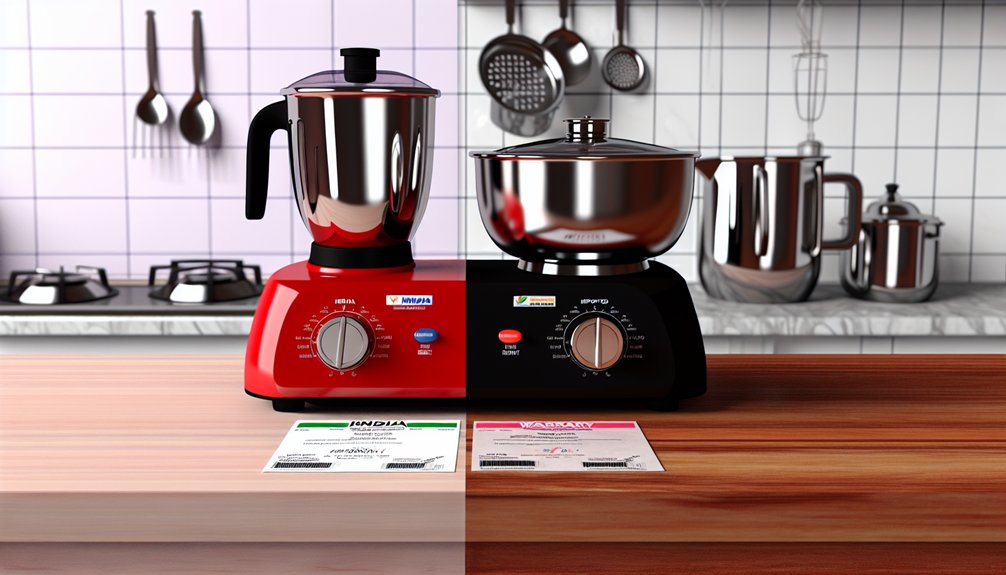
When you choose between an Indian and an imported mixer grinder, you’re weighing rugged, torque‑focused design against refined controls and broader attachments. Indian units tend to excel at heavy wet grinding and long runs; imported models often offer smoother speed control, better thermal protection, and sleeker finishes. The surface differences hide bigger trade‑offs in serviceability, parts cost, and real‑world performance—so which matters more to you?
Key Takeaways
- Indian grinders prioritize high starting torque and thicker stainless-steel jars for heavy wet grinding and spices.
- Imported units emphasize lighter materials, precision finishes, and broader multifunction attachments for blending and kitchen versatility.
- Durability hinges on seals, lid locks, and joint quality rather than raw weight or materials alone.
- Serviceability and spare-part availability favor Indian brands with faster local repairs and lower long-term costs.
- Choose based on cooking needs: heavy-duty Indian use vs. multi-function imported convenience and advanced safety controls.
Build Quality, Materials and Durability
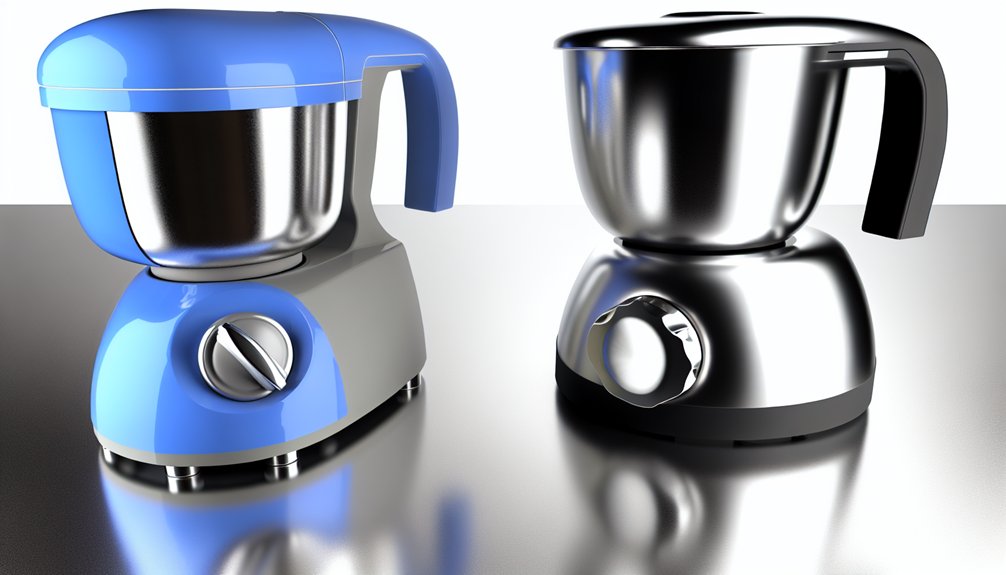
When you compare Indian and imported mixer grinders, you’ll notice differences in materials and construction that reflect their target kitchens: Indian models often prioritize robust, high-torque motors and thicker stainless-steel jars to handle wet, heavy grinding, while many imported units focus on lighter alloys, precision finishes, and compact assemblies suited for blending and multitasking. You’ll find Indian units built with reinforced housings, heavier lids, and corrosion-resistant steel to withstand prolonged contact with spices and pulses; imported designs often trade mass for engineered plastics and anodized aluminum for ease of cleaning and lower weight. For safety-conscious users, check joint seals, lid locks, non-slip bases, and food-grade finishes; durability then becomes a balance between material heft and quality of assembly rather than origin alone. For best results when grinding spices at home, start with whole, dry spices and perform brief toasting before cooling and grinding to preserve aroma and prevent clumping dry spices.
Motor Performance and Power Delivery
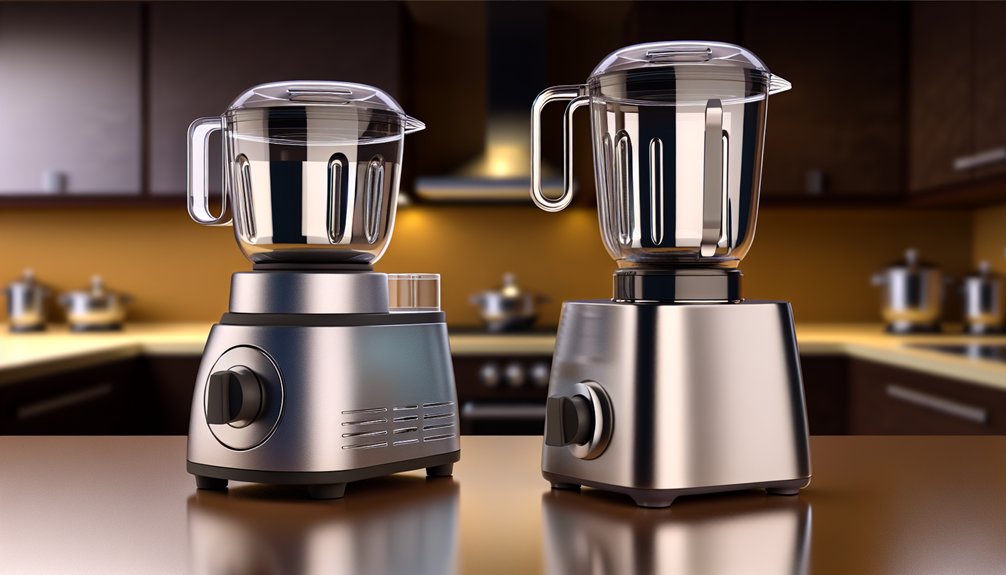
How much torque and how consistently a motor delivers it are the real determinants of a mixer grinder’s performance, not just the watt rating on the box. You’ll find Indian models often tuned for high starting torque to tackle tough spices and batter without stalling, while many imported units emphasize steady RPM control and thermal protection. That means you should weigh raw pull versus sustained delivery: high torque helps with crushing dense ingredients, but consistent power and good heat dissipation prevent motor stress during long use. Check for features like overload cut-off, cooling vents, and serviceability — they matter for safe operation. Ultimately pick a motor whose torque curve and protective systems match how you cook, not just peak watts. Philips HL7505/00 offers a reliable motor, sturdy jars, and a strong service network with thermal cut-off as a key protection feature.
Range of Functions and Attachment Ecosystem
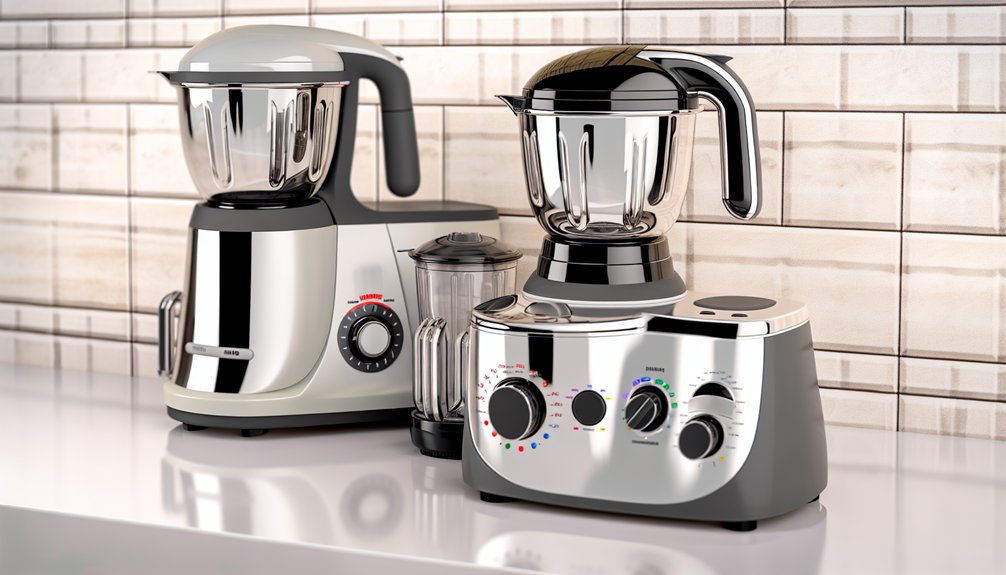
Curious what you’ll actually get beyond the jar? You’ll find Indian models tend to focus on core tasks—wet grinding, dry grinding, chutneys and batter—with sturdy multi-jars and simple blade sets designed for heavy use. Imported units often offer broader ecosystems: smoothie cups, dough hooks, citrus presses, even vacuum blending lids. When you choose, consider safety features: secure locking, splash guards and overload cut-offs are common on Indian machines; many imports add magnetic safety interlocks and user-friendly quick-release fittings.
Compatibility matters—proprietary attachments limit options and safe interchangeability, so stick to manufacturer-approved parts. Think about frequency and task variety: if you need specialist attachments, an imported system may suit; for robust everyday Indian cooking, the traditional jar lineup is often safer and more durable. Many quiet models also include noise reduction features such as sound insulation and rubber bases to minimize disturbance in shared living spaces.
After‑Sales Service, Spare Parts and Warranty
Why should after-sales support factor into your mixer-grinder choice? You rely on safe, consistent performance, so accessible service, genuine spare parts and a clear warranty matter. Indian brands often offer wider service networks and quicker spare-part availability in local markets, which cuts downtime and reduces risk from DIY fixes. Imported models may have robust factory warranties but longer wait times for authorised repairs or proprietary parts, potentially leaving you without safe replacements. Check warranty scope (motor, PCB, accessories), whether in-home repairs are provided, and response times for both brands. Ask about certified technicians and original parts to avoid counterfeit components that compromise safety. Prioritise a brand whose after-sales system matches your expectations for prompt, reliable support. Also consider models with overload protection as a key safety feature when evaluating service and repairs.
Price, Value for Money and Total Cost of Ownership
After-sales support affects more than just repairs — it directly shapes the total cost you’ll pay over a mixer’s lifetime. When you compare Indian and imported mixer grinders, initial price is only part of the story: warranty length, service network density, and spare-part availability change long-term expense and risk. Indian brands often cost less upfront and have cheaper local parts and faster service, lowering lifetime cost and downtime. Imported models may offer advanced features and build quality but can carry higher repair charges, longer wait times for parts, and pricier international components that raise ownership cost. For safety-conscious buyers, factor in certified repairs, regular maintenance costs, and predictable service availability—those reduce hazard risk and deliver better value, even if initial outlay is higher. Also consider motor durability as a key factor since longer-lasting motors and overload protection cut replacement and repair costs over time.
Frequently Asked Questions
Which Mixers Are Quieter During Operation?
Imported grinders are generally quieter; you’ll notice smoother motors, better insulation, and vibration damping. Indian models can be louder but safer if maintained. Pick units with sound ratings, sealed bearings, and anti-vibration mounts for quieter, safer operation.
Do Imported Models Consume More Electricity?
Not necessarily — imported models aren’t inherently more power-hungry. You’ll want to compare motor wattage, efficiency ratings, and safety certifications; higher-watt motors use more electricity, so pick efficient, certified units to ensure safe, lower consumption.
Are There Health or Safety Certification Differences?
Yes — certifications can differ. You’ll find Indian models often hold BIS/ISI marks, while imports may carry CE, UL, or ETL. You’ll want appliances with recognized domestic or international safety approvals and clear testing documentation.
Which Models Handle Fibrous Ingredients Better?
High-torque models with sturdy stainless steel blades handle fibrous ingredients better; you’ll prefer Indian brands’ higher-rpm wet grinders or imported blenders with powerful motors (≥1000W) and pulse functions—look for durable jars, serviceability, and overload protection.
How Do Noise and Vibration Affect Countertop Stability?
Noise and vibration can loosen mounts and shift the grinder, so you’ll want models with balanced motors, anti-vibration feet, and low decibel ratings; that reduces tipping risk, wear, and noise-related safety hazards during use.