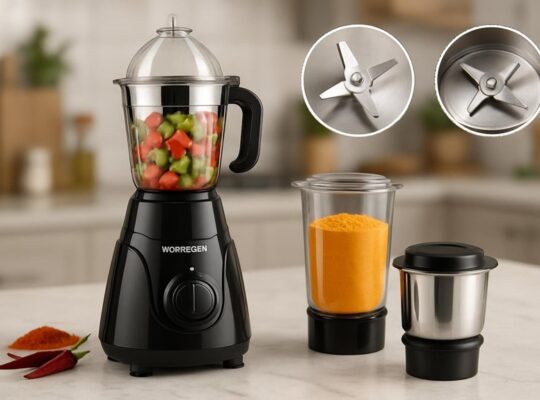
You’ll use the pulse function when you need short, powerful bursts instead of continuous running; it delivers rapid torque in controlled intervals so you can feel the texture change and hear the motor breathe between bursts. It’s precise for chunky salsas, chopping herbs, or cracking ice, and it helps prevent overheating—yet there’s more to know about timing, technique, and safety before you try it.
Key Takeaways
- The pulse function provides short, controlled bursts of motor power for precise, incremental chopping or mixing.
- Pulsing prevents over-processing by letting blades cut, stop, and preserve ingredient texture and flavors.
- It reduces heat buildup and protects volatile oils by allowing pause intervals between bursts.
- Pulse is ideal for coarse chopping herbs, nuts, hard cheeses, ice, and preventing wet mixtures from surging.
- Reliable pulses depend on motor torque, thermal management, duty cycle, and proper lid/safety interlocks.
How Pulse Mode Works in a Mixer Grinder
Ever wondered why the pulse button gives you more control? You tap it to deliver short, forceful bursts of motor torque instead of continuous spinning. Each pulse starts the motor rapidly, applies peak RPM for a fraction of a second, then stops, so you can judge texture between bursts. You’ll feel brief mechanical jolts through the jar and hear discrete, sharp motor notes—sensory cues that help time the next pulse. Internally, the motor’s windings engage, current spikes, and blade inertia generates chopping energy; stopping prevents overheating and over-processing. You’ll control particle size by varying pulse duration and interval: shorter pulses shear less, longer pulses increase shear and heat. The lid and locking mechanism must be secure before pulsing; otherwise vibration can loosen seals or eject contents. Use the pulse mode when you need tactile feedback and precise stops; it’s designed to give you measured power while reducing continuous thermal and mechanical strain on the appliance, improving safety and consistency. A higher-wattage motor provides greater torque and sustained power for heavier or denser loads when using pulse bursts.
When to Use the Pulse Function
When should you reach for the pulse button? Use pulse when you need controlled, short bursts of power to prevent over-processing fragile ingredients or to stop sudden splashes. You’ll tap it for coarse chopping of herbs, when you want visible texture in nuts, or when mixing wet-dry ingredients so liquids don’t surge up the lid. You’ll also pulse to release trapped air pockets in dense mixtures—short bursts break clumps without overheating the motor. Listen and feel: each quick pulse gives an audible engine reply and a tactile reduction in resistance when pieces shear; stop if vibration grows irregular. Keep the lid locked and your hands clear; never override safety interlocks. Let the motor cool between long pulsing sequences to avoid thermal cutoff. For small batches, use brief, measured pulses rather than continuous runs—you’ll control particle size while maintaining safer temperatures, cleaner seals, and predictable results. Models like the Philips HL7505/00 also include protective features and stable builds that help during repeated pulsing thermal cut-off.
Benefits of Pulsing Vs Continuous Grinding
After you’ve used pulse to control bursts and avoid over-processing, compare that approach with continuous grinding to see how each shapes texture, heat, and motor load. When you pulse, short controlled rotations let particles shear then settle, producing uneven, coarse-to-fine textures you can sense by sight and touch. Pulsing limits heat buildup because duty cycles include rests; that protects volatile flavors and prevents steam-softening. Motor current spikes are brief, reducing sustained thermal stress and extending motor life when used properly. Continuous grinding keeps blades at steady rpm, yielding uniform particle reduction and smoother pastes; you’ll notice a consistent sheen and homogenous mouthfeel. But continuous runs raise internal temperature and steady current draw, increasing risk of overheating and flavor loss, especially with oils or delicate aromatics. Choose pulse for textural control and thermal safety, continuous for uniformity and speed—always monitor motor temperature, avoid prolonged continuous cycles, and follow manufacturer duty recommendations for safe operation. Ensure vents stay clear and provide good airflow to reduce heat buildup and protect the motor ventilation and maintenance.
Tips for Achieving Desired Texture With Pulses
You’ll use short bursts to control particle size and avoid overheating, feeling the texture change between pulses. Time your pulse duration—brief taps for coarse, longer intervals for finer—while pausing to check consistency. Layer ingredients by size and moisture (hard/dry first, soft/wet last) so cutting edges engage efficiently and textures stay uniform. Choose a wattage appropriate to your ingredients to prevent strain on the motor and achieve consistent results with pulses (750W balance).
Short Bursts Control
Want finer control over texture? You’ll use short, deliberate pulses to coax precise particle size while keeping safety in mind. Small bursts let you sense progress by sound and sight, avoiding over-processing and heat buildup. Use visual checks and brief pauses to protect seals and blades.
- Tap the jar between pulses to settle contents and spot unmixed chunks.
- Count consistent pulses (e.g., 1–2 seconds) to reproduce results safely.
- Listen for changes in motor pitch; a smoother tone signals uniformity.
- Pause after a few bursts to cool the motor and inspect blade alignment.
- Use a spatula only when the grinder is fully stopped and unplugged.
Also, always unplug the unit before inspecting blades or making adjustments to ensure safe handling.
Pulse Duration Tips
Short, measured pulses give you tactile feedback, but the exact duration of each burst determines whether particles shear, fracture, or simply reorient. You’ll learn to tune pulse length by testing: short (0.2–0.5 s) for shearing, medium (0.5–1.5 s) for coarse breaks, long (>1.5 s) for fine grinding. Always secure lid, keep hands clear, and cool motor between cycles to prevent overheating. For tougher ingredients consider using a higher power motor or a stainless steel jar to improve performance.
| Duration | Effect | Sensory Cue |
|---|---|---|
| 0.2–0.5 s | Surface shear | Slight vibration |
| 0.5–1.0 s | Controlled fracture | Audible crunch |
| 1.0–1.5 s | Mixed texture | Increased hum |
| >1.5 s | Fine grind | Smooth, steady tone |
Probe textures incrementally; stop, inspect, repeat.
Ingredient Layering Order
How should you arrange ingredients in the jar to get the pulse durations to do what you want? You’ll layer by density and moisture so pulses act predictably. Place heavier, wetter items near blades to reduce cavitation and overheating; keep fragile herbs and aerated ingredients on top to avoid pulverizing. Tight, even packing gives uniform shear; gaps let chunks survive. Pause between bursts to check temperature and texture, and always secure the lid to prevent ejection.
- Heavy, wet items (root vegetables, soaked beans) closest to blades
- Dense solids (nuts, hard grains) next for controlled fracturing
- Medium items (cheese, cooked veg) mid-layer for smoothing
- Light, leafy herbs or spices on top to be bruised, not shredded
- Leave small air pockets; don’t overfill—observe safe max line
Also, use short pulses with brief rests to prevent overheating and preserve aromas, especially when working with oily or fibrous ingredients like nuts and tough roots pulse technique.
Common Ingredients That Need Pulsing
Which ingredients demand the pulse setting to get the right texture? You’ll reach for pulse with coarse, variable components that need controlled breaks rather than continuous shear. Think firm vegetables—onion, carrot, celery—where short bursts cut cell walls and release juices without turning mashy. Nuts and seeds benefit: pulse fracturing creates crunchy crumbs or coarse meal while limiting heat from prolonged blades. Fresh herbs call for rapid taps to lift oils and aroma without bruising into paste. Hard cheeses and cold butter respond to pulses, giving you flaky grates or pea-sized pieces ideal for doughs. Whole spices and dried chilies take measured pulses to crack skins and expose aroma without pulverizing to dust. For wet mixtures that include ice or frozen fruit, pulse prevents clumping and excessive thawing. You should always secure lids, use the tamper if recommended, and pause between sequences to check texture and blade temperature for safe, predictable results. The pulse function is especially useful when working with ingredients that benefit from controlled, intermittent processing to avoid overheating the motor and food, as seen in models with better ventilation.
Preventing Overheating and Flavor Loss
Use short, frequent bursts to keep the blade chopping cleanly without heating the food; you’ll feel less steam and smell less cooked aroma. Give the motor rest intervals between bursts to prevent winding strain and preserve volatile oils. Consider cool-down accessories like silicone sleeves or chilled jars to lower thermal transfer and protect delicate flavors. Match pulse use to the motor capacity and overload protection of your grinder by checking its motor power.
Short, Frequent Bursts
Why pulse in short, frequent bursts rather than long runs? You’ll limit heat buildup and protect delicate flavors. Short bursts let blades cut, then pause so residual heat dissipates; that preserves aroma compounds and prevents scorching. You’ll feel less vibration and notice cooler jars. Use tactile feedback—warmth at the jar base signals you’ve pushed too far.
- Apply 1–2 second pulses, judge texture, repeat as needed.
- Watch motor sound; steady climb means stress.
- Smell for sharp, cooked notes; stop if present.
- Keep lid sealed; avoid steam escape that masks heat.
- Use a towel under the jar to sense rising temperature quickly.
This method reduces thermal damage and keeps operation safer and more predictable. Consider also motors in the 500–750W range which balance power with reduced overheating risk.
Motor Rest Intervals
Short, frequent pulses help, but you still need planned rest intervals to keep the motor cool and preserve volatile flavors. You should pause between pulse bursts to let windings dissipate heat; continuous pulsing raises internal temperature rapidly, degrading insulation and risking motor failure. Time your rests: for light grinding, 5–10 seconds every 20–30 seconds of total run time; for dense or oily ingredients, extend rests to 20–30 seconds after 10–15 seconds of operation. Use touch and smell as quick sensors — an unexpectedly warm casing or faint burning odor means stop longer. Keeping the grinder cooler not only protects components but preserves aroma compounds that volatilize with heat. Always restart only after the motor feels near ambient to the touch.
Cool-Down Accessories
How can you keep a mixer grinder from overheating between pulse bursts? You’ll use cool-down accessories to protect the motor and preserve aroma. Feel the case temperature drop, hear vents move air, and trust built-in guards to cut heat transfer.
- Install a heat sink or aluminum cooling plate to draw heat away quickly.
- Fit a low-noise fan or turbo-vent to boost airflow across motor windings.
- Add thermal cutoff switches that interrupt power before damage occurs.
- Use silicone isolation mounts to reduce vibration heat and improve airflow paths.
- Keep removable mesh filters or dust screens clean to maintain consistent convection.
These measures are technical and tactile; they reduce duty cycles, prevent flavor loss from warm blades, and keep operation within safe thermal limits.
Pulse Technique for Crushing Ice and Frozen Items
When you need to crush ice or frozen fruit in a mixer grinder, use short, controlled pulse bursts rather than continuous runs to prevent motor strain and blade overheating. You’ll hear sharp, rhythmic snaps as the blades break hard pieces; that cadence lets you gauge progress and avoid overworking the motor. Load the jar no more than halfway so fragments move freely and don’t jam. Hold the jar firmly on the base, engage pulses of one to two seconds, then pause for three to five seconds to let blades settle and material reposition. Visually inspect the texture between bursts: coarse shards mean continue pulsing, finer slush means stop. If you detect grinding squeal or motor laboring, stop immediately and redistribute contents manually before resuming. Use the lowest effective speed and let centrifugal force clear the cutting path with each burst. This measured, tactile approach yields uniform crushing while minimizing wear on components.
Safety Considerations When Using Pulse Mode
Want to avoid accidents and equipment damage while using pulse mode? You should treat pulse as controlled bursts of high torque—sharp vibrations, sudden noise, and rapid blade movement. Stay attentive; don’t leave the unit unattended during pulsing.
- Ensure the lid is locked and seal intact before each short burst.
- Keep hands, utensils, and loose clothing away from feed openings; feel the vibration through the housing.
- Use correct jar size and blade assembly rated for pulse; mismatched parts increase stress and heat.
- Limit pulse duration and rest between bursts to prevent motor overheating and burned smells.
- Secure the base on a dry, stable surface to minimize slippage from torque spikes.
You’ll also unplug before cleaning or changing blades, inspect for cracks after heavy use, and avoid overfilling. These sensory cues—hot casing, unusual vibration, burning odor—tell you to stop immediately. Follow these steps to reduce risk and extend equipment life.
Troubleshooting Pulse Function Issues
After you’ve checked lids, seals, jar size, and avoided overheating, you’ll need a systematic approach to diagnose pulse faults. First, isolate power: unplug and inspect the cord and plug for cuts, scorched smells, or loose connections; a frayed cable gives tingling or burnt-olive odor and must be replaced. Next, test the switch: with the unit off, press pulse—feel for a firm, tactile click; a mushy or no-click indicates a worn microswitch. Listen to the motor: grinding, whining, or failed start suggests rotor-stator or capacitor issues; a burnt scent or smoke means stop and seek professional repair. Check brushes if serviceable: worn brushes show low contact and intermittent pulse. Examine jar coupling and drive bushing for cracks or slippage; you should sense solid engagement. Finally, document symptoms, avoid further use if you detect heat, sparks, or smell, and contact qualified service to prevent electrical or mechanical hazards.
Comparing Pulse Function Across Mixer Grinder Models
When you compare models, note how pulse speed ranges and control responsiveness change the feel and outcome of a quick burst. You’ll sense differences in motor torque and casing design as they affect vibration, noise, and chopping consistency. Use those tactile and auditory cues to judge which combination of speed-control and motor architecture suits your routines.
Speed and Control
How fast should the pulse function respond under load, and how precisely can you modulate bursts for textured results? You want immediate RPM changes and repeatable micro-bursts so you can feel the difference in particle size and moisture release. Test response with moderate load; delayed recovery means inconsistent texture.
- Response time: milliseconds to a fraction of a second for crisp control.
- Burst precision: predictable duration increments for incremental chopping.
- Feedback: tactile vibration and sound cues indicate settling before next pulse.
- Safety interlocks: ensure blades stop fully between pulses to avoid hazards.
- User control: clearly marked buttons or dials let you reproduce settings safely.
Choose models with tight control tolerances for repeatable, safe texturing.
Motor and Design
Why does motor design make or break the pulse function? You’ll notice torque curve, RPM stability, and thermal management dictate pulse responsiveness. A robust copper-wound motor gives crisp, instantaneous bursts; a weak, undersized motor lags, stalls, or overheats. Metal gears and sealed bearings transmit force with minimal vibration and harsh sound; plastic components damp performance and increase wear. You’ll feel differences: solid pulses deliver sharp resistance against the blade, while flabby pulses feel mushy. Safety hinges on design — proper ventilation, thermal cutouts, and overload protection prevent motor burnout during repeated pulsing. When comparing models, inspect motor rating (W), duty cycle, build materials, and safety features so your pulses stay controlled, effective, and safe.
Frequently Asked Questions
Can Pulse Mode Be Used for Wet Batters or Dough Mixing?
Yes, you can use pulse for wet batters and light doughs, but don’t overload. Short bursts prevent overheating and splashing; stop periodically to scrape sides and check consistency to avoid motor strain and uneven mixing.
Does Pulsing Affect Blade Wear or Motor Lifespan?
Yes — pulsing can increase blade wear and motor strain if overused on hard or heavy loads; you’ll feel vibration and hear higher pitch; use short bursts, avoid overload, and let the motor cool to preserve lifespan.
Can Pulse Function Be Used With Food Processor Attachments?
Yes — you can use pulse with many food-processor attachments, but do it briefly and test load: you’ll feel firm resistance if overloaded, so avoid dense batches, prevent overheating, and follow manufacturer torque and attachment limits.
Is Pulse Mode Energy-Efficient Compared to Continuous Use?
Yes — pulse mode’s intermittent operation’s generally more energy-efficient for short tasks, since you’re avoiding continuous motor draw; but if you’d run long, heavy jobs repeatedly, continuous use can be similarly efficient and safer with proper cooling.
Do Warranty Terms Cover Damage From Pulse Operation?
Usually no — manufacturers rarely list pulse-specific coverage, and damage from improper pulse use can void warranty. You should inspect terms, keep usage within specs, document faults, and contact support before assuming repair or replacement.