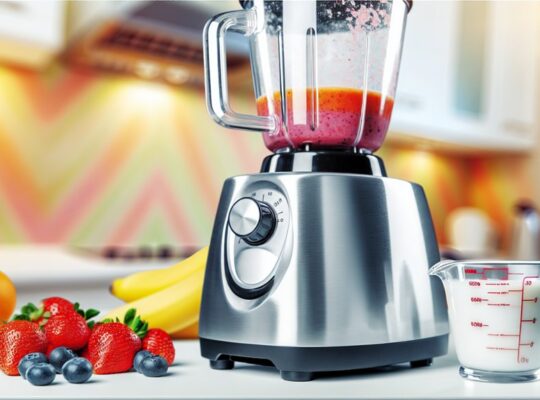
When you compare mixer grinder motors, you’ll see two clear approaches: traditional universal (series-wound) motors and modern BLDC units. Universal motors give high starting torque, simple AC operation, and low upfront cost but run hotter, spark, and need brushes. BLDC motors run cooler, are more efficient and precise, and require electronic control and higher cost. There’s a practical trade-off you’ll want to weigh further.
Key Takeaways
- Universal motors are series-wound, brush-commutator machines offering high starting torque and simple AC/DC operation.
- BLDC motors are brushless, electronically commutated, delivering higher efficiency and lower heat for the same output.
- Universal motors are inexpensive and suitable for compact, high-RPM grinders but require brush maintenance and spark management.
- BLDC motors provide precise speed control, lower maintenance, and safer operation with reduced electrical noise and no commutator sparks.
- Choose universal for low-cost, high-start-torque designs; choose BLDC for efficiency, longevity, and advanced electronic control.
How Universal Motors Work and What They Offer
A universal motor is a series-wound, commutator-type machine that runs on either AC or DC by having its armature and field windings connected in series, producing high starting torque and fast speed; you’ll see these characteristics exploited in many grinder and handheld appliance designs where compact power and variable-speed control matter. You’ll recognize the construction: laminated iron core, series field coils, armature with windings, and a carbon-brush/commutator assembly. Torque scales with current, so you’ll get strong startup and responsive load handling, but brushes wear and commutator maintenance are inevitable. Speed control’s achieved via voltage or triac-based phase control, giving you practical variable-speed operation. Be aware of sparks at the commutator and ensure proper ventilation; high RPMs demand balanced rotors and secure fastening of attachments. For safe use, follow insulation, grounding, and overcurrent protection guidelines, and schedule brush inspection or replacement intervals to prevent overheating and mechanical failure. Many mixer grinders under 3000 often use 750-watt motors to balance power and cost.
Why BLDC Motors Are Gaining Popularity
Why are BLDC motors becoming the preferred choice in modern mixer grinders? You’ll find several technical and safety-driven reasons. BLDC motors offer higher electrical-to-mechanical efficiency, reducing heat generation and lowering overload risk during heavy loads. Their electronic commutation provides precise speed control and rapid torque response, so you’ll get consistent performance with safer stall protection and automatic cutoffs. Without brushes, wear-points are minimized, decreasing maintenance and the chance of sparks that could pose fire hazards. Regenerative and soft-start capabilities limit inrush currents, protecting wiring and circuit breakers in household installations. Acoustic vibration is reduced by smoother torque delivery, improving user comfort and reducing stress on structural mounts. Compact form factors let manufacturers add thermal sensors and intelligent controllers for real-time monitoring and fault detection, enhancing overall safety. For appliance designers prioritizing durability, efficiency, and user protection, BLDC technology aligns with current regulatory and consumer-safety expectations. Many popular silent mixer grinders also pair BLDC motors with noise-dampening designs to further reduce operational sound levels.
Frequently Asked Questions
Which Motor Type Uses Less Electricity Over Typical Household Use?
BLDC motors use less electricity during typical household use; they’re more efficient, generate less heat, and have better speed control. You’ll reduce energy draw and overheating risk, improving safety and prolonging motor life.
Are Replacement Parts for Universal and BLDC Motors Equally Available?
No — you’ll find universal motor parts are more widely available and cheaper; BLDC replacements, especially controllers and stators, can be pricier and less common, so exercise caution sourcing correct, certified components and installation.
Which Motor Type Is Quieter During Startup and Idle?
BLDC motors are quieter during startup and idle; they produce less acoustic and electromagnetic noise due to smooth electronic commutation and controlled ramping. You’ll prefer BLDC for quieter, safer kitchens with reduced vibration and wear.
Do BLDC Motors Require Special Controllers or Circuitry?
Yes — BLDC motors need dedicated electronic controllers (ESCs or driver boards) for commutation, PWM speed control, position/sensor feedback handling, and protection. You’ll need proper wiring, fault detection, and thermal/current safeguards for safe, reliable operation.
How Do Repair Costs Compare Between Universal and BLDC Motors?
Repairs for universal motors are generally cheaper and simpler; you’ll pay less for brushes and bearings. BLDC repairs cost more due to electronic controllers and sensors, requiring specialized parts, diagnostics, and trained technicians for safe service.