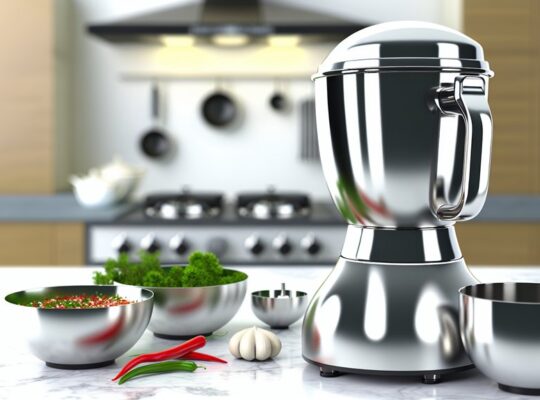
Before you buy or use a mixer grinder, check that jars lock securely, the motor has overload and thermal cut-off protection, and the casing and wiring are sealed and stable. Look for non-slip feet, stainless-steel jars, clear safety vents, and certifications plus a good warranty and service network. Keep up regular inspections and simple maintenance to avoid failures and hazards — here’s what to check and how to keep it safe.
Key Takeaways
- Check for interlock and lid-lock systems plus overload/thermal cutoff to ensure the motor won’t run unsafely.
- Verify certified safety labels, warranty length, and availability of nearby authorized service centers.
- Look for sealed motor housing, insulated wiring, stable base with non-slip feet, and robust stainless-steel jars.
- Inspect seals, vents, and blade assembly integrity; test power cord and switches for looseness before purchase and monthly.
- Follow maintenance: unplug before cleaning, clean blades/seals after use, avoid overloading, and keep a repair/inspection log.
Essential Safety Features to Check Before Buying
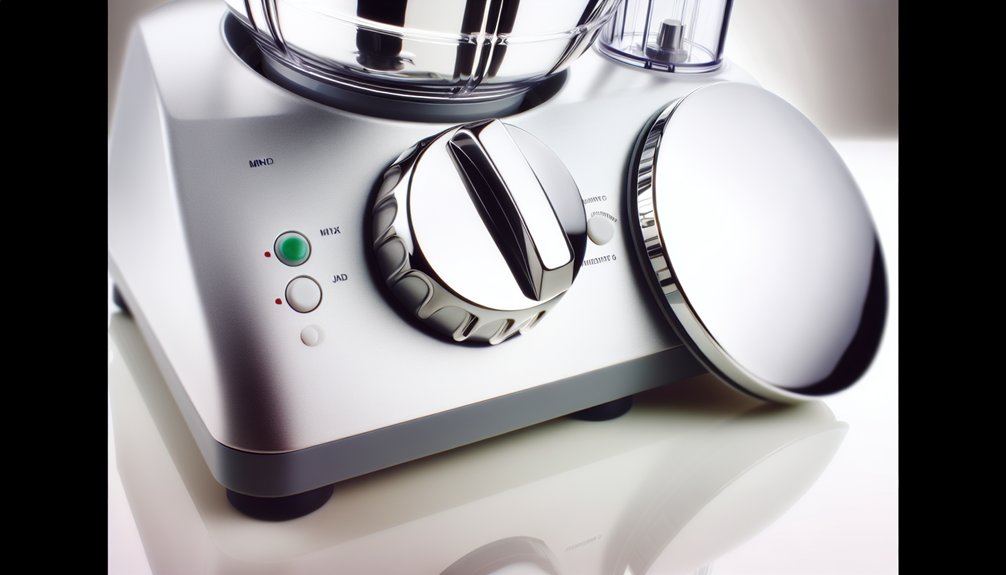
Wondering which safety features really matter when you’re shopping for a mixer grinder? You’ll want a sturdy interlock system that prevents the motor running unless jars are securely locked. Look for overload protection or thermal-cutoff to stop the motor from burning out under heavy load. Non-slip feet and a stable base reduce tip risks during operation. Check for a sealed motor housing and insulated wiring to prevent shocks and easy-clean designs that avoid water ingress. A reliable auto-shutoff for overheating and clear, durable controls minimize user error. Choose stainless-steel jars with secure lids and safety vents to release steam. Verify certification labels and a trustworthy warranty so you’re covered if safety systems fail. Also consider brands with a strong service network since wide availability of service centers improves long-term safety and maintenance.
Practical Maintenance Tips to Keep Your Mixer Grinder Safe
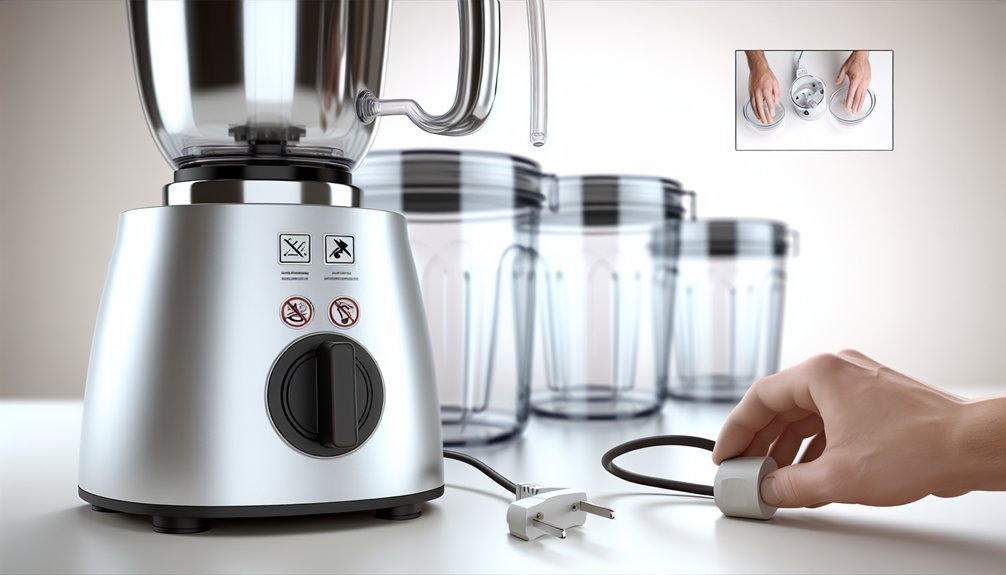
Now that you’ve checked the safety features, keeping them working means regular maintenance. Clean jars, blades, and seals after each use to prevent residue buildup that can impair locking mechanisms and contaminate food. Inspect power cords and plugs for frays or loosened connections; replace damaged cords immediately. Test interlock and lid locks monthly; don’t use the grinder if safety switches feel loose or don’t engage. Lubricate non-electric moving parts per manufacturer guidance to avoid strain on the motor. Avoid overloading or running continuously beyond recommended duty cycles to prevent overheating and motor failure. Store the unit in a dry, ventilated place. Keep a simple log of inspections and repairs so you’ll spot patterns and act before small issues become hazards. Also, always unplug the unit before assembling, disassembling, or cleaning to reduce the risk of accidental starts and electrical shock.
Frequently Asked Questions
Can I Use My Mixer Grinder Outdoors or in Damp Conditions?
You shouldn’t use your mixer grinder outdoors or in damp conditions; it’ll risk electric shock, motor damage, and corrosion. Use it in dry, sheltered areas, keep it elevated, unplug before cleaning, and avoid wet hands or surfaces.
How Do I Know When Motor Bearings Need Replacement?
You’ll know bearings need replacing if the motor shows loud grinding, whining, increased vibration, overheating, oil/metal flakes, or reduced speed despite no load. Don’t ignore these signs — power off and get a qualified repair promptly.
Are Third-Party Jars and Blades Safe to Use?
Third-party jars and blades can be safe if they’re certified, fit correctly, and use food-grade materials; avoid poor machining, mismatched couplings, or cheap seals. Check compatibility, warranty impact, and test at low speed first.
Can a Mixer Grinder Start Fires Due to Overheating?
Yes — a grinder can start fires if it overheats from blocked ventilation, prolonged use, faulty wiring, or worn brushes; you should unplug it, let it cool, inspect cords, clean vents, and service or replace faulty parts promptly.
Is It Safe to Grind Hot Liquids Immediately After Cooking?
No, you shouldn’t grind hot liquids immediately after cooking; they can create pressure, splatter, and burn you. Let liquids cool to warm, remove steam, and only then blend in small batches with the lid vented or towel-covered.