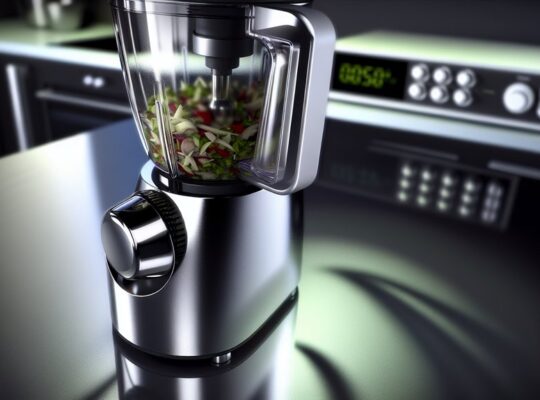
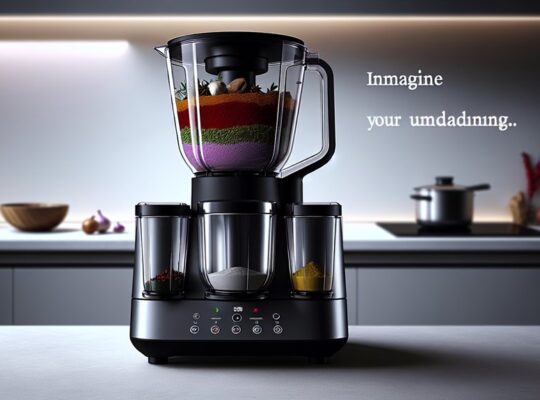
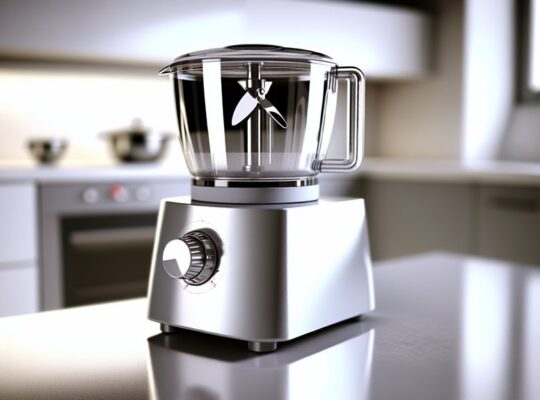
When you pick a mixer grinder with overload protection, you’re choosing a device that actively prevents motor overheating and insulation failure by cutting power under excessive current or temperature. That reduces fire risk, limits winding stress, and keeps torque predictable in heavy use. For busy kitchens and frequent grinding tasks, it means fewer sudden failures and longer service life—and there are specific thresholds and reset options you’ll want to check next.
Key Takeaways
- Prevents motor overheating and overcurrent by detecting excess current or temperature and cutting power automatically.
- Extends motor life by avoiding insulation and winding damage from prolonged thermal stress and peak currents.
- Reduces fire and electrical hazards in busy kitchens by isolating the unit during unsafe load spikes.
- Stops mechanical damage (gears, blades, bearings) when jars are overfilled or hard objects jam the motor.
- Choose units with specified trip thresholds, clear reset behavior, and diagnostic indicators for reliable protection.
What Overload Protection Is and How It Works
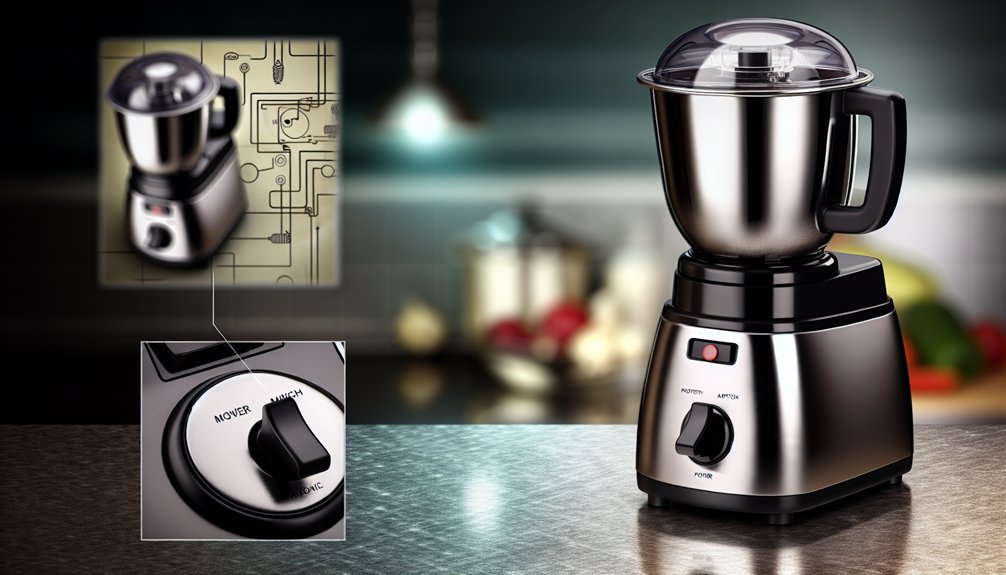
What exactly is overload protection, and why should you care when using a mixer grinder? You need a defined control that prevents motor overheating and electrical overloads by detecting excess current or temperature and interrupting power before damage occurs. Typically it’s a thermal cutoff, bimetallic trip, electronic current-sensing circuit, or auto-resetting protector that meets safety standards and rated specifications. When load exceeds safe limits — for instance dense paste or stalled blades — the protector isolates the motor, reducing fire, insulation failure, and wiring risks. You should verify the protector’s trip thresholds, response time, and compliance marks (IS/IEC or equivalent). Also confirm serviceability and clear user instructions so you can respond correctly if the unit trips, ensuring safe operation and regulatory conformity. Regular testing and matching protection settings to the motor rating helps ensure reliable performance and prevent damage.
Benefits for Motor Life and Reliability
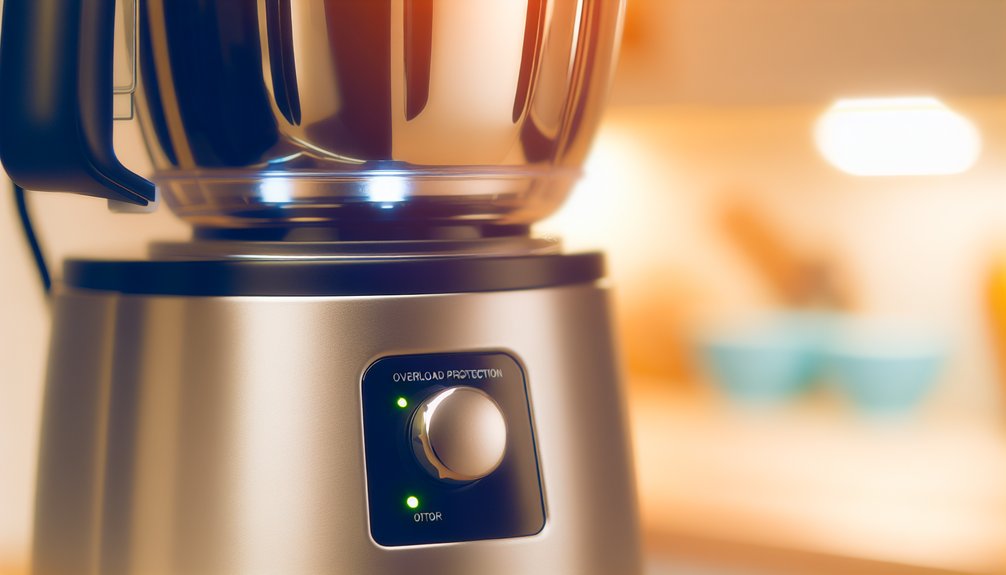
Having reliable overload protection means you’ll substantially extend the mixer grinder’s motor life and improve long-term reliability by preventing the conditions that cause insulation breakdown, bearing damage, and winding stress. You reduce thermal cycling and peak-current exposure that accelerate dielectric deterioration and conductor fatigue. By limiting stall and overcurrent events, the device maintains insulation class ratings and torque profiles within manufacturer specifications, so mean time between failures (MTBF) improves. Consistent trip thresholds and automatic reset or manual lockout conform to safety-oriented operational protocols, preserving bearing lubrication regimes and preventing seizure. Routine cycles under protected operation also lower maintenance frequency and unexpected downtime. If you prioritize equipment longevity and predictable performance, overload protection is a measurable, standards-aligned control that mitigates core mechanical and electrical risks. Choosing compatible stainless steel jars and durable components further complements overload protection by reducing mechanical strain and improving overall system resilience.
Safety Advantages for Busy Kitchens

How will overload protection keep your busy kitchen safer during peak service? You’ll reduce fire and electrical risks by preventing sustained motor overheating and current draw beyond rating. When loads spike, automatic cut-off isolates the unit, removing fault current and stopping thermal escalation that can ignite wiring or components. That interruption also limits operator exposure to sudden mechanical failures—no unexpected seizing or shaft breakage under high torque. Compliant devices follow thermal and overcurrent standards, giving you measurable protection aligned with safety protocols and inspection criteria. You’ll maintain continuity of safe operation by minimizing cascade failures that threaten adjacent equipment. For kitchens prioritizing risk control, overload protection is a simple, verifiable engineering control that enforces safe operating envelopes. Unplugging the unit before assembling, disassembling, or cleaning helps prevent electrical hazards and complements overload protection by reducing accidental energization of blades and jar.
Practical Scenarios Where It Prevents Damage
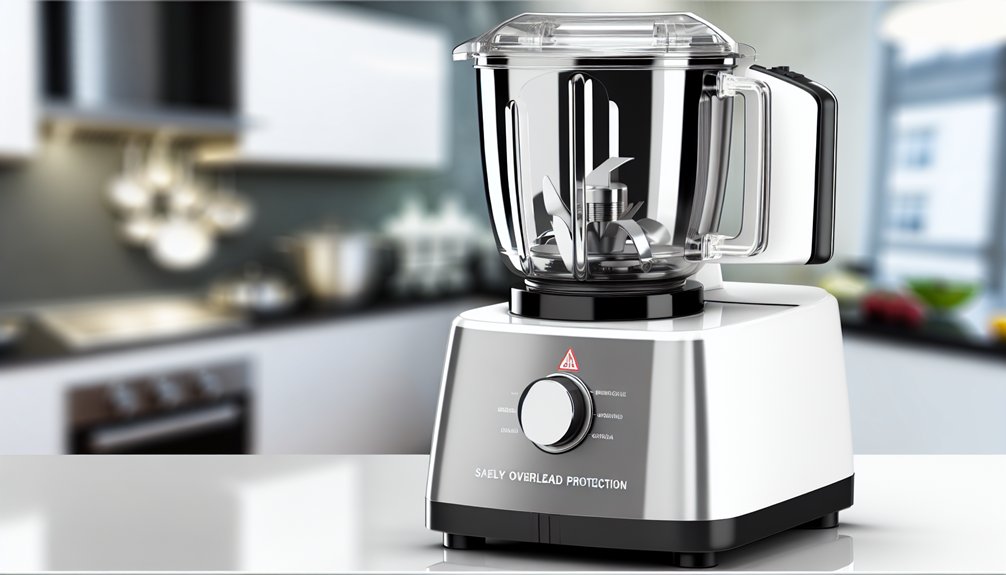
Beyond reducing fire and electrical hazards, overload protection directly prevents common mechanical and electrical failures you’ll encounter during peak service. When you accidentally overfill the jar with dense batter, the motor current spikes; the protection trips, stopping thermal stress and preventing winding insulation breakdown. If a hard object—stone, bone fragment—enters the blade chamber, sudden arrest would ordinarily shear gears; the overload pauses operation, limiting torque transfer and avoiding gear tooth failure. During prolonged use, bearing temperature can climb; automatic cutoff enforces cooldown intervals, reducing lubricant degradation and race wear. Repeated short-circuit events from moisture ingress are contained by current-limited shutdowns, safeguarding PCB components and fuses. These controls align with appliance safety norms and extend service life while reducing catastrophic repair risk. Models with sturdy ABS shell and rubberized feet further improve operational safety and stability.
Choosing the Right Mixer Grinder With This Feature
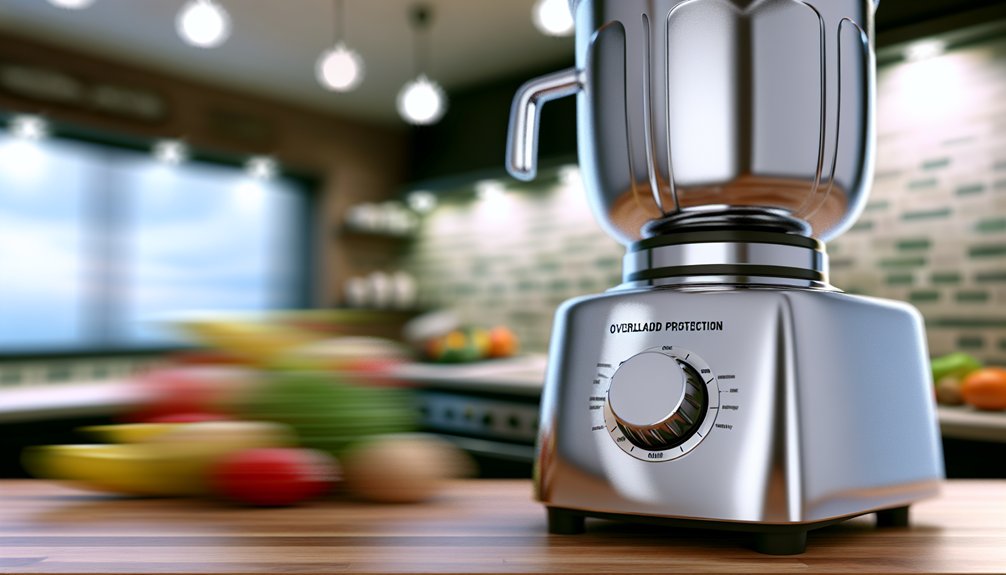
When you pick a mixer grinder with overload protection, prioritize models whose trip thresholds, reset behavior, and diagnostic indicators are clearly specified by the manufacturer and conform to recognized standards (IEC/IS/UL where applicable); unclear specs mask operational risks like nuisance trips or insufficient protection that can still allow winding damage or thermal runaway. Check documented trip current/time curves and whether protection is thermal, electronic, or both, so you know what faults are covered. Verify automatic versus manual reset and whether resets require technician access—automatic resets can be unsafe if repeated faults persist. Look for visible LEDs or error codes that identify overloads, short circuits, or motor overheating. Confirm manufacturer test reports, compliance marks, and a clear warranty covering electrical failure modes. Also consider models that offer 5-year motor warranties and reinforced construction for longer-term reliability.
Frequently Asked Questions
Can Overload Protection Affect Grinding Performance or Speed Consistency?
Yes — overload protection can temporarily slow or interrupt grinding to prevent motor damage, causing brief speed inconsistency; you’ll notice reduced performance only under excessive load, but it’s a deliberate safety trade-off to protect components and meet standards.
Does Overload Protection Need Periodic Testing or Maintenance?
Yes — you should test and maintain overload protection periodically. Follow manufacturer intervals, inspect thermal cutouts, clean vents, verify trip operation under controlled conditions, and log results to ensure reliable safety performance and compliance with standards.
Will Overload Protection Void the Mixer’s Warranty if Triggered?
It usually won’t void warranty if overload protection trips as designed, but you should check your manufacturer’s terms; improper tampering, bypassing, or repeated misuse can nullify coverage, so document incidents and follow service procedures.
Can I Retrofit Overload Protection to My Existing Mixer Grinder?
You can, but you shouldn’t unless you’re qualified and follow appliance safety standards; improper retrofits risk fire, electrical shock, and void warranties. Consult manufacturer or certified electrician, use rated thermal/magnetic breakers and documented compliance.
Does Overload Protection Increase the Appliance’s Energy Consumption?
No, overload protection doesn’t increase energy consumption; it prevents motor overheating and damage, tripping when current exceeds safe limits. You’ll use no extra power in normal operation, and it enhances safety and equipment longevity.