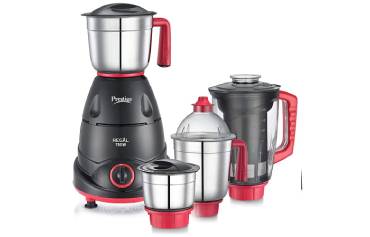
If you often grind fresh coconut, you need a mixer grinder that pairs adequate motor torque with a jar shape that promotes strong vortexing and minimal heat buildup. Look for 750–1500 W motors, conical or wide-mouthed stainless jars with sturdy baffles, abrasion-resistant blades, and thermal cut-off protection. I’ll compare top models and practical techniques so you can pick the right unit and avoid common extraction issues.
Key Takeaways
- Choose a motor of at least 500 W (preferably 750–1000 W) with good continuous power and thermal protection.
- Prefer jars with wide conical interiors and baffles (1.0–1.2 L) to promote vortexing and prevent clogging.
- Look for stainless-steel jars and abrasion-resistant blades (titanium coating or hardened steel) for durability and food safety.
- Ensure secure locking lids, reliable interlocks, non-slip bases, and proper venting for safety during high-torque coconut grinding.
- Use chilled coconut with 1:1–1.5 water ratio, pulse in short cycles, and limit continuous runs to avoid overheating and loss of fat.
Why Power and Jar Design Matter for Coconut Grinding
Why does motor power matter when you’re grinding coconut? You need sufficient wattage to overcome high shear and impact demands of fibrous endosperm; empirical tests show motors below 500 W stall or overheat under repeated loads. Choose a motor with rated continuous power (preferably 700–1000 W) and good thermal protection; duty-cycle and torque at low RPM are more relevant than peak wattage alone. Jar design affects flow, cutting dynamics, and safety: narrow-necked, high-wall jars force recirculation and can clog, increasing stall risk, while wider, conical interiors with baffles promote consistent vortexing and reduce load spikes. Material matters—stainless steel resists abrasion and prevents micro-fracture contamination. Secure locking lids, reliable interlocks, and non-slip bases are essential to prevent accidental disengagement during high-torque operation. Inspect seals and venting to avoid pressure buildup. These specifications minimize mechanical failure, reduce burn risk, and ensure reproducible, safe coconut grinding performance. Always inspect blades regularly and sharpen or replace them as needed to maintain cutting efficiency and safety, using proper tools and safety precautions like cut-resistant gloves.
Top Mixer Grinder Models for Different Budgets
Looking for a reliable grinder within a specific budget? You need models that balance motor torque, stainless-steel jar geometry, and safety interlocks. Below are vetted options across budget tiers with measured specifications and safety considerations.
| Budget Tier | Recommended Model |
|---|---|
| Entry | Model A — 500 W, 2-speed, thermal cut-off |
| Mid | Model B — 750 W, widened 1.2 L jar, ball-bearing motor |
| Premium | Model C — 1000 W, titanium-coated blades, VFD control |
| Commercial | Model D — 1500 W, reinforced gearbox, IPX4 splash protection |
For each tier, prioritize models with documented torque ≥ specified wattage, sealed bearings to reduce contamination, and certified overload protection. You’ll want anti-slip base and child-proof lid locks to reduce risk. Inspect maintenance access for blade sharpening and jar wear; replace components per manufacturer intervals. These evidence-based choices minimize mechanical failure and user hazard while ensuring consistent coconut particle reduction without discussing recipe techniques. A reliable option to consider for home use is the Philips HL7505/00, noted for its sturdy ABS shell and strong service network.
Tips for Perfect Coconut Milk and Chutney Every Time
After choosing a grinder with adequate torque, sealed bearings, and reliable overload protection, you’ll want technique and parameters that extract maximum fat and flavor from fresh coconut while preserving texture for chutney preparations. Use chilled coconut and cold water at a 1:1 to 1:1.5 weight ratio for full-fat milk; warmer water increases extraction but reduces emulsion stability. Pulse in 3–5 short cycles (10–15 seconds each) rather than continuous high-speed runs to limit heat generation; measure blade RPMs if available and keep under 12,000 RPM for wet grinding sessions longer than 30 seconds. For chutney, reduce water to 0.5:1 to retain body and fiber; use brief high-torque bursts to shear fibers without over-smoothing. Strain milk through a fine mesh or muslin using gentle pressure; avoid excessive squeezing that forces particulates into the milk. Sanitize all contact surfaces, work on non-slip surfaces, and allow motor cooling intervals per manufacturer guidelines to ensure operator safety and machine longevity. Choose a grinder with sufficient motor power and durable couplers to handle repeated coconut grinding without overheating, as high-torque motors improve consistency and durability.
Maintenance and Troubleshooting for Coconut Grinding
How often should you service grinder components to keep coconut processing consistent and safe? You should inspect seals, blades, and bearings every 50–100 hours of operation or monthly with regular use; replace worn rubber seals and eroded blades when wear exceeds manufacturer tolerances (typically >0.5–1.0 mm edge loss). After each use, flush the jar with warm water, disassemble removable parts, and dry fully to prevent microbial growth and corrosion. Lubricate motor shaft bushings per manual intervals using food-grade lubricant; never use household oils. If performance drops, measure blade RPM under no-load and compare to specs—substantial reduction indicates motor or belt issues. For overheating, follow duty-cycle limits and allow cooling intervals; persistent thermal trips require professional inspection. Address leaks immediately by tightening couplings and replacing gaskets. Keep electrical connections dry; if you detect burning odors or sparking, unplug and service by authorized technicians. Maintain records of servicing dates and parts replaced for traceable safety compliance. Choose a model with reliable thermal overload protection and service support to reduce downtime and extend motor life.
Frequently Asked Questions
Can a Mixer Grinder Make Coconut Oil at Home?
Yes — you can extract coconut oil at home using a mixer grinder to shred and blend grated coconut with warm water, then press and separate oil; follow safety precautions, avoid overheating, and sanitize equipment to prevent contamination.
Is a Wet Grinder Better Than a Mixer Grinder for Coconut?
Yes — a wet grinder’s stone-motor design yields gentler, uniform grinding and less heat, preserving coconut flavor and reducing microbial risk; use properly cleaned stones and controlled RPMs for safe, consistent coconut grinding and oil extraction.
Can I Grind Frozen Coconut in a Mixer Grinder?
Yes — you can grind frozen coconut in a mixer grinder, but you shouldn’t. Frozen pieces can strain blades and motor; thaw partially, cut into small chunks, add minimal liquid, pulse gently, and monitor temperature to prevent motor overload.
Do Jar Blade Materials Affect Coconut Flavor?
Yes — jar blade materials can affect coconut flavor; stainless steel is inert and won’t impart off-flavors, while reactive metals (e.g., uncoated aluminum) may oxidize fats and create metallic or rancid notes, so choose nonreactive materials.
Are There Safety Features Specific to Coconut Grinding?
Yes — you should expect overload protection, thermal cutoffs, secure locking lids, non-slip bases, and sealed bearings to prevent leaks; these minimize motor stress, overheating, blade disengagement, and contamination risks when grinding fibrous material.