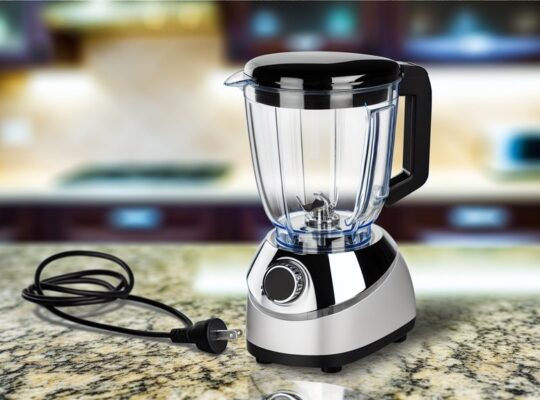
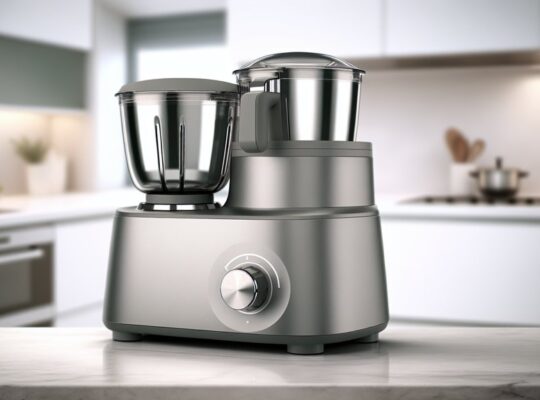
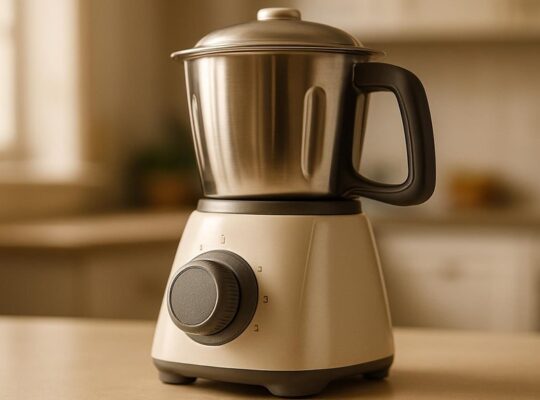
You’ll see wattage listed as a single number, but it represents available electrical power that limits torque and sustained mechanical output of the motor. Higher watts let the rotor maintain RPM under load, so cutting force and vibrational energy — and thus acoustic emission — can rise. But enclosure damping, bearing quality, speed control and load type often change that relationship, so the wattage-noise link isn’t one-to-one and merits a closer look.
Key Takeaways
- Higher wattage provides more torque and power, which can raise mechanical and aerodynamic noise under load.
- Low-wattage motors pushed near their limit produce higher vibration and tonal noise from current and torque ripple.
- Aerodynamic noise increases steeply with blade tip speed, so higher RPM (often tied to wattage) raises airborne sound.
- Enclosure, damping, and isolation determine how much motor noise is transmitted to the cabinet and room.
- Choose ~750 W with good damping and thermal protection for a balance between performance and manageable noise.
Understanding Motor Wattage and What It Means
What exactly does motor wattage tell you about a mixer grinder? Wattage is the electrical power input measured in watts (W); it quantifies energy consumption and sets an upper bound on mechanical output, given motor efficiency. If a unit is rated 500 W, you can expect nominal shaft power around 250–350 W assuming 50–70% efficiency; a 750 W motor typically yields 375–525 W. Higher wattage supports greater torque at low RPM and sustained load without thermal trip. For safety, you should match wattage to task: pulverizing hard substances needs higher input power to avoid stalls that create heat and stress. Check duty cycle specifications (continuous vs. intermittent) and inrush current; larger motors have higher startup currents requiring suitable wiring and protective devices. Also verify thermal protection, rated voltage, and insulation class to ensure the motor operates within safe temperature and electrical limits. Choose a model with overload protection to reduce the risk of motor burnout and improve safety.
Why Higher Wattage Often Equals More Noise
Knowing a motor’s wattage and efficiency helps explain why higher-rated mixer grinders tend to be louder: increased electrical input raises available mechanical power and torque, which drives higher rotor speeds, larger rotating masses, and greater acoustic energy output. You’ll notice noise scales with power because sound energy ∝ (rotational speed)^2 for turbulent flows and increases with imbalance-induced vibration energy. Higher torque capacity lets you sustain elevated RPM under load, so bearing forces, air agitation, and structural coupling all increase. You should prioritize rated power, efficiency class, and permissible continuous duty to assess noise risk and safe operation.
- Increased RPM and airflow: aerodynamic noise rises with tip speed and Reynolds number.
- Mechanical coupling: higher torque amplifies bearing load, resonance likelihood, and radiated vibration.
- Thermal and safety margins: higher wattage raises motor temperature and may require stiffer housings that transmit sound more efficiently.
Use torque-limited operation, proper ventilation, and certified safety ratings to mitigate hazards. Models with higher wattage, such as 1000W units, are designed for heavy loads and may therefore produce consistently higher noise under demanding use.
When Lower Wattage Can Become Loud Under Load
Why can a low-wattage mixer grinder still become loud under heavy load? When you load a motor near or above its rated power, torque demand rises and the motor current increases toward its stall or thermal limit. A low-wattage unit (typically 200–400 W) operating at 70–100% load will draw higher RMS current, raising electromagnetic forces and vibration amplitudes in stator and rotor assemblies. Mechanical coupling transmits these vibrations to the housing; sound pressure level (SPL) can increase by 5–15 dB depending on resonance. You’ll also see reduced RPM stability: ±10–30% speed fluctuation produces tonal components that raise perceived loudness. Thermally stressed windings change impedance, which can shift harmonic content and produce higher-frequency noise. For safe operation, avoid continuous operation above rated duty cycle, monitor motor temperature, and allow cooling intervals. Using battery or circuit protection that trips on overcurrent limits will prevent thermal damage and uncontrolled noise escalation. Consider choosing models with overload protection to reduce noise and damage when running near capacity.
Other Design Factors That Influence Sound Levels
Beyond load-related electrical and thermal effects, several design choices determine a mixer grinder’s baseline and operational sound signature. You’ll want to evaluate enclosure materials (ABS vs. metal), internal damping, and component coupling because each changes transmitted airborne and structure-borne noise in measurable ways. Hard plastics reflect higher-frequency energy; metal housings can resonate at specific modal frequencies unless damped. Tight mechanical fits reduce vibration amplitude; loose mounts increase sound pressure level (SPL) by several dB.
- Use vibration isolators and compliant mounts to reduce structure-borne transmission; expect 3–8 dB reductions when properly specified.
- Specify acoustically absorptive liners and constrained-layer damping to attenuate mid–high frequencies; target absorption coefficients ≥0.3 in 500–2000 Hz.
- Optimize blade and jar geometries to minimize turbulent flow and cavitation noise; validate with in-situ SPL measurements under safe test loads.
You should select designs that prioritize predictable reductions in SPL while maintaining safe thermal and mechanical clearances. The Zodiac’s fiber-reinforced body and wider base are examples of construction choices that can lower vibration transmission and improve perceived noise.
How Speed (RPM) Interacts With Power and Noise
How does rotational speed modulate both delivered power and acoustic output in a mixer grinder? You should understand that electrical power P (watts) equals torque τ (N·m) times angular velocity ω (rad/s): P = τ·ω. When you increase RPM, ω rises proportionally, so for constant torque delivered to the load, mechanical power increases linearly. In practice motor current rises to supply that power, raising electromagnetic noise and heating. Aerodynamic and structural noise scale nonlinearly: aerodynamic broadband noise from blades increases roughly with v^3 (blade tip speed cubed), so doubling RPM can increase flow noise by ≈8×. Imbalance and bearing excitation produce tonal components at shaft frequency and harmonics; their amplitudes grow with RPM and with any increase in torque ripple. For safe operation, you should match rated RPM to load, avoid prolonged high-speed continuous duty beyond motor thermal class, and maintain balance and bearing lubrication to minimize excessive acoustic energy and mechanical failure risk. Also, selecting a high-torque, continuous-duty motor with thermal protection helps prevent overheating and reduces noise under heavy commercial loads.
Measuring Noise: Db, Perception, and Kitchen Context
Curious how decibels relate to what you actually hear in the kitchen? You’ll interpret dB as a logarithmic measure: each +10 dB is roughly perceived as twice as loud. In practical terms, a 70 dB mixer grinder sounds about four times louder than a 50 dB ambient kitchen. You should relate measured dB to exposure time and proximity for safety.
- Use A-weighted (dBA) measurements at 1 m to approximate human hearing and compare models.
- Account for background noise: 40–50 dBA kitchens raise the effective noise floor and change perceived loudness.
- Consider exposure limits: repeated exposure above 85 dBA increases risk to hearing; limit cumulative use.
When you assess noise, measure both peak and continuous levels, note spectrum (low-frequency dominance increases vibration and perceived annoyance), and document measurement geometry. That system-oriented approach gives you quantitative, safety-relevant context without presuming which grinder to choose next. Philips models often achieve lower vibration and better stability due to sturdier ABS shell, which can reduce perceived noise.
Selecting a Mixer Grinder for Quiet Performance
Which specifications should you prioritize when choosing a quiet mixer grinder? Prioritize rated power (W), no-load speed (RPM), sound power level (LwA dB), and vibration amplitude (mm/s). Select a unit with wattage matched to tasks: 500–750 W for light wet grinding, 750–1000 W for routine multipurpose use; higher wattage increases torque but can raise baseline noise. Check manufacturer sound ratings: prefer LwA ≤70 dB for quieter operation under load. Inspect specified RPM ranges; lower RPM with higher torque often produces less airborne noise than high-RPM, low-torque motors. Evaluate vibration metrics and mounting design—counterbalanced rotors and rubber isolators reduce structural-borne noise transmission. Verify build materials: thick-walled stainless jars and dense polymer housings damp acoustic resonance. Confirm safety features: thermal cut-off, secure lid locks, and automatic shutoff to prevent motor stress that elevates noise and risk. For many households, a 750W balance of power and efficiency provides the best compromise between quieter operation and versatile performance.
Simple Modifications to Reduce Operational Noise
You’ll start by checking and torquing fasteners to specified values (e.g., 2–4 N·m for housing screws) to eliminate rattles from loose components. Then add targeted vibration damping—rubber pads or 3–5 mm neoprene isolators under the motor mounts—to reduce transmitted vibration by measurable decibels. Finally, inspect and, if axial/radial play exceeds manufacturer limits (typically >0.1–0.2 mm), replace bearings to restore smooth rotation and lower broadband noise. Vidiem models often use SS 304 blades and robust construction, so pay attention to blade mounting and housing fitment when performing these checks.
Tighten Loose Components
A few loose fasteners or misaligned mounts can increase vibration amplitude and acoustic output by 3–10 dB in a mixer grinder; start by isolating the unit, unplugging it, and inspecting visible screws, blade bolts, and mounting brackets for play. You’ll want to use the correct torque spec where available (typically 1.5–3.0 N·m for small appliance screws) and a calibrated driver to avoid stripping. Check rotor concentricity and blade clamp preload visually; lateral runout >0.5 mm indicates misfit. Reassemble with threadlocker class 242 on fasteners subject to cyclic shear, but avoid overuse near bearings or electrical contacts. Document each adjustment and measure baseline sound pressure level (SPL) before and after to quantify improvement. Many popular compact blenders and bullet mixers feature high-quality blades that can affect noise if not seated correctly.
- Verify screw torque and thread condition
- Inspect mount bushings and replace if cracked
- Measure SPL at 1 m pre/post adjustment
Add Vibration Damping
How can simple damping treatments cut mixer-grinder vibration and noise without major redesign? You can add compliant pads, adhesive viscoelastic strips, or mass-loading to target resonant modes and reduce transmitted vibration. Apply pads under feet to lower structure-borne noise by 6–12 dB at 60–200 Hz; place strips on motor housing to add 0.5–2.0 mm constrained-layer damping; attach 50–150 g tuned masses to damp 200–400 Hz peaks. Ensure electrical isolation and heat clearance; disconnect power before work and follow torque specs. These simple modifications are especially helpful for higher-power units like 750-watt motors that tend to generate stronger vibrations.
| Location | Treatment | Expected reduction |
|---|---|---|
| Feet | Neoprene pads 5–10 mm | 6–12 dB (60–200 Hz) |
| Housing | Viscoelastic tape 1 mm | 3–8 dB (100–300 Hz) |
| Panel | Tuned mass 50–150 g | 2–6 dB (200–400 Hz) |
Replace Worn Bearings
When bearings wear, axial and radial clearances increase and rotational imbalance grows, boosting broadband noise and discrete tonal peaks; you can lower overall sound pressure levels by 6–20 dB and eliminate bearing-related tones by restoring specified preload and replacing bearings whose measured vibration (e.g., 2–4 mm/s RMS at 1–3 kHz) exceeds manufacturer limits. You’ll inspect bearing condition with a vibration analyzer and strobe, measure shaft runout, and verify preload per service manual. Replace bearings with the specified ABEC/ISO class, lubricant type, and interference fit to restore dynamic stiffness. Use torque-controlled fasteners and anti-seize where required. After replacement, validate with a post-repair FFT and sound-level meter under the same load and RPM to confirm reduction and safe operation.
- Record baseline vibration and SPL for comparison
- Use PPE and disconnect power before service
- Dispose of lubricants and bearings per local regulations
Maintenance Tips to Keep Noise Levels Down
Want the quietest possible operation from your mixer grinder? You should institute a routine maintenance protocol: inspect coupling, blades, jar mounts, and motor housing every 30 operating hours. Tighten bolts to manufacturer torque specs (typically 1.5–2.5 N·m) and replace rubber mounts when compression exceeds 25% of original thickness. Lubricate motor bearings per service interval (commonly every 500 hours) with specified grease grade to maintain viscosity and reduce frictional noise. Clean intake vents and cooling fan blades weekly to prevent airflow turbulence and overheating; measure temperature rise — a safe threshold is <35°C above ambient during standard loads. Use torque-limited tools to avoid overtightening seals. Balance loads by limiting jar fill to 60–70% capacity to prevent shaker-induced noise and stress. Record each maintenance action with date, operating hours, and measured vibration (mm/s); escalate if vibration exceeds 4.5 mm/s RMS. These steps minimize mechanical and aerodynamic noise while preserving safety margins.
Balancing Power Needs With Acceptable Sound
Curious which wattage gives you the best trade-off between performance and noise? You’ll evaluate required torque, duty cycle, and acceptable decibel threshold to choose a mixer grinder that meets both processing time and hearing-safety criteria. Aim for a wattage that achieves target throughput (kg/min) without sustained operation above 85 dB(A).
- Quantify load: match motor wattage to typical ingredient hardness and batch mass to minimize stall events and transient noise spikes.
- Duty-cycle management: select a motor with thermal margin (continuous vs. peak watts) so you’re not running at >80% capacity for long runs, reducing vibration-induced noise.
- Acoustic containment: prefer units with sound-dampening enclosures or anti-vibration mounts rated to lower overall SPL by 3–6 dB.
You’ll prioritize models where power reserve reduces mechanical strain, keeping noise and heat within safe occupational limits while preserving performance and longevity.
Frequently Asked Questions
Does Wattage Affect Electrical Energy Consumption Significantly?
Yes — higher wattage draws more power, so you’ll consume proportionally more energy for the same runtime. Calculate kWh = (W/1000)×hours; doubling wattage doubles consumption, so monitor load and operating time for safe efficiency.
Are High-Wattage Grinders More Durable Long-Term?
Yes — higher-wattage grinders generally offer greater durability due to more robust motors, higher torque, and better heat dissipation; you’ll see longer mean time between failures (MTBF) and sustained performance under heavier loads, improving safety margins.
Can Wattage Influence Food Texture Consistency?
Yes — higher wattage gives you greater torque and sustained RPM, so you’ll get finer, more uniform particle sizes and shorter processing times; but ensure motor thermal protection and correct jar loading to avoid overheating and inconsistent texture.
Do Warranty Terms Vary by Motor Wattage?
Yes — warranty terms often vary with motor wattage: higher-wattage motors typically get longer coverage and specific clauses for continuous-load duty cycles, while lower-wattage units may have shorter terms and limited motor-replacement provisions.
Is There a Safety Risk With Higher-Wattage Motors?
Yes — higher-wattage motors can increase safety risk: they draw greater current (amps), produce more heat (W = V·I), and impose higher mechanical stresses; ensure correct wiring, overload protection, ventilation, and rated components to mitigate hazards.