When you prep for Diwali or Navratri, the hum of a mixer grinder becomes part of the festival soundtrack, turning whole spices into fragrant dust and coconut into silky paste. You’ll notice textures that stretch from coarse chutneys to lusciously smooth batters, each aroma releasing memories of ancestral kitchens. It speeds up labor without stealing tradition, but there’s more about technique and care that keeps flavors true—and you’ll want to get that right.
Key Takeaways
- Speeds up traditional preparations by converting hours of pounding into minutes for batters, chutneys, and sweet pastes.
- Ensures consistent, festival-expected textures (silky halwa, airy idli batter, coarse chutneys) through correct jar and grind settings.
- Preserves peak aroma and flavor by enabling small-batch, last-minute grinding of spices, coconut, and nuts.
- Supports safety and reliability during heavy use with proper loading, pulsing, and rest to prevent motor strain.
- Simplifies cleanup and waste management—scrape pastes into jars, compost peels, and store used oil for proper disposal.
Importance of Consistent Textures in Festive Dishes
Because texture shapes memory as much as flavor, getting consistent textures in festive dishes makes your celebrations feel authentic and comforting. You’ll notice how the smoothness of besan laddoo or the coarse bite of coconut chutney signals home; each mouthful evokes temples, lamps, and family voices. You want the right grind—silky for halwa, grainy for thechi—so every recipe holds its intended mouthfeel. Sensory cues guide guests to familiar rituals, and safety-minded preparation—steady pulses, secure lids, cooled blends—keeps everyone protected while you craft those textures. Respecting cultural proportions and tactile expectations honors tradition, while consistent results reduce waste and anxiety. When textures match memory, meals become both reassuring and celebratory. Choose a mixer grinder with multiple jar sizes and strong motor protection to ensure reliable textures across batches.
Essential Mixer Grinder Attachments and Their Uses
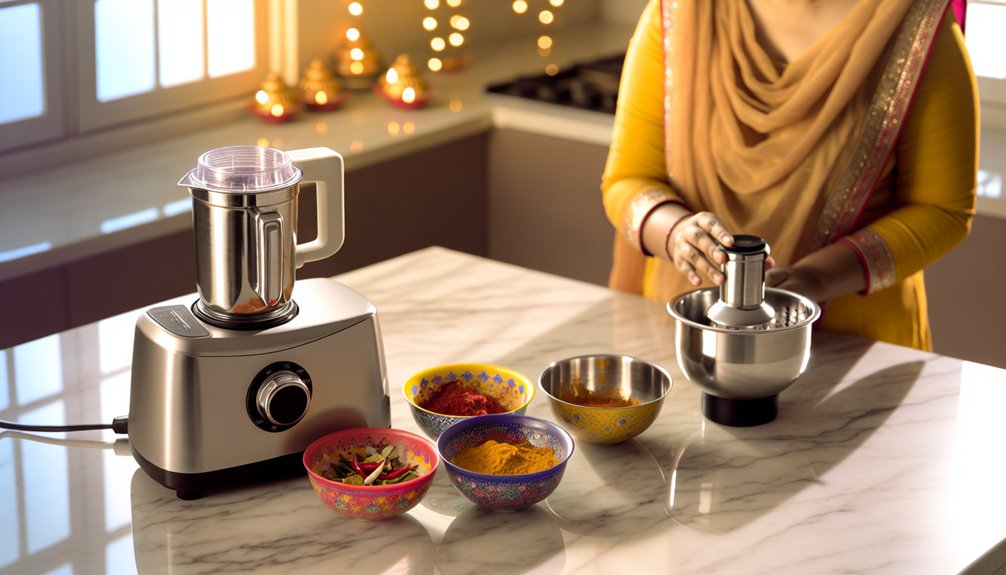
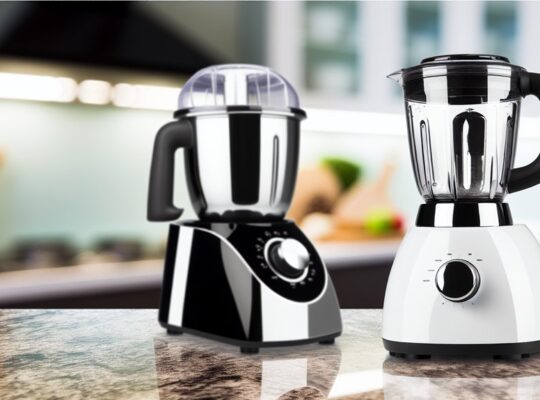
Once you’ve nailed the right textures, knowing which mixer grinder attachment to reach for becomes as important as the recipe itself. You’ll recognize the jar for wet grinding by its heavy glass or stainless steel body and sealed lid—ideal for silky batters for idli, dosa, and sweet batters; keep the lid locked and hands clear. The chutney jar is smaller, perfect for fragrant coconut and mint blends—pulse gently to preserve aroma. Use the blender jar for smoothies and lassis, watching speed to avoid splatter. The dry grinding jar turns spices into aromatic powders—work in small batches and cool between runs to prevent overheating. Attachments like whiskers or slicers expand options, but always secure fittings and unplug before changing parts for safe, joyful festival cooking. Consider models with overload protection to enhance safety and prolong motor life.
Time-Saving Benefits During Festival Preparations
When you’re juggling sweets, chutneys, and spice pastes for Diwali or Navratri, the mixer grinder turns hours of pounding into minutes, filling the kitchen with the warm, nutty scent of roasted masalas. You can grind large batches at once, so the rhythm of pounding mortar and pestle is replaced by a steady hum that frees you to plate, decorate, or greet arriving guests. That speed—paired with consistent texture—keeps festive flavors true while saving precious time. Modern mixers with overload protection also ensure safe, uninterrupted operation during heavy festival workloads.
Faster Ingredient Processing
How many hands would you save if you could pulse through piles of soaked lentils, roasted spices and chiffonaded greens in minutes? You’d feel the rhythm of festival prep shift: the blade’s hum replaces tedious scraping, releasing warm, nutty aromas and the bright green scent of coriander. You’ll quickly transform textures — coarse to silky — while keeping ingredients cool and safe. That speed preserves freshness, reduces time food sits at room temperature, and lowers contamination risk when you follow simple safety steps: secure lids, avoid overfilling, and pulse in short bursts. Faster processing means you can focus on ritual, plating, and guests, not repetitive chopping. In busy kitchens, a reliable mixer grinder becomes a sensory ally that protects both flavor and family health.
Batch Grinding Efficiency
From the quick pulses that saved your hands, you’ll notice another payoff: the ability to process large batches without losing rhythm. You’ll load jars of roasted chana and coconut, the motor humming like a steady tabla, and scent of spices will bloom faster than by mortar and pestle. You’ll move from chutney to masala paste in one continuous flow, timing each run so ingredients stay cool and texture stays even. That steady throughput cuts hours from festival prep, so you can focus on safe handling — secure lids, short bursts, and cooling intervals to avoid overheating. In crowded kitchens during Diwali or Navratri, that reliable batch efficiency keeps your workflow calm, tidy, and confidently on schedule.
Popular Festival Recipes Made Easier With a Grinder
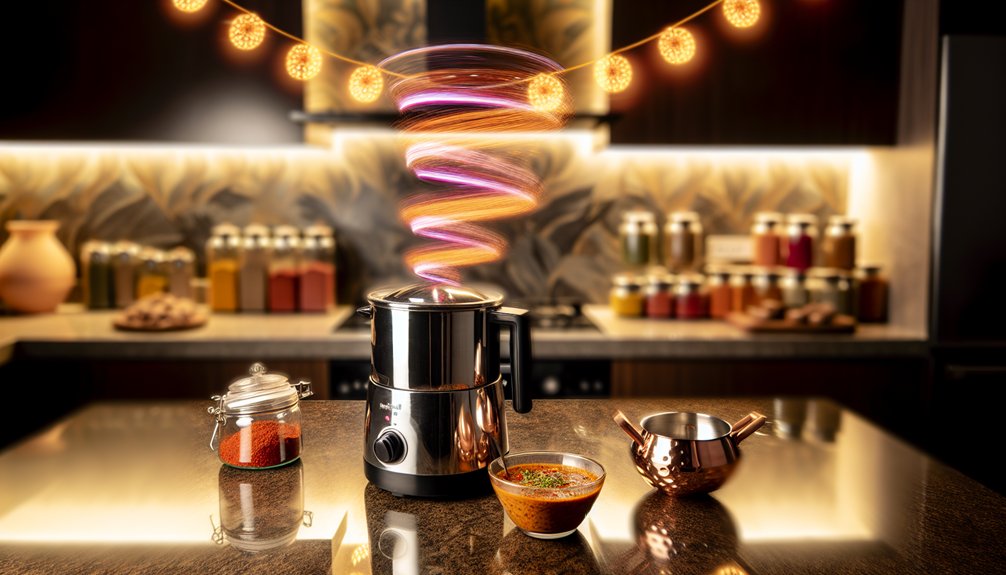
Ever wondered why the hum of a grinder becomes part of festival soundscapes across India? You feel that vibration as cardamom and coconut turn to velvet, and the kitchen fills with warm, heady aromas. A grinder speeds up making:
- Besan laddoo mix and coconut fillings for quick, consistent textures.
- Navratri sabudana khichdi paste and peanut chutneys for smooth, safe blends.
- Idli-dosa batter and urad dal paste for airy, reliable fermentation.
You’ll notice fresher flavors when whole spices and nuts are ground moments before use, and you can control texture for family preferences. Use stable placement, secure lids, and short pulses to avoid overheating. The result is festive food that’s fragrant, uniform, and made with calm, confident hands. Choose a grinder with a suitable motor wattage to match the volume and toughness of ingredients you commonly prepare.
Tips for Grinding Spices and Pastes for Authentic Flavors
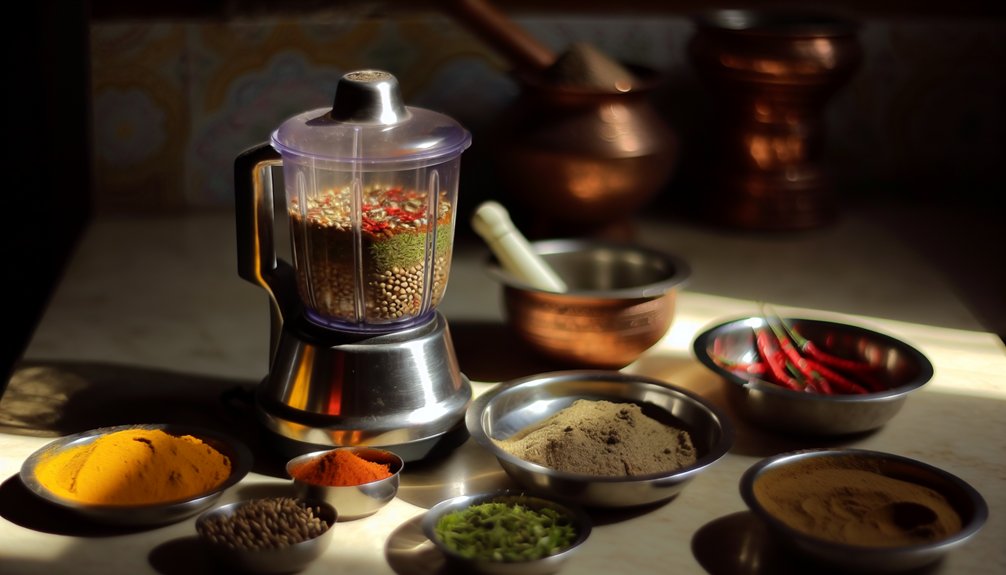
When you grind spices and pastes just before cooking, the aromas burst out—warm cardamom, sharp cumin, and the oily sweetness of freshly crushed coconut—bringing an immediacy to festival dishes that pre-ground powders can’t match; you’ll notice the difference in the depth of flavor and the way each bite carries a brighter, truer note. Use small batches for peak aroma: grind what you need for one dish, not the whole feast. Toast whole spices lightly to unlock oils, then cool before grinding. Add coarse salt or a spoon of oil when making chutneys and masalas to create a smoother paste and preserve volatile flavors. Scrape jars and blades between uses to avoid cross-flavoring. Let pastes rest briefly so flavors marry before you cook. For larger festival prep consider using a mixer grinder’s high RPM to achieve smoother pastes quickly while maintaining authentic textures.
Maintenance and Safety While Cooking for Large Gatherings

When you’re feeding a crowd for Diwali or Navratri, a regular cleaning schedule for your mixer grinder keeps aromas pure and reduces the risk of burnt tastes that can ruin a feast. You’ll want to avoid overloading the jar—feel the motor strain and listen for labored sounds so you can pulse smaller batches instead of forcing through too much. And after the rituals and the last serving, follow safe disposal practices for peels, oil and wet waste so your kitchen stays fragrant and hygienic for the next celebration. Choose a mixer grinder with durable stainless steel jars to ensure hygiene and long-lasting performance.
Regular Cleaning Schedule
How often do you wipe down your mixer grinder between batches during festival prep? You’ll notice the tang of spices lingering on the rubber seal and the soft thud as lids close—these cues tell you it’s time to clean. Keep a ritual:
- After every heavy-use session, rinse jar and blades with warm, soapy water.
- Wipe motor housing and switch with a damp cloth; dry immediately.
- Deep-clean seals and crevices weekly, using a small brush.
This schedule keeps aromas pure for prasadam, avoids cross-contamination during Navratri fasts, and reduces microbial risk when feeding many. You’ll want gloves for stubborn residues and a clean towel ready to polish metal surfaces until they gleam. Regular, sensory-aware cleaning protects both heritage flavors and guests’ safety.
Overload Prevention Tips
After wiping down spills and keeping seals bright for fragrant prasadam, you’ll want to guard against overloading the grinder as you scale up for a crowd. Fill jars no more than two-thirds, feeling the rhythm of pulses rather than continuous run; you’ll hear the motor breathe between short bursts. Break dense dals or coconut into smaller pieces so blades meet them easily, and alternate wet and dry ingredients to keep a cool, steady hum. If the machine strains, stop, stir and let it rest; a hot, metallic scent is your cue to pause. Use the right jar size and sturdy blades for batter or chutney. These simple, sensory-aware habits keep celebrations safe, kitchens calm, and offerings perfect.
Safe Disposal Practices
Where will all the peels, oil, and used spice pastes go once the last aarti’s light has dimmed? You’ll want clean, safe disposal that honors tradition and protects your kitchen. Feel the citrus zest fade as you scrape peels into compostable bags; smell of mustard oil should remind you to never pour it down drains. Follow these simple steps for festival-scale care:
- Collect solids (peels, husks, waste) in compost bins or biodegradable bags.
- Strain and store used oil in labeled containers for recycling or proper hazardous-waste drop-off.
- Scrape pastes into sealed jars; wipe grinders with damp cloths before rinsing to avoid clogging drains.
These practices keep aromas pleasant, drains clear, and guests safe during celebrations.
Choosing the Right Mixer Grinder for Occasional Heavy Use
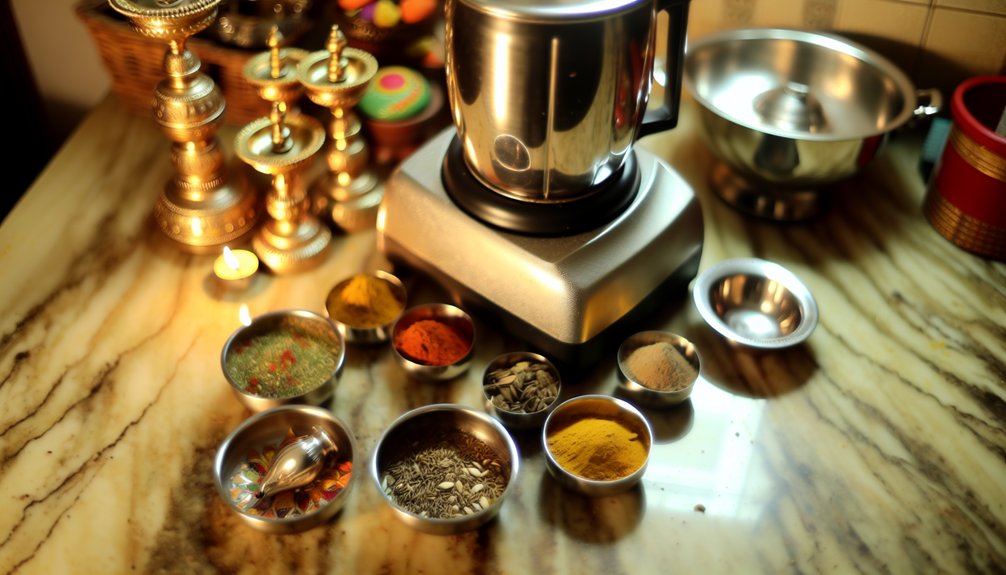
Thinking about a grinder for the few times a year you’ll blitz batter, chutneys, and spice pastes? You’ll want a sturdy motor—preferably 750–1000W—to handle dense dosa batter and coarse peanut chutney without overheating. Look for metal jars with tight lids and a wet-grind blade that stays sharp; the weight and vibration damping tell you it’s built for occasional heavy duty. Choose thermal overload protection and easy-to-clean seals so you can stop, cool, and resume safely during long festival prep. Consider a slow-start function for smoother textures and quieter operation that won’t frighten guests. Culturally, the right machine preserves aroma and texture; practically, it keeps your kitchen safe and your festive dishes true. Make sure to follow basic safety steps like unplugging and removing the blade before inspection and sharpening safety first.
Frequently Asked Questions
Can a Mixer Grinder Make Traditional Sweets Like Burfi or Laddoo Smoother?
Yes — you can use a mixer grinder to make burfi or laddoo smoother; it’ll give silky textures if you pulse gently, avoid overheating, pause to cool, and taste as you go to keep flavors and safety intact.
Is a Wet Grinder Better Than a Mixer Grinder for Idli Batter?
Yes — you’ll find a wet grinder’s slow, stone-like action yields silkier, aerated idli batter with warmer, gentle grinding that preserves enzymes and safety; it’s steadier, less heat-generating, and better for authentic, fluffy idlis every time.
Can I Use the Same Grinder for Raw Meat and Vegetarian Pastes?
You can, but you shouldn’t without thorough cleaning and sterilizing between uses; raw meat scents, juices and bacteria can linger, affecting vegetarian dishes and safety—wash with hot soapy water, sanitize, dry completely before switching to veg pastes.
How Do Altitude and Humidity Affect Grinding Results?
Altitude and humidity change grinding: you’ll notice drier air makes powders fluffier and blades run cooler, while high humidity clumps pastes and risks spoilage; adjust grind time, pulse, and drying to keep textures safe and consistent.
Are There Noise-Reduction Tips for Nighttime Festival Cooking?
Yes — you can muffle the grinder with thick towels, run it on lower speed, schedule grinding earlier, use rubber mats to absorb vibration, and wear ear protection; you’ll keep nighttime cooking safe, quiet, and respectful of neighbors.