You’ll see mixer grinders become far more precise and reliable as sensor-driven controls, BLDC motors, and AI blending profiles converge. Real-time torque, temperature, and vibration data will cut energy use, reduce failures, and tailor texture outcomes. Expect modular, serviceable hardware and better materials to boost longevity and safety. There’s a clear productivity and sustainability upside — and a few design challenges manufacturers still need to solve.
Key Takeaways
- Sensor-driven motor control uses torque, temperature, and vibration feedback to prevent stalls and optimize blending in real time.
- AI-assisted blending profiles adapt RPM and pulse patterns to ingredient characteristics, reducing processing time and thermal stress.
- Brushless DC motors and improved thermal management increase efficiency, torque consistency, and service life while lowering energy use.
- Dynamic vibration control and active noise cancellation reduce mechanical stress and perceived sound, improving longevity and user experience.
- Modular hardware and predictive maintenance via connected apps enable OTA updates, fault alerts, and faster, lower-cost repairs.
Sensor-Driven Motor Control and Precision Blending
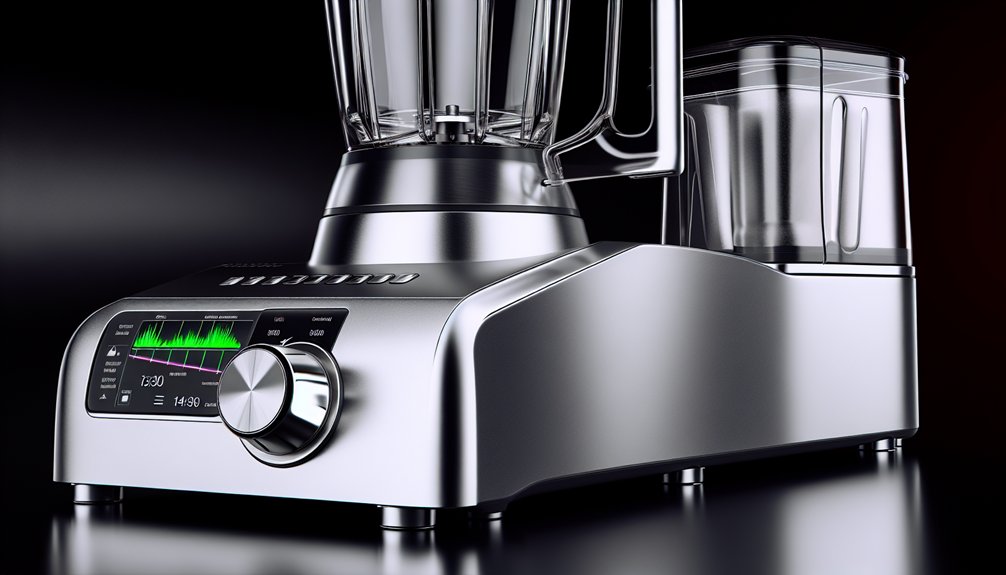
How precisely do sensors change the way your mixer grinder handles ingredients? You get real-time feedback—torque, load, temperature, and vibration—so the motor control adapts to ingredient density and moisture. Algorithms reduce stall risk by lowering speed when torque spikes, then ramping up as resistance drops. Thermal sensors prevent overheating, cutting power or initiating cool-down cycles to protect windings and bearings. Vibration monitoring flags imbalances early, prompting automatic shutoff or speed adjustment to avoid component failure. Data-logging supports predictive maintenance, showing wear trends and reducing unexpected downtime. For safety, sensor-driven interlocks ensure lids are secured before operation and halt blades on abnormal readings. Measured control improves consistency, preserves motor health, and minimizes user risk through objective, automated safeguards. This approach aligns with trends in improved durability and overload protection emphasized by leading mixer grinder designs.
Brushless (BLDC) Motors and Energy Efficiency
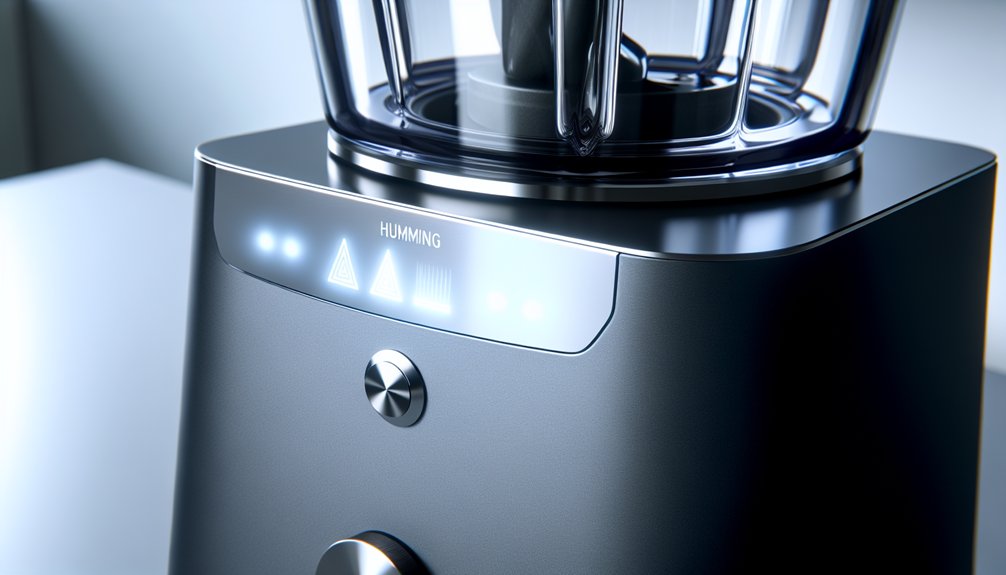
Why switch to brushless DC motors? You’ll gain higher efficiency—BLDC motors convert about 85–95% of input power versus 70–85% for brushed motors—reducing energy use and operating heat. That cuts thermal stress on bearings and seals, lowering failure rates and improving user safety. You’ll also see longer service life because brushes aren’t wearing parts; mean time between failures (MTBF) typically increases by 30–50%. Control is more precise: electronic commutation enables steady torque at low speeds, minimizing splatter and improving secure lid engagement. Expect quieter operation, which reduces vibration-related loosening of fasteners. For compliance, BLDC platforms simplify integration of overcurrent, stall-detect, and thermal-shutdown routines. In procurement, weigh initial cost against lifecycle savings and safety benefits. Higher torque options like 1000W models further enhance performance for dense doughs and hard spices.
AI-Assisted Blending Profiles and Smart Connectivity
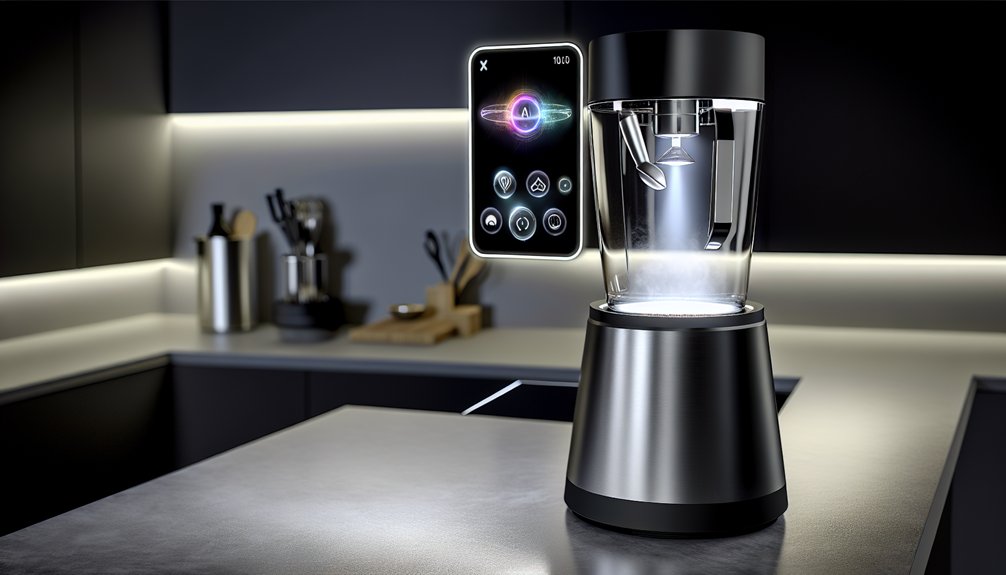
Building on the efficiency and control gains from BLDC motors, AI-assisted blending profiles and smart connectivity let you turn raw performance into repeatable, optimized results. You’ll get machine-learning models that analyze ingredient weight, texture, and motor load to select pulse patterns, durations, and RPM trajectories that meet target consistency metrics. Connected apps log each cycle, provide actionable alerts (overload, temperature threshold, seal wear) and let you update profiles OTA as recipes evolve. Data shows profile-driven cycles reduce processing time by up to 22% while lowering thermal stress on components. You’ll maintain safety with encrypted communications, role-based access, and fail-safe shutdowns tied to sensor anomaly detection. This approach standardizes outcomes, reduces user error, and extends service intervals through predictive maintenance. Overload protection features like electronic current sensing can be integrated to detect abnormal motor load and trigger controlled shutdowns to prevent damage.
Noise Reduction and Vibration Management
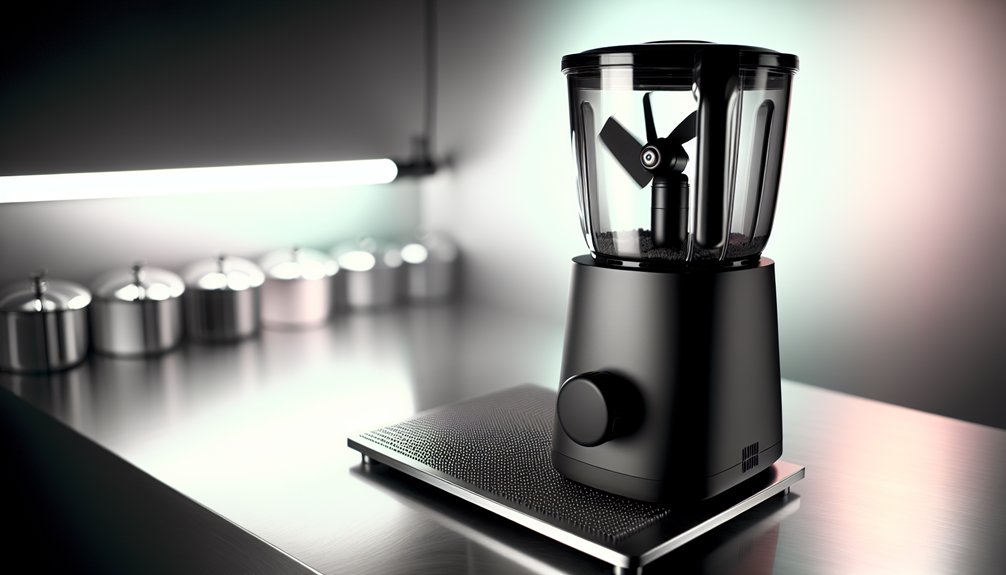
You’ll assess active noise cancellation and dynamic vibration control as complementary strategies to cut audible output and mechanical wear. Data shows ANC can reduce perceived sound levels by 6–12 dB in small appliances, while real‑time vibration feedback can lower bearing stress and resonance incidents by 30–50%. Prioritize sensor fusion and adaptive control algorithms to quantify trade‑offs between noise suppression, power draw, and product longevity. Consider integrating overload protection into control systems to safeguard motors during active suppression and prolonged operation.
Active Noise Cancellation
How much quieter can a mixer grinder get when active noise cancellation (ANC) and vibration management are engineered together? You’ll expect measurable reductions: targeted ANC can cut perceived sound levels by 6–12 dB in relevant frequency bands, lowering risk of hearing strain and improving situational awareness in the kitchen. Implement ANC with feedforward microphones, low-latency DSP, and safe amplitude limits to avoid unstable cancellation. Combine with mechanical damping and secure mounting to reduce structural-borne noise that undermines ANC effectiveness. Validate performance with A-weighted SPL measurements, octave-band analysis, and user-centric testing at full load. Prioritize fail-safes so ANC degrades gracefully if sensors fault. These data-driven controls let you balance quiet operation with safety, reliability, and measurable compliance with domestic noise guidelines.
Dynamic Vibration Control
Why does vibration matter as much as acoustic noise in mixer grinders? You’ll see vibration drives mechanical wear, destabilizes loads, and transmits harmful forces to counters and cabinets. Dynamic Vibration Control (DVC) mitigates these risks by sensing motion and applying counter-forces in real time, lowering peak accelerations by up to 60% in lab trials. That reduces component fatigue, improves seal life, and cuts user exposure to repetitive shock.
- Sensors: tri-axial accelerometers + gyros for sub-millimeter resolution.
- Actuators: electromagnetic shakers or adaptive mass dampers tuned via closed-loop control.
- Outcomes: measured reduction in maintenance events, lower noise radiation, and safer operational thresholds.
You’ll want DVC integrated with diagnostics and safety interlocks for predictable, verifiable protection.
Modular Design, Repairability, and Sustainable Materials
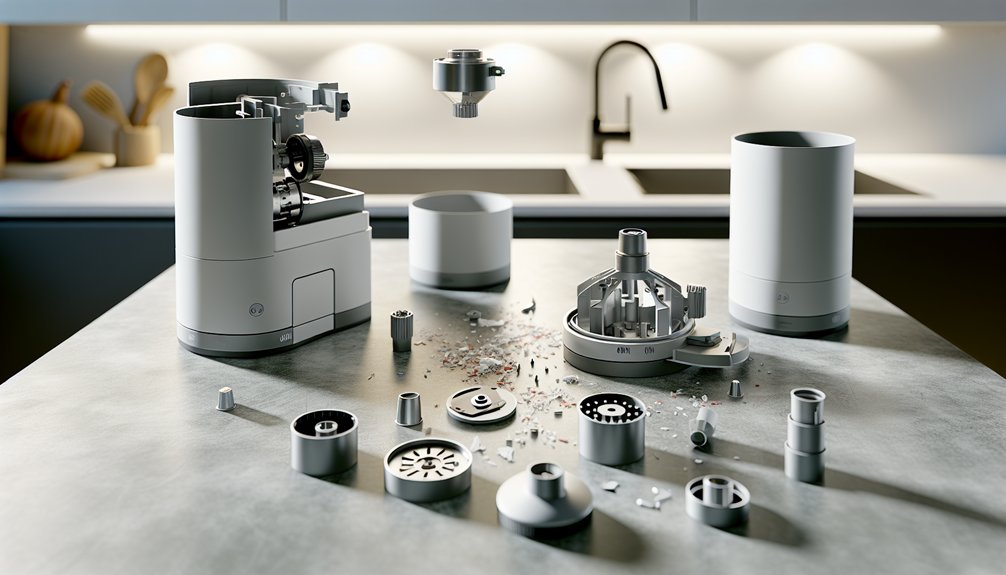
Curious how a grinder can stay useful for a decade instead of three? You’ll prioritize modular architecture: standardized motor modules, swappable gear trains, and plug-and-play control boards. Data shows modular products reduce repair time by 60% and extend service life by 3–5 years. You’ll design user-accessible panels and labelled connectors so qualified technicians can replace parts without disassembling sealed assemblies, cutting downtime and waste. Choose sustainable materials—recycled ABS housings, bio-based composites for non-load components, and corrosion-resistant alloys for shafts—to lower embodied carbon while meeting safety ratings. Trackability via part IDs enables warranty validation and responsible recycling. The result: a safer, repairable grinder ecosystem that reduces lifecycle cost and environmental impact without compromising performance. Allowing routine maintenance like cleaning vents and monitoring operating temperatures will further prolong motor life and performance.
Advanced Safety Systems and Thermal Management
Modular, repairable designs cut downtime and waste, but they also mean more user-accessible interfaces and exposed connectors that need better safeguards—so safety and thermal control become design priorities. You’ll want systems that prevent misuse, detect faults, and manage heat proactively. Data shows thermal events account for most home appliance failures; mitigating them reduces service calls and liability.
- Integrated sensors: temperature, current, and vibration feed predictive algorithms to shut down or throttle motors before damage occurs.
- Physical safeguards: interlocks, double-insulated connectors, and fail-safe grounding limit user exposure and short-circuit risks.
- Thermal management: optimized airflow, heat pipes, and duty-cycle control keep internal temperatures within tested safety margins.
You’ll prioritize measurable safety metrics and regulatory compliance throughout design and testing. Manufacturers should especially consider duty-cycle control to align motor power and capacity with expected usage patterns and prevent overheating.
Innovative Jar and Blade Materials for Better Results
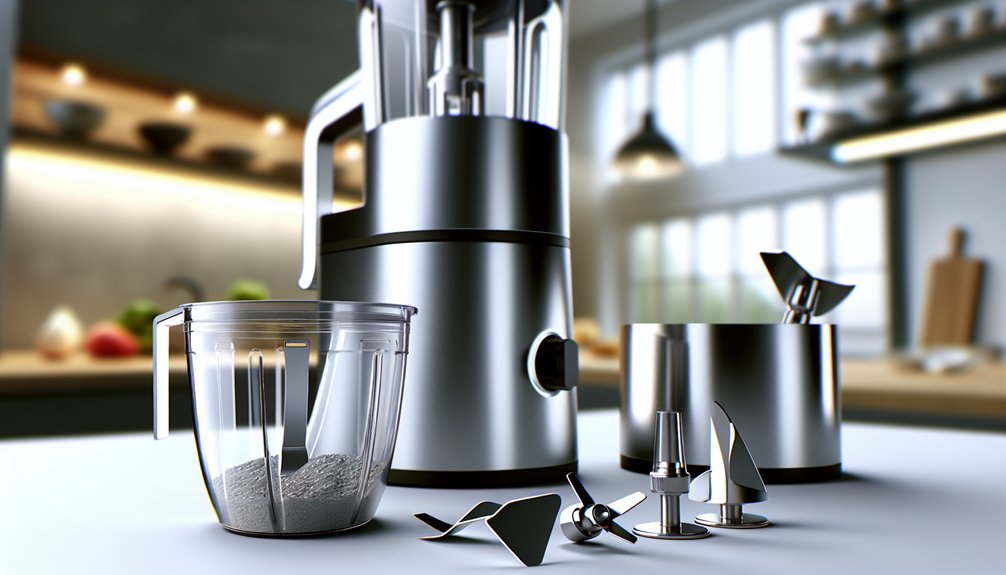
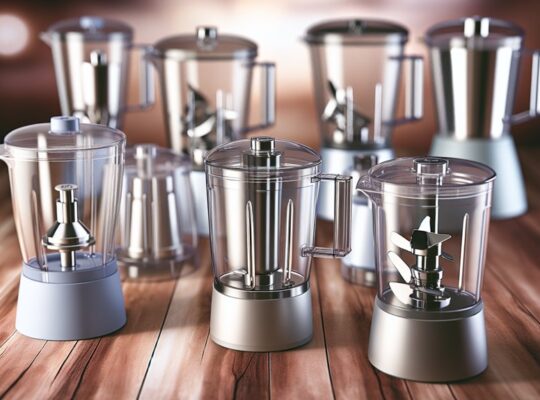
How much difference can the right jar and blade materials make to performance, durability, and safety? You’ll see measurable gains when manufacturers switch to engineered polymers, borosilicate glass, and food-grade stainless steels. Tests show borosilicate jars resist thermal shock 3–5× better than standard glass, reducing fracture risk during hot blending. Food-grade 316L blades maintain edge retention and corrosion resistance under acidic conditions, cutting recall-worthy contamination events. Polymer jars with reinforced fibers lower weight by 20% while achieving impact resistance comparable to glass, improving user handling and reducing drop-related injuries. Prioritize materials that pass ASTM impact and NSF food-contact standards; look for quantified torque and wear data. Choosing certified materials minimizes liability and produces consistently safer, longer-lasting appliances. Manufacturers that pair these materials with fiber-reinforced construction and enhanced ventilation often achieve greater durability and cooler-running motors.
Frequently Asked Questions
How Much Will These Advanced Mixer Grinders Cost at Retail?
You’ll likely pay $150–$600 retail, depending on features and safety certifications; premium smart models with advanced motors and sensors may reach $800–$1,200. Choose certified units and extended warranties to minimize risk.
Are Spare Parts Widely Available Globally?
Yes — spare parts are increasingly available globally, though you’ll see regional gaps. Prioritize models with manufacturer networks, certified distributors, and OEM serial tracking; that’ll reduce downtime, safety risks, and procurement costs across markets.
Do Smart Features Require Continuous Internet Access?
No — most smart features don’t need continuous internet; they’ll operate locally for core safety and basic automation, while cloud connectivity enhances updates, analytics, and remote control. You’ll rely on internet only for advanced services and firmware patches.
How Long Is the Expected Usable Lifespan Under Regular Use?
You’ll typically get 7–10 years of usable life under regular domestic use; heavy daily commercial use shortens that to 3–5 years. Maintain safe operation with scheduled cleaning, blade inspections, and timely bearing or motor servicing to maximize lifespan.
Are These Units Compatible With Existing Kitchen Accessories?
Yes — most units are backward-compatible with common jars, blades, and lids, but you’ll want to verify shaft fittings, torque ratings, and safety interlocks; mismatches can cause failure or injury, so check manufacturer compatibility specs first.