When you pick a jar, start with the batch sizes you usually process and the ingredient types you use; aim for jars that hold about 0.8–1.2 L for 200–400 g dry spices or 300–600 g soaked legumes, 0.3–0.5 L for chutneys and pastes, and smaller 0.2–0.3 L lids for grinding tiny amounts. Match jar volume to motor power, fill to ~75% (60% for wet-dry mixes), and consider blade design and cleaning—there’s more to optimize.
Key Takeaways
- Match jar volume to batch size: 0.8–1.2 L for 200–400 g dry spices, 0.3–0.5 L for 50–150 g small batches.
- Keep fill below recommended limits: max 75% headspace, reduce to 60% for mixed wet–dry blends.
- Consider ingredient texture: use small jar and high-speed bursts for hard dry items, medium jar and pulses for fibrous ingredients.
- Balance jar fill with motor power: heavy loads 30–40% (<750 W), 40–60% (750–1000 W), up to 70% (>1000 W).
- Use practical features: removable blades, sealed gaskets, wide-mouth jars and thermal cutouts for safety and easy cleaning.
Match Jar Capacity to Typical Batch Sizes
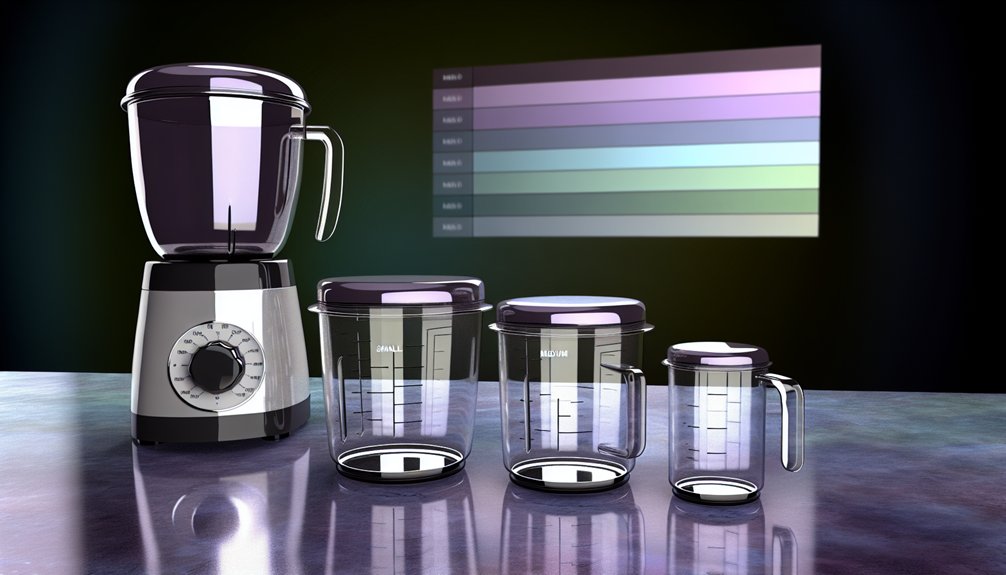
How much will you typically grind at once? You’ll measure batches by ingredient volume and intended yield: match jar capacity to the largest routine batch. If you process 200–400 g of dry spices or 300–600 g of soaked legumes, choose a 0.8–1.2 L jar; for 50–150 g small-batch chutneys or pastes, opt for a 0.3–0.5 L jar. Keep at least 25% headspace to prevent splatter and motor strain: fill to 75% maximum. For mixed wet-dry blends, reduce fill to 60%. When scaling, ensure the grinder’s motor power (W) aligns with jar volume to avoid overheating: higher volume needs higher wattage. Always secure lids, check seals, and follow torque limits for safe, repeatable results. Consider matching larger jars with 750-watt motors when routinely processing high volumes for best performance.
Consider Ingredient Type and Texture Needs
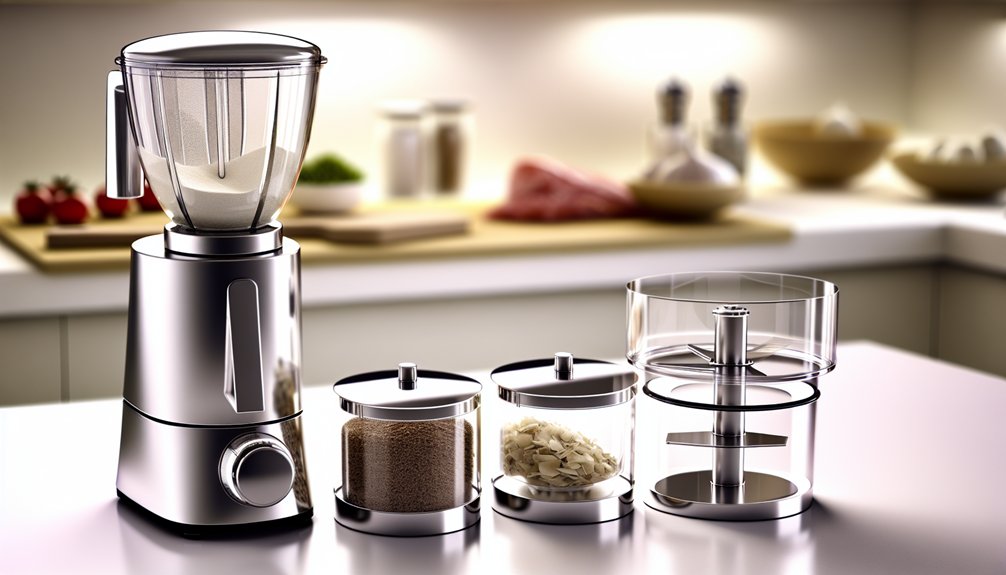
Why does the ingredient matter? You’ll select jar size based on density, moisture, and target texture to ensure consistent, safe processing. Use these rules:
- Hard, dry items (nuts, spices): small jar; high-speed bursts; secure lid to prevent projectile hazards.
- Fibrous, leafy items (herbs, greens): medium jar; pulse with liquid; avoid overfilling to prevent clogging and uneven chopping.
- Wet batters and purees (soups, sauces): larger jar; allow headspace for expansion and splashing; keep speed moderate for control.
- Coarse-to-fine transitions (idli batter → smooth puree): choose a jar that lets you vary fill level; monitor temperature to prevent motor strain.
Follow fill limits and lid locks; measure batches to match jar geometry for safe, reproducible texture. Processors with overload protection handle larger batches more safely and reduce motor wear.
Balance Motor Power With Jar Choice
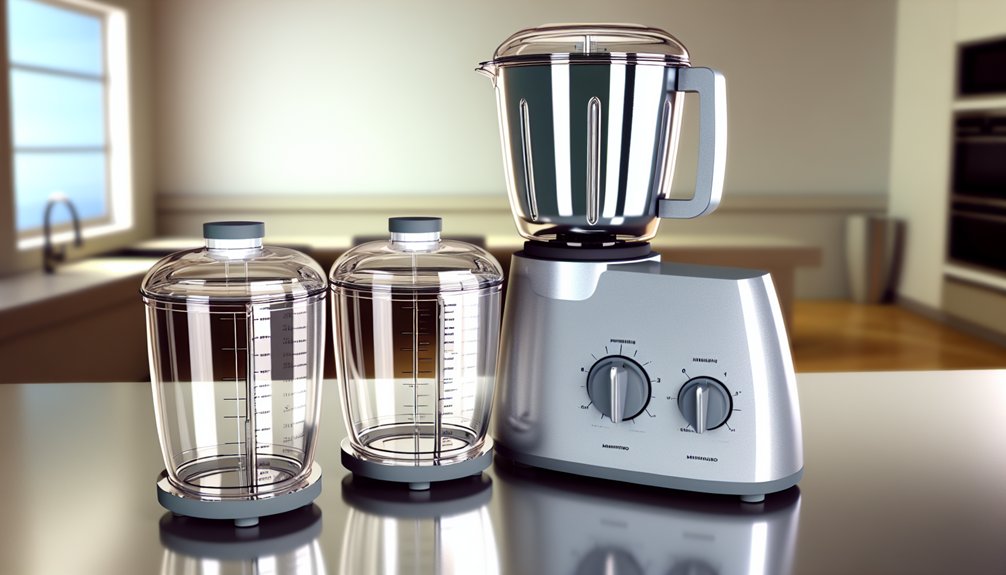
Once you’ve matched jar size to ingredient density and texture goals, match that choice to motor capacity so you don’t overload the machine. Calculate load: for heavy items (nuts, whole spices), limit jar fill to 30–40% of jar volume when motor is <750 W; 40–60% for 750–1000 W; up to 70% for >1000 W. For wet or soft mixtures (batters, chutneys), you can use 50–80% fill at equivalent motor ratings because flow reduces stall risk. Use pulse intervals: 5–10 seconds on, 10–20 seconds off for dense loads to prevent overheating. If motor strain occurs (slowed RPM, burning smell, tripping), immediately reduce batch size and allow a 10–20 minute cool-down. Regularly inspect the cord and plug for damage and keep the appliance dry to reduce electrical risks and prolong motor life, especially when using high loads with proper grounding.
Look for Practical Features and Ease of Cleaning
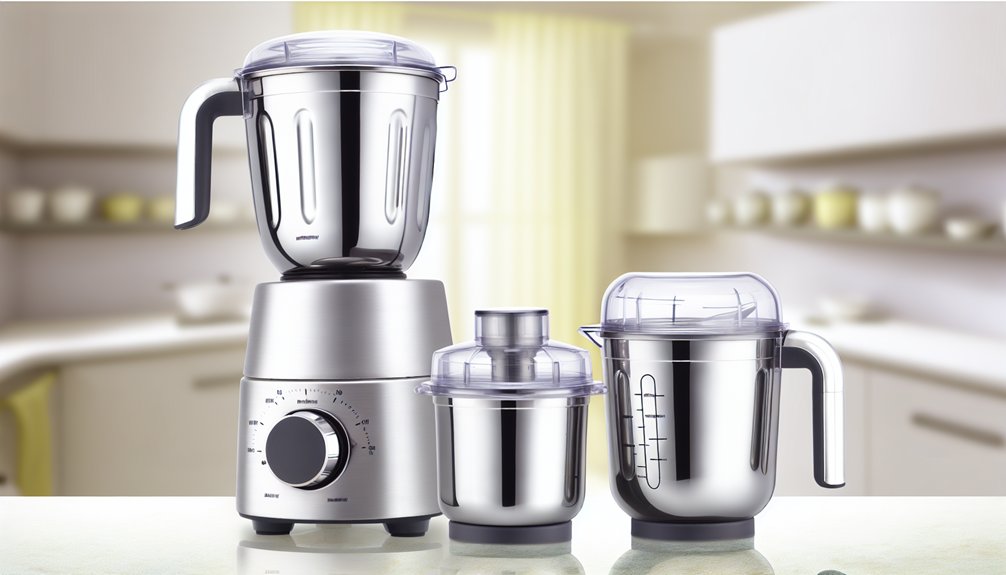
Want a grinder you’ll actually enjoy using and cleaning? Focus on concrete, safety-minded features that make maintenance predictable and efficient. Inspect seals, blades, lid locks, and jar materials as if they were recipe components: each has a function and a cleaning protocol.
- Removable stainless-steel blades — detach, rinse, dry; avoid trapped food and rust.
- Rubber or silicone gaskets — check for cracks; replace on schedule to prevent leaks.
- Wide-mouth jars with smooth interiors — reduce scraping time and bacterial crevices.
- Locking lids with visible indicators — ensure secure fit before operation.
Choose jars labeled dishwasher-safe and BPA-free. You’ll minimize contamination risk, simplify sanitizing steps, and maintain consistent performance with predictable, safe cleaning routines. Stainless steel jars are often preferred for durability and corrosion resistance.
Optimize for Energy Use and Appliance Longevity
Good maintenance habits cut down on wasted runs and wear, so think about energy use and lifespan the same way you think about jar care: measure, minimize, and match. Measure batch size against jar volume; running a 50% filled large jar wastes power and stresses the motor. Minimize cycles by grouping similar tasks and using pulse bursts: 5–8 second pulses with 10–15 second rests reduces heat buildup. Match blade type, RPM setting, and jar material to the ingredient: hard items need short high-speed bursts in a metal jar; wet purees prefer a smaller glass or plastic jar at moderate speeds. Inspect seals, bearings, and vents monthly; replace worn parts promptly. These formulas cut energy consumption, lower thermal stress, and extend appliance life safely. Also ensure your grinder has thermal cutouts to prevent motor overheating during heavy-duty use.
Frequently Asked Questions
Can I Use One Jar for Both Wet and Dry Grinding?
You can, but you shouldn’t: wet and dry use different blades, seals, and cleaning routines; cross-contamination alters texture and safety. If you must, clean thoroughly, dry completely, and inspect seals to prevent spoilage or motor strain.
Are Replacement Jars and Blades Widely Available?
Yes — replacement jars and blades are widely available; check exact model numbers, material (stainless steel vs. plastic), blade compatibility, sealed bearings, and vendor certifications; match specs, inspect seals, and replace damaged parts promptly for safe operation.
Do Jar Materials Affect Food Safety or Taste?
Yes — jar materials can alter safety and taste. Choose stainless steel for neutral flavor and corrosion resistance; food-grade plastic (BPA-free) for light tasks; glass for inertness. Avoid reactive metals and scratched plastics to stay safe.
Can I Store Food in the Grinder Jars After Use?
You can, but don’t: only store fully cooled, dry, food in stainless or glass jars with tight lids; refrigerate perishable items promptly, label with date, avoid acidic or oily foods long-term, and wash thoroughly before next use.
Will Using Larger Jars Increase Noise or Vibration?
Yes — using larger jars can increase vibration and noise if they’re heavier or unbalanced. You’ll want matched, secure lids, correct blade assembly, and smaller batch fills to reduce wobble; always follow safety torque and balance guidelines.